
Daily Bible Devotionals
written by
Pastor Steve Wiggins
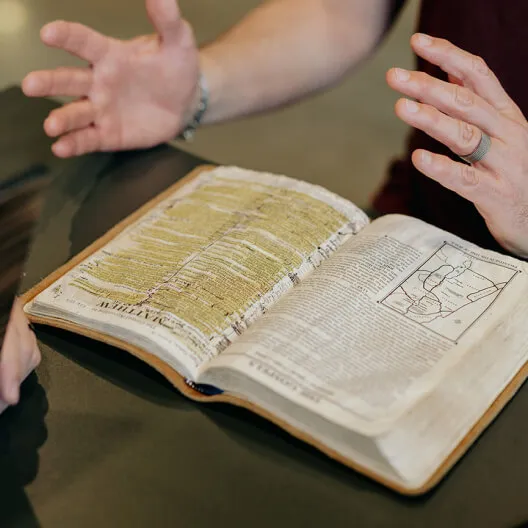


Daily Bible Devotionals


Galatians 4
“But in the past, when you didn’t know God, you were enslaved to things that by nature are not gods. But now, since you know God, or rather have become known by God, how can you turn back again to the weak and bankrupt elemental forces? Do you want to be enslaved to them all over again? You observe special days, months, seasons, and years. I am fearful for you, that perhaps my labor for you has been wasted.” Galatians 4:8-10 (HCSB)
In recent years, the United States has legalized same-sex marriage. Because these daily email devotionals go out to several foreign countries, some of you have asked for my opinion concerning this issue.
Personally, it doesn’t much matter what I think. It’s what the Bible says that matters, and I hope you are continually weighing my observations, insights, and opinions by God’s Word, as you should with anyone else. My ministry goal is to encourage people to read the Bible one chapter daily. You build your faith by raising your Biblical literacy. If you have limited time and are trying to decide between reading the day’s Bible chapter or reading my devotional, please read the Bible!
That being said, I do have Bible-based opinions on gay marriage. First, the Bible is clear that all sex outside of heterosexual marriage is a sin. (Hebrews 13:4) The Bible is clear that marriage is ordained by God to be between a man and a woman. (Genesis 2:21-24, Matthew 19:4-6) Furthermore, the Bible is very clear as to God’s feelings about homosexual behavior. (Genesis 19:1-13; Leviticus 18:22; Romans 1:26-27; 1 Cor 6:9)
The Bible is also clear that homosexuality is just as forgivable as all other sins: sins like pride, adultery, idol-worshipping, murder, or lying. (John 3:16; Romans 5:8) God promises strength for victory over sin. (1 Corinthians 6:11, 2 Corinthians 5:17)
Pertaining to today’s passage, it does not shock me that same-sex couples want to be married. Apart from heeding the direction of God’s Spirit, which is given to all true believers, the non-believer does not have the correct motive or desire to abstain from worldly pursuits.
To me, three great tragedies surround the legalization of gay marriage. The first is focused on believers in Jesus who refuse to take a stand for fear of offending the gay community. To them, I would say: Now you have offended God.
The second tragedy is focused on the “pseudo-Christian” pastors who perform gay marriage services. There is a reckoning forthcoming.
And thirdly, perhaps most tragically, those professing to be Christians living the gay lifestyle have been sold a false gospel. It is heresy to claim to have been set free from the elemental forces of our sin nature, accept the Grace of Jesus, claim to be called by His name, yet purposely and continuously live in defiance of the commands, precepts, statutes, and requirements that God established for His followers.
Galatians 5
“For you were called to be free, brothers; only don’t use this freedom as an opportunity for the flesh, but serve one another through love. For the entire law is fulfilled in one statement: Love your neighbor as yourself.” Galatians 5:13-14 (HCSB)
Beginning on Thanksgiving and continuing through New Year’s Eve, an elderly man handed out $20 bills to strangers. He became known as the “Secret Santa.” Over the next 30 years, “Secret Santa” gave away almost 2 million dollars.
A few years ago, his identity was revealed. In a twist of tragic irony, the “Secret Santa” who had helped so many was himself in need of benevolence. He needed a kidney transplant and didn’t have enough money to pay for it.
For the cynics, this story is confirmation of how idiotic philanthropy is. They say giving money without personal accountability or getting a tax deduction is terrible stewardship. Skeptics would say people should only work their way out of poverty. They would even say benevolence should only be left to professionals.
The cynics will no doubt fail to recognize how people worldwide rallied to pay for “Secret Santa’s” operation. So much money poured in that a fund has been set up to spend the excess. As a result, “Secret Santa” will end up giving more out of poverty than when he was rich!
“When that year was over, they (Egyptians) came the next year and said to him (Joseph), ‘We cannot hide from our lord that the money is gone and that all our livestock belongs to our lord. There is nothing left for our lord except our bodies and our land. Why should we die here in front of you – both us and our land?’” Genesis 47:18-19a (HCSB)
As in the days of Joseph’s leadership in Egypt, people in America are selling themselves into bondage. They are enslaved to credit card and mortgage companies. America’s insatiable desire for “self” has driven it into slavery…even government shutdowns at the Federal level! The average American household maintains over $12,000 in credit card debt. Most of us can’t afford to give to the poor, even if we wanted to.
It reminds me of today’s passage. Compared to the World economy, most of America’s “impoverished” still possess considerable disposable wealth. God has blessed us with spiritual and financial wealth, not to waste it all on ourselves but to invest it in His Kingdom. When we use our freedom to satisfy ourselves, we become slaves to our desires. But if we love our neighbors as ourselves, the Lord (Who sees what is done in secret) will bless the faithful.
Galatians 6
“For whatever a man sows he will also reap, because the one who sows to his flesh will reap corruption from the flesh, but the one who sows to the Spirit will reap eternal life from the Spirit. So we must not get tired of doing good, for we will reap at the proper time if we don’t give up.” Galatians 6:6b-9 (HCSB)
I have spent my whole adult life in and around the Christian music business. When I was 22 years old, I got my first record deal. I clearly remember the day I signed that record contract. I recall sitting across the desk from the record executive, ink still wet on the contract from my signature. He leaned back in his chair and spouted two incredibly poignant pearls of wisdom. The first was, “Most people fail in this business because they quit too soon,” and the second was, “Don’t quit your day gig.”
Those two statements conveyed a multitude of wisdom. On the one hand, he wanted me to know I was in a “slow growth” industry, where investment would take considerable time to pay dividends. But, on the other hand, he encouraged me that MY pay-off was worth the wait, and HIS pay-off depended on my wise investment and patience!
The “Christian” music business can be a tricky industry. There are multi-car pileups at the intersection of Faith and Commerce! Some people see the “platform” as an opportunity to vainly project their image in hopes of exploiting the marketplace. When you view yourself as a product, everyone else becomes a consumer. That scenario doesn’t foster great personal relationships. Eventually, an artist’s “shelf life” ends. Those who sow their gifts in vanity reap an empty harvest.
Other artists approach the business from the standpoint of ministering to others. Sure, they produce products for the marketplace, but the greater desire is for the music to encourage people to draw closer to God. The well-intended artists view their time on the “shelf” as the Lord’s calling and recognize it is God’s prerogative to eventually call them elsewhere. Yet, they never tire of doing good, no matter how high or low profile the ministry opportunity may be.
However, wherever we are called to serve the Lord, we should each diligently sow the gospel seed in whatever mission field the Lord leads us to. Then, we must patiently wait for God to provide growth. When we focus less on our personal pay-off and more on the quality of fruit that develops in the lives of others, we will be less inclined to sell out or quit when times get hard.

Ephesians 1
Grab your Bible & experience the Groundworks Ministries Podcast as Steve Wiggins leads us through the full chapter of Ephesians 1. Click the links below to watch or listen now!
Ephesians 2
“So then you are no longer foreigners and strangers, but fellow citizens with the saints, and members of God’s household, built on the foundation of the apostles and prophets, with Christ Jesus Himself as the cornerstone. The whole building, being put together by Him, grows into a holy sanctuary in the Lord. You also are being built together for God’s dwelling in the Spirit.” Ephesians 2:19-22 (HCSB)
I love going to church! Every week, folks of varied ethnic, economic, and educational backgrounds come to worship the Lord together. I love it when people who would otherwise never mingle come together in close community simply to seek God. Most of us know Jesus in a saving way, and I pray the rest will know His salvation soon!
I didn’t grow up in a culture that readily embraced unity, even for the sake of the Gospel. I grew up in the Southern U.S., towards the end of an era of horrible racial division. I recall an instance when I was a fifth-grader in Mississippi. On the way to school, my school bus pulled to the side of the road. The door opened, and a member of the Ku Klux Klan, in full robe and hood, boarded our bus and passed out “hate literature.” You see, we were “white” kids being bussed to schools in “black” neighborhoods. That enraged an unsavory element in the backwoods culture.
The disgusting irony of the KKK is how they use the “cross” as their central icon, albeit a burning one. The argument that Jesus loves all people, regardless of race, to the point where He would die for them is lost on racists. Their actions and values are by no means “Christian.”
From reading the Bible, we understand that Jesus would never endorse the agenda of a group like the Klan! The same goes for the actions of the Nazis, medieval Crusaders, and Spanish Inquisition. While each of these “hate groups” claimed to speak on behalf of God, their agendas simply couldn’t jive with the life and teachings of Jesus.
That’s not to say Jesus won’t judge sin. I am simply saying that sin is not specific to any people group. Everyone, regardless of ethnic or social standing, is born into sin and needs atonement. Jesus makes His gracious plea of atonement, by His grace through our faith, to all men, regardless of ethnicity or socio-economic status.
I chose this passage today because the church continues to grow. We are expanding in terms of numbers by grace and knowledge of God’s Word. I believe God is building our group, human stone upon stone. The cornerstone of our group is the Cornerstone of our faith: Messiah Himself. We are diverse but unified in the knowledge that Jesus is the only way to salvation for all who believe. Regardless of our sin origin, we share a common destination, and each of us has become an altogether new creation by His grace. We read the Word, and we sing His praises. It is evident He has brought us together because His Spirit abides within and among us!
Ephesians 3
“The mystery was made known to me by revelation, as I have briefly written above. By reading this you are able to understand my insight about the mystery of the Messiah. This was not made known to people in other generations as it is now revealed to His holy apostles and prophets by the Spirit: The Gentiles are coheirs, members of the same body, and partners of the promise in Christ Jesus through the gospel. I was made a servant of this gospel by the gift of God’s grace that was given to me by the working of His power.” Ephesians 3:3-7 (HCSB)
Suppose some ethnic gang hassles your neighborhood. They extort money and terrorize your family, and it gets really bad. This gang’s corruption has even infiltrated the government. There’s nobody to call for help.
Now, suppose this gang’s terror has been going on for several generations. A prejudice of hatred has grown among your community against every one of this gang’s ethnicities. Your only hope is that you’ve been taught to believe that God would, someday, send a Deliverer Who would stop the terror. Your whole life’s plea to God is like generations past, crying out, “Save us from those people!”
Finally, in His perfect timing, God responded to those prayers. He sent the promised Deliverer. You’re thinking, “Now, those people are going to get crushed!” But, instead of destroying and publicly humiliating all the members of that gang’s ethnic community, your Deliverer has other plans. He decided to atone for their sins and offer them grace and forgiveness if they would repent and receive His atonement by faith.
How would that make you feel? I bet your answer is close to what many Jews felt when they learned that Messiah came first to atone for sin and offer salvation to all people before He returned to judge and punish the world’s sin.
Jesus identified that the REAL problem in the world was not primarily its different people groups; the problem was how sin had affected those cultures. He understood that sin had infected BOTH the Jew and Gentile cultures. Thus, Jesus did not elevate any people group above another regarding their need for atonement or its accessibility to anyone who seeks it. He came to wipe the slate clean for all, so to speak, and give everyone a choice for a new start. This was so that all ethnicities could glorify Him together by God’s grace and the Spirit’s enabling.
I can relate to how the Jewish leaders felt when Jesus spoke of a “good Samaritan” and commanded, “Love your neighbor as yourself.” I can also identify with the prejudice Paul faced when he asserted that the mystery of the “prophets” in the Tanakh (Old Testament) was: All of us Jews need atonement, and Gentiles can receive it, too!
Ephesians 4
“And He personally gave some to be apostles, some prophets, some evangelists, some pastors and teachers, for the training of the saints in the work of ministry, to build up the body of Christ, until we all reach unity in the faith and in the knowledge of God’s Son, growing into a mature man with a stature measured by Christ’s fullness. Then we will no longer be little children, tossed by the waves and blown around by every wind of teaching, by human cunning with cleverness in the techniques of deceit.” Ephesians 4:11-14 (HCSB)
God desires that we all reach unity in the faith and in the knowledge of His Son, Jesus. His will is that we would each grow into mature believers with a stature that would measure up to the fullness of the Messiah. In short, it is time for us to move beyond being consumers of ministry and begin contributing to it.
When you heard the gospel (those who have heard and believed it), you probably learned that God has a wonderful plan for your life. That is true. A while back, Rick Warren sold a few books aimed at helping people discover their “purpose” in life.
God’s desire for every individual is that they enter into a saving relationship with Him. Beyond that, He desires that each of us grow in faithful maturity. To aid us in that endeavor, He has gifted us with the Holy Spirit, Who teaches us and reveals the truth of God’s Word and “impels” us with the desire from within to obey it.
When we choose Him, He chooses and gifts us individually to serve His “body,” the greater body of the Messiah. Some believers He endows with the ability to start ministries. Others may prophesy, evangelize, pastor, or teach. The list continues…
So, in which way has He called you to minister? No matter what your occupation is, your preoccupation should be to draw nearer to God and to be used to draw others near to Him.
We read the Bible with the intent to know and obey the Lord. In doing so, we seek to become more faithful and mature. And we understand that while there are many opinions and “versions” of the gospel, there is only one TRUE gospel. Therefore, pray that the Lord would reveal His truth to you so that you could not only expose the lies within false teaching, but you would also lead others in the way of truth.
Ephesians 5
“Pay careful attention, then, to how you walk – not as unwise people but as wise – making the most of the time, because the days are evil. So don’t be foolish, but understand what the Lord’s will is. And don’t get drunk with wine, which leads to reckless actions, but be filled with the Spirit: speaking to one another in psalms, hymns, and spiritual songs, singing and making music from your heart to the Lord, giving thanks always for everything to God the Father in the name of our Lord Jesus Christ, submitting to one another in the fear of Christ.” Ephesians 5:15-21 (HCSB)
We live in an age where many professing believers spend very little time reading the Bible. To be honest, most followers of the Messiah would admit they should spend more time studying God’s Word. When asked why they spend so little time searching the Scriptures, the average believer answers that they simply don’t have the time or feel inadequate to comprehend the text. Believers generally prefer to have the Bible filtered and dispensed through a preacher/pastor than to read it for themselves.
Today, God’s message to us through Paul’s letter is that we should be wise, careful, and understanding of the Lord’s will. The Lord’s will comes in two varieties: Revealed and Unrevealed.
For instance, an example of God’s unrevealed “will” would be something like…how the antichrist will rise to power in the world. While theologians may have varied opinions about end-times scenarios, we will not know precisely how God will accomplish His will until He reveals it in His time, according to His great wisdom. Until then, the best we can do is to speculate.
As for God’s revealed will, that’s easy. It is the Bible. Everything we need to know about God, having a right relationship with Him, and living a blessed and fulfilled life is contained in the pages of Scripture.
Before one comes to know Jesus in a saving way, they are unwise. They may have been successful and wise in the ways of the World, but in God’s eyes, they were foolish. For instance, I used to live to party. I loved the fashion of partying, party people, and mostly the music. It all glorified my Worldly lifestyle.
But by God’s grace, I was saved, filled with the Spirit, and began reading the Bible. Through the Bible, God began revealing how I should honor Him with my life. The Psalmist correctly said, “He put a new song in my mouth.” My song changed because the object of my worship had changed.
Beyond that, when I began applying God’s instruction to my life, He began replacing my desires for “self” with the desire to serve others.
Ephesians 6
“Finally, be strengthened by the Lord and by His vast strength. Put on the full armor of God so that you can stand against the tactics of the Devil. For our battle is not against flesh and blood, but against the rulers, against the authorities, against the world powers of this darkness, against the spiritual forces of evil in the heavens. This is why you must take up the full armor of God, so that you may be able to resist in the evil day, and having prepared everything, to take your stand. Stand, therefore, with truth around your waist, righteousness like armor on your chest, and your feet sandaled with readiness for the gospel of peace. In every situation take the shield of faith, and with it you will be able to extinguish the flaming arrows of the evil one. Take the helmet of salvation, and the sword of the Spirit, which is God’s word.” Ephesians 6:10-17 (HCSB)
In the final statements of his letter to the Ephesians, Paul elicits imagery from Israel’s dark past. He recalls a time when Satan’s tactics were effective against the nation of Israel, which had fallen into national sin by abandoning the truth of God’s Word. This is especially relevant to modern believers in light of recent pew surveys. Research has uncovered that 57% of so-called “Evangelical” believers do not believe Jesus is the only way to salvation. That assumption can only be reached by being ignorant of the Bible. Isaiah’s warning to pre-dispersion Israel mirrors Paul’s exhortation.
“We all growl like bears and moan like doves. We hope for justice, but there is none; for salvation, but it is far from us. For our transgressions have multiplied before You, and our sins testify against us. For our transgressions are with us, and we know our iniquities: transgression and deception against the Lord, turning away from following our God, speaking oppression and revolt, conceiving and uttering lying words from the heart. Justice is turned back, and righteousness stands far off. For truth has stumbled in the public square, and honesty cannot enter. Truth is missing, and whoever turns from evil is plundered.” Isaiah 59:11-15a (HCSB)
Isaiah’s last sentence is relevant today because the absolute truth of God’s Word has been scuttled in so many so-called “churches” and is exchanged for a seemingly more convenient message. When people abandon evil (repent from their sin) only to embrace a false gospel and benign operational theology, which rejects the absolute truth of the Bible, they are twice deceived!!
Isaiah continues: “The Lord saw that there was no justice, and He was offended. He saw that there was no man – He was amazed that there was no one interceding, so His own arm brought salvation, and His own righteousness supported Him. He put on righteousness like a breastplate, and a helmet of salvation in His head; He put on garments of vengeance for clothing, and He wrapped Himself in zeal as in a cloak.” Isaiah 59:15b-17 (HCSB)
In Jesus, we are called to be those men and women who conduct spiritual battle, interceding and evangelizing, standing in the gap, and connecting people to the truth of the Gospel. And our only weapon for which to wage the offensive is the very thing the world (and many in the church-at-large) has rejected: The sword of God’s Word!
Philippians 1
“For it has been given to you on Christ’s behalf not only to believe in Him, but also to suffer for Him, having the same struggle that you saw I had and now hear about me.” Philippians 1:29-30 (HCSB)
“Hey, Paul! How are we supposed to convince sinners with THAT kind of theology? Struggling? Suffering? Dude, you don’t understand this post-modern culture…?”
Paul’s statement certainly raises some questions and concerns about what we should expect from following Jesus. The “problem of pain” is, perhaps, the Church’s greatest dilemma, moving ahead. We live in a culture of luxury. Ours is an “i-centered” world, complete with iTunes, iMessage…iChurch. The point is that our world seems to revolve around how we feel.
You can tell our narcissism by the complaints we have about church services. “The music was off today.” “The preaching went long.” “The parking lot is too crowded.”
News flash: God connects more deeply with us through hardship than abundance. Consider the September 11th tragedy of 2001. Remember how quickly our national focus changed to “God, save us!”? Recall how soon folks abandoned the Lord once the immediate hardship seemed to diminish.
Some within the Church believe that Christians never have problems as long as they are friendly people and live according to the “golden rule.” When such people observe your pain, they say it must be the result of your sin. Any difficulty in their life they attribute to the sins of others. This theology is negligent of Paul’s teaching. It is heresy because Paul exhorted that suffering is a GIFT from the Lord. It is part of His grace to us!
Alongside the gift of salvation, through faith in Messiah, we also receive the gift of living “in Him.” Consider the lives of Jesus and Paul. Who wants to be beaten, stoned, shipwrecked…crucified? Yet, they considered it all joy in light of the hope set before them.
Hardship is inevitable and also a privilege for believers. How so? It builds faith.
“Blessed is a man who endures trials because when he passes the test, he will receive the crown of life that He has promised to those who love Him.” James 1:12 (HCSB)
We trust God, initially, because of the observable testimony of faithful believers. When we read the Bible, we learn of God’s holiness and His faithful interaction with mankind. This leads us to trust His leading in our lives. He leads us through hardships, where we learn the REALITY of His faithfulness instead of abstractly believing in the THEORY of it. Thus, our faith and boldness builds. Observable faithfulness attracts unbelievers. And the whole process starts again.
Philippians 2
Grab your Bible & experience the Groundworks Ministries Podcast as Steve Wiggins leads us through the full chapter of Philippians 2. Click the links below to watch or listen now!
Philippians 3
“Because of Him I have suffered the loss of all things and consider them filth, so that I may gain Messiah and be found in Him, not having a righteousness of my own from the law, but one that is through faith in Messiah – the righteousness from God based on faith.” Philippians 3:8b-9 (HCSB)
To be “known” is a basic human need. To be “found out” is a basic human fear.
While some strive to project an image of perfection, I don’t think any sane person actually believes they are perfect. It reminds me of the proud man who stated, “I thought I was wrong once, but I was mistaken.” Now, that’s denial!
Much of the anxiety in our culture is based on being “known” without being “found out.” Here’s how it works. We are all insecure, so we buy into an image of how we should look, dress, or act. This image is always slightly bigger than life. It is the “us” we want to be. By the way, we get the image(s) from three sources: the World, the Flesh, and the Devil.
If the image is cast well, it is never fully attainable; it is ever elusive, always barely out of reach. So, our whole lives are focused on obtaining the impossible. Even if we could obtain the image, we couldn’t sustain it for long. It is constantly morphing. The moment you finally get in fashion, the trends change!!
This is a hurdle for the contemporary church. “Contempo” means “With the times.” The moment a congregation gets “with the times,” the times have already moved on. We must base our ministry on something more solid than a passing social, musical, or style trend. We must build on the solid foundation of Scripture, which never changes.
Deep inside, we know the image is a lie, but we continue to strive for it. This is because we are so afraid of being rejected that we hide in the World under the mask of the image. We simply want to be accepted and valued. That is also why, when people find God’s unconditional love actually determines their worth, they quickly start abandoning their Worldly image pursuits.
Having excelled in non-Messianic Judaism, Paul made it his goal to be known ONLY as a follower of Jesus. He had once tried to live up to the image of a Perushim (a Pharisee). Compared to others, he was outwardly righteous, but inwardly, he was not at peace. Paul counted that former “image” of righteousness as rubbish because it was rooted in lies and fueled by vanity.
In short, we should be “known” as people who were formerly in need of salvation, and we should be “found out” to now be righteous by faith in Messiah, Jesus alone.
Philippians 4
“I know both how to have a little, and I know how to have a lot. I have learned the secret of being content – whether in abundance or in need. I am able to do all things through Him who strengthens me. Still, you did well by sharing with me in my hardship.” Philippians 4:12-14 (HCSB)
Can you imagine yourself in a state of contentment? What would make you happy?
For me, I’m at a beach house. I have no mortgage, no debt. I have enough money to cover any reasonable whim. I’m thin, tan, and there’s a south swell coming in. Let’s go surfing!
It’s easy to be content when we’re living our dreams.
What if, instead, we were forced to endure a nightmare? What if, while lying on my dream beach, a tsunami came and swept away the coastline? I survived but lost the use of my legs, my family, and everything else. Now, I’m alone, bankrupt, and physically incapacitated.
Is it possible to contently praise the Lord when our conditions are displeasing? Paul says, “Yes!”
It is a great mystery, but true contentment is not about maintaining a positive environment. It is also more than maintaining a positive attitude. Contentment, or “joy,” is a gift from the Lord that transcends your particular situation and attaches itself to God’s never-changing character and promises.
Paul says he “learned it.” He endured both abundance & hardships, and God proved faithful through both! God was faithful to deliver Paul from prison, and He was faithful when Paul was thrown into prison. God is always faithful. And there is peace in knowing that.
Here is another thing we know: Whenever Paul suffered, people believed in Jesus! They would ask, “Why else would Paul volunteer to suffer unless he KNEW Jesus was Messiah?” Paul’s message is different from the “prosperity” gospel of today. Paul’s approach sounds more like a “disparity” gospel! Yet, Paul was an effective evangelist, nonetheless.
If Paul learned contentment by experiencing God’s faithfulness, he perpetuated contentment by continuing to heed God’s call. The secret to contentment is to trust and obey the Lord through all circumstances. We must learn to trust He will never leave or forsake us, even if following Him leads us through hard times or even martyrdom.
It is good to entrust Jesus with our “souls.” But how well do we trust Him with our lives?
Colossians 1
“God wanted to make known among the Gentiles the glorious wealth of His mystery, which is Christ [Messiah] in you, the hope of glory. We proclaim Him, warning and teaching everyone with all wisdom, so that we may present everyone mature in Christ [Messiah]. I labor for this, striving with His strength that works powerfully in me.” Colossians 1:27-29 (HCSB)
I urge you to read this chapter. If for no other reason, it lays out the deity of Jesus.
At the moment they become a follower of Jesus, every believer receives the gift of the Holy Spirit. It is God’s Spirit that teaches us and even intercedes to God on our behalf. The Bible says there are times when the Spirit will express itself in great power. These would be times when a work is accomplished, and there is no doubt that only God’s Spirit has achieved it.
Paul is speaking of such a time in today’s passage. Paul notes that God is accomplishing His will through Paul, as he is strengthened and empowered by the Holy Spirit. Wouldn’t you like the Spirit to work through you as it did for Paul? Here are some things we can learn from Paul’s testimony:
First, God is looking for faithful believers to labor at His mission. Are you willing to step out in faith? Does your fear of the World keep you from possessing what is only offered to God’s faithful servants?
Second, Paul proclaimed the whole Gospel. When you share your faith, do you withhold the essential elements of true conversion yet make people feel uncomfortable? It is unhealthy when a person values a relationship more than they value the other person in the relationship. Often, people withhold sharing the truth of God’s standard, mankind’s sin, and the consequence of Hell for all who refuse Jesus’ atonement. They do this simply because they value the personal relationship with the non-believer more than they care about the non-believer’s salvation. Such a relationship is selfish because it puts the believer’s personal social comfort ahead of the spiritual necessities of the non-believing friend.
Paul presented the Gospel as it is. The whole Gospel. He told of the great love of Messiah, and he warned of the reality of Hell. He knew very well that the message of Jesus was the cornerstone of salvation to some and a “rock of offense” to others. Paul didn’t “market” Jesus; he “preached” Him.
Lastly, after faithfully heeding God’s call and proclaiming the complete Gospel, the Spirit worked in power and strength. Thus, Paul saw his efforts bear fruit worthy of his suffering because he was confident God’s Spirit would bring success, according to His perfect wisdom, purpose, plan, and promise.
Colossians 2
“If you died with the Messiah to the elemental forces of this world, why do you live as if you still belonged to the world? Why do you submit to regulations: “Don’t handle, don’t taste, don’t touch”? All these regulations refer to what is destroyed by being used up; they are commands and doctrines of men. Although these have a reputation of wisdom by promoting ascetic practices, humility, and severe treatment of the body, they are not of any value in curbing self-indulgence.” Colossians 2:20-23 (HCSB)
Paul begins (what we know as) this second chapter by encouraging the Colossians to pass on his letter to the Church at Laodicea. Interestingly, the congregation at Laodicea has become synonymous with “lukewarm-ness.”
“I know your works, that you are neither cold nor hot. I wish that you were cold or hot. So, because you are lukewarm, and neither hot nor cold, I am going to vomit you out of My mouth.” Revelation 3:15-16 (HCSB)
From Paul’s previous letters, we know that there were groups of false apostles whom Paul called “Judaizers.” At least one of these groups came from the heart of James’ Jerusalem congregation. The Judaizers were traveling about, telling Gentiles they had to convert to Judaism before they could accept Jesus. Some theologians speculate that the Judaizers were, themselves, Gentiles who had converted to Judaism. This made their testimony all the more powerful among other Gentiles and undoubtedly prompted Paul to underscore that he was “born a Jew” in Philippians 3.
By nature, most people would rather seek a compromise than take a stand. It is the underlying reason for the emergence of the “Tea Party” movement in American politics. Taking a stand means declaring absolutes and possibly polarizing people. Our “post-modern” culture rejects the notion of absolutes, so “not offending” has become the goal.
The Apostle Paul, on the other hand, was willing to go to the extreme for his convictions. His convictions went beyond some personal preference or natural bent towards extremism. Paul believed in God, and his foundation for belief was the Bible, matched with a personal saving relationship with Jesus.
The problem with the congregation at Laodicea was that they tried balancing Paul’s “extremism” with that of the Judaizers. Their compromise garnered them Jesus-themed paganism, which wasn’t true religion at all. It overlooked certain sins, which God would never allow, and emphasized disciplines God never commanded.
Any religion worth hanging your eternal “hat” on had better be true! And if it’s true, then it should be able to be defended. If it can be defended, it must come from a list of absolutes. And if those absolutes come from anywhere other than God’s Word, they may have a reputation of wisdom. Still, they deny the power of God’s Spirit, given to all true believers, to enable them to discern the Bible’s truth, resist temptation, and build His Kingdom. That’s precisely why we read His Word every day. So we can know it, live it, and share it!
Colossians 3
“Therefore, put to death what belongs to your worldly nature: sexual immorality, impurity, lust, evil desire, and greed, which is idolatry. Because of these, God’s wrath comes on the disobedient, and you once walked in these things when you were living in them.” Colossians 3:5-7 (HCSB)
When I was young, my parents used to frequent a Chinese restaurant. Behind the cash register at this establishment were several ornate boxes containing what I thought were “action figures,” posed amidst a constant stream of incense smoke. I recall asking the Chinese cashier about the dolls; she told me they were her family gods.
For years, that experience formed my opinion of idolatry. In my mind, an idol was a carving or picture of people to whom you prayed and burned incense. I figured the idol would bless the worshipper in return for the worship. It all seemed silly to me. I was thankful I didn’t grow up in a culture that worshipped idols.
Fast-forward several years.
I was in my mid 20’s and deep into the music business. I remember standing at a department store merchandise counter. I had an armful of clothes that I figured would look really cool on stage. The cashier zipped my credit card and discretely informed me that my card had been declined. When I called the card company, I was astonished at how much debt I had accumulated in such a short amount of time. That’s when I realized I myself was an idolater!
Yes, I had gotten into debt because of my idolatry. Here’s what I mean: I had bought into a lifestyle, or “image,” which I pursued beyond Godly accountability. I wasn’t satisfied with God’s provision, so I sold myself into the bondage of credit card companies, all to acquire an “image.” I had bestowed power and worship to the “image” to provide success and protect my lifestyle…power and worship that belonged to God!
Whenever I felt God was inadequately showing up for me, I simply trusted the “image” to grant me what God had denied. And that’s how I got into credit trouble as a young man!
Paul tells us that God’s wrath comes because of our idolatry. Maybe you have never worshipped carved stone and wooden idols. Nevertheless, the Bible says we ALL once walked in idolatrous ways. In some ways, perhaps, we still occasionally flirt with those former idols. But there is HOPE for all who choose to turn from their idolatry and walk with the Lord by placing their faith and trust in Jesus. However, when we reject His ways, we open ourselves up to His certain “rod of correction” and wrath of punishment.
Colossians 4
“Walk in wisdom toward those who are outside, redeeming the time. Let your speech always be with grace, seasoned with salt, that you may know how you ought to answer each one.” Colossians 4:5-6 (NKJV)
I love to fish, although I haven’t done it in years. One summer, my brother and I went fishing every day despite the heat waves and thunderstorms. I even got my picture in the paper when a news reporter noticed my devotion to the art of angling.
My favorite place to fish was my Uncle Alpha’s lake. (They named him “Alpha” because he was the first child.) One day, I was sitting on the edge of the dock, cooling my feet in the water, when my brother yelled, “Pick up your feet!” I looked down, just in time to spy a huge loggerhead turtle swimming up to bite off my big toe!! That’s when I realized you must stay alert when you’re fishing because some things may be fishing for you!
This concept of alertness transfers to evangelism. After all, evangelism is fishing for men. Paul says we should “walk in wisdom toward those who are outside.” In addition to being knowledgeable of the gospel, we should be wise with it.
We are called to be gracious to the unbeliever. Paul directs us to intentionally season our conversations with salt. What does he mean? As another Bible translation put it: “…always be gracious and interesting so that you will know how to respond to any particular individual.” There is a reason why bartenders set out bowls of pretzels: salt makes people thirsty. If you give away pretzels, you sell more beer!
We “salt” our conversation so people will want to hear more about Jesus. How does that play out, practically?
For starters: listen, listen, listen! We live in an age of information overload, and people seldom get to tell their stories. Next, turn down the preaching and turn up the caring. Show genuine concern for people. People don’t care what you know ‘till they know that you care. Try communicating on a pedestrian level. That means dropping the “Christian-ese.” (church language) Otherwise, we may appear to be so “Heavenly-minded” that we are no “Earthly good.”
Avoid taking a secular approach, which abandons the gospel for the sake of cultural “relevance.” Share the whole gospel, even the aspects that seem uncomfortable. In trying to erase the differences between the Church and the world, many have become so worldly-minded that they’re no Heavenly good. There is no such thing as a “decision for Jesus” that excludes committing to a Bible-centered life.
“Not everyone who says to me, “Lord, Lord!” will enter the kingdom of heaven, but only the one who does the will of My Father in heaven.” Matthew 7:21 (HCSB)
1 Thessalonians 1
Grab your Bible & experience the Groundworks Ministries Podcast as Steve Wiggins leads us through the full chapter of 1 Thessalonians 1. Click the links below to watch or listen now!
1 Thessalonians 2
“So we wanted to come to you – even I, Paul, time and again – but Satan hindered us. For who is our hope or joy or crown of boasting in the presence of our Lord Jesus at His coming? Is it not you? For you are our glory and joy!” 1 Thessalonians 2:18-20 (HCSB)
When I was a kid, the cool thing was to have a brand-new pair of WHITE tennis shoes. Everyone got new shoes for school, but a few trips to the playground quickly faded their glory. Dirt happens.
Occasionally, a footwear miracle would occur. Some lucky kid would defy all odds, and his shoes would retain their out-of-the-box “whiteness” for months on end. In the fall of 1980, I was that miracle kid. I recall the day the miracle ended.
It was well past Thanksgiving, and I had just stepped off the school bus. The air was crisp and relatively cool for a sunny day. I was strutting my Fred Perry “pure whites” to homeroom when, out of nowhere, Ron Street ran up and raked his muddy penny-loafer across my shoelaces!!!! He yells, “Skid Mark!” and runs off. Apparently, he had been jealous for some time. I was devastated. Some guys are just plain mean.
Speaking of mean, the Devil is mean. There is nothing Satan wants more than to keep you from God and steal the glory of your Kingdom work. If you are a follower of Jesus, Satan wants to make you completely ineffective. More than a discourager, he is a destroyer. He would kill you if allowed the opportunity.
Now, consider Paul. How can the guy who said, “I can do all things through Messiah, Who strengthens me.” be hindered by Satan? Was Paul a liar? By no means!!
Paul accomplished all that the Lord had directed him to labor towards in Thessalonica. The church flourished despite great opposition. But the way that God used Paul to accomplish His plan for the Thessalonians’ salvation was through the example of Paul and his colleagues enduring spiritual opposition and overcoming it by faith.
Friends, do not be discouraged when you experience spiritual opposition. Be encouraged that while the battle may be fierce, the victory is the Lord’s. Satan will get his due…much the same way Ron Street got detention for scuffing my shoes.
1 Thessalonians 3
“In fact, when we were with you, we told you previously that we were going to suffer persecution, and as you know, it happened. For this reason, when I could no longer stand it, I also sent to find out about your faith, fearing that the Tempter had tempted you and that our labor might be for nothing.” 1 Thessalonians 3:4-5 (HCSB)
Reggie had no reason to be running college cross-country. I argued with him all the way to the signup table. Still, he signed his name on the “walk-on” list and turned away.
In high school, Reggie and I had been track and field competitors. I had obtained a scholarship while all the colleges passed him up. Even though he hadn’t worked out in over a year, he had observed my previous track season with envy. Bottom line is that he thought he could beat me and earn a place on the team.
I actually wanted Reggie to succeed. I thought he had more raw talent than me, but he lacked the drive to win. Like I said, I tried to talk him out of it. I told him that running at the college level was harder than it looked.
The day arrived for our first practice. The coach blew a whistle, and off we went. The first week’s practices are always the most difficult. They’re designed to weed out the weaker runners. Five miles later, I returned to the starting point with the front pack. Then I stood by Coach until everyone crossed the line…no Reggie. The guys said he had fallen back and was “examining his lunch,” yawning in technicolor somewhere on the trail. He never came back.
I have met many young people who could have been successful in ministry, but nobody told them it would be so hard. Others were told but wouldn’t listen. Maybe you’re tired of hearing me say it, but living for the Lord can be challenging. If you expect to succeed on raw talent, you’re fooling yourself. God has designed us to run on a combination of His Spirit, Talent, and Discipline.
More than just warning you, I have determined to train alongside you. Hopefully, you find these daily Bible emails more inspirational than “desperational” (my word). I pray you will endure the discipline to obtain the prize!
1 Thessalonians 4
“Finally then, brothers, we ask and encourage you in the Lord Jesus, that as you have received from us how you must walk and please God – as you are doing – do so even more.” 1 Thessalonians 4:1 (HCSB)
There are basically two types of slaves: those forced into it and those who willingly apply for it.
Many people have an inappropriate view of Jewish Biblical slave life. They have the Alex Haley “Roots” and Cecil B. DeMille “10 Commandments” views, where the slaves are constantly beaten. Of course, the Israelites were slaves in Egypt and, under foreign oppression, were beaten. However, within the nation of Israel, there was voluntary slavery, which was not usually physically brutal.
I’m not making a case for slavery. I believe it’s cruel and inhumane. I’m just saying that Paul’s use of slave imagery was received more positively in his day than in ours. Jewish slaves within the national Hebrew life were more respected and treated better than those of, say, the American Civil War era.
Accounts given by former slaves after the U.S. Civil War told how they got through the day. The overall goal was to do as little as possible but just enough to avoid the whip. That is, they didn’t want to honor their oppressors, yet they didn’t want to provoke them either.
Some Believers in Jesus have adopted the “forced slave” mentality. They want to know exactly how much “Jesus” it takes to avoid Hell without having to serve their Master by living a Christ-centered life.
Who has forced us to believe in Messiah that we would take that attitude? Have we not chosen, of our own free will, to be His slaves and servants on this earth? Why, then, would we settle to do as little as possible with our Christian lives and simply skate through life? Why would we not give ourselves in faithful thanksgiving that God has invited us to serve Him?
Paul addresses the believers in Thessalonica by encouraging the progress they had made. But Paul goes further. He says, “As you are doing – do so even more.” While there are legitimate times of rest and refreshment, the momentum of our lives should always be moving forward and upward. We have come a long way since we became believers in Messiah Jesus; God be praised! Here’s our challenge: Let’s go further!
1 Thessalonians 5
“So then, we must not sleep, like the rest, but we must stay awake and be serious. For those who sleep, sleep at night, and those who get drunk are drunk at night. But since we belong to the day, we must be serious and put on the armor of faith and love on our chests, and put on a helmet of the hope of salvation. For God did not appoint us to wrath, but to obtain salvation through our Lord Jesus Christ, who died for us, so that whether we are awake or asleep, we will live together with Him. Therefore, encourage one another and build each other up as you are already doing.” 1 Thessalonians 5:6-11 (HCSB)
For the past few days, I’ve been working in my yard. Some people like working in their yards. When you visit their homes, it’s like entering a luxury resort. My wife grew up in a “yard family.” She can look at a vacant lot and envision a beautiful garden.
When I see a vacant lot, I think, “Lucky guys, no yard work.” I grew up in a family that prayed for August so the grass would die and we wouldn’t have to mow it! Yes, our neighbors hated us!
I don’t like yard work because I simply don’t have a vision for what my labor could produce. All that digging and clipping, with no immediate gratification…shrubs just don’t grow fast enough! To paraphrase the girl group TLC, “I don’t want no shrubs.”
Sometimes, being a follower of Jesus can seem like self-sacrificing work with no foreseeable payoff. It’s easy to get impatient, especially if we can’t visualize what we’re working towards.
The congregation at Thessalonica had problems understanding what it meant to wait on the Lord. They had to learn to patiently endure the work of faith and the labor of love with hope. The primary purpose of Paul’s letter was to provide the Thessalonians with an accurate vision of what their faithfulness (and faithlessness) would yield.
Paul describes the abstract concepts of “faith, hope & love” with action-oriented terms to motivate the Thessalonians. Impatient people need a sense of momentum. In chapter 1, Paul referenced the “Work of faith, labor of love, and endurance of hope.” Later, he boils them down to “turning, serving, and waiting.” In today’s chapter, he uses military terms.
Perhaps you are feeling impatient or even bored with (seemingly) rote Christian activities like Bible reading, prayer, or church service. It is important to remember we are amidst a raging spiritual war. While we may not be experiencing a direct attack, someone around you probably is! Eventually, we are all attacked. If we can visualize the war in the light of our overwhelming spiritual “ammunition,” we can endure our battles with hope for the victory.
By the way, my yard is starting to take shape…by my wife’s direction and my shoveling.
2 Thessalonians 1
“God is just: He will pay back trouble to those who trouble you and give relief to you who are troubled, and to us as well. This will happen when the Lord Jesus is revealed from Heaven in blazing fire with His powerful angels.” 2 Thessalonians 1:6-7 (NIV)
My wife and I have four children. At times, it is challenging to keep a secret in our house. There are just too many people and too little space for privacy. At times, we have developed an elaborate holiday shopping process. Everyone shops on the same day, yet nobody knows what they’re getting until they open their presents.
When it comes to gift-giving, my kids demand FAIRNESS. Everyone must get the same amount. If it were discovered that we spent more on one sibling, there would be a huge whine-fest until next year.
Adults have similar expectations about God. “God must be fair!”
You’ll be disappointed if your hope of God’s goodness is weighed on your scale for His fairness. God is not fair. (See also: Ecclesiastes) Fairness assumes that we should all get the same thing. Our American understanding of “Life, Liberty, and the pursuit of Happiness” has led us to think that everyone deserves equal portions.
Each of us has different “callings” (or “missions” to accomplish) within God’s Kingdom. In the Army, soldiers are rationed supplies and armaments according to their distinct missions. Some need overwhelming supplies, and others would be hindered by excess gear to schlep. It’s not a question of fairness or equity. Supplies are rationed based on what is suitable for the mission.
If God is not fair, then what makes Him good? He is good because He is JUST. Justice does not assume all men get equal shares in life. It simply represents that God can always be trusted to judge fairly and display His righteousness with ultimate authority.
The Thessalonian congregation endured severe persecution. Notice Paul didn’t promise equality with other congregations. Instead, He encouraged them to persevere as a testimony to others. He focused their hope on God’s JUSTICE instead of a false hope of equal treatment with other believers.
Some acts of Justice may not occur in our lifetime. Our oppressors may die believing they got away without punishment. We hope that God will judge eventually. Nobody escapes God’s Justice. Paul indicated that aspects of the fullness of God’s Justice would not be fully weighed on the Thessalonian oppressors until the Lord is revealed.
Enter Grace. Messiah took God’s judgment (of the World’s sin) upon Himself. Through a saving relationship with Jesus, we can boldly stand before the Lord, “justified.” Furthermore, the Grace of Messiah Jesus is offered freely to ALL who would receive it by faith. That’s fair enough!
2 Thessalonians 2
“Do you not remember that when I was still with you I told you these things? And now you know what is restraining, that he may be revealed in his own time. For the mystery of lawlessness is already at work; only He who now restrains will do so until He is taken out of the way. And then the lawless one will be revealed…” 2 Thessalonians 2:5-8a (NKJV)
Paul spoke of his administration in the earlier epistles to reveal the “mystery of the gospel.” That mystery can be summarized as follows: Gentiles get in, too. That is, Messiah’s grace is offered freely to all who will believe by faith, regardless of ethnicity. No longer a mystery, today’s “Church-at-large” is comprised of mostly Gentiles.
The gospel’s mystery is still mysterious in most Jewish synagogues, but hopefully not for long!
So, what is the “mystery of lawlessness”? The mystery of lawlessness is the polar opposite of the “promise of lawlessness.” Lawlessness promises liberty without accountability. “If it feels good, do it.” On the surface, that’s a great idea…but when lawlessness is promised to EVERYONE, every man becomes a law unto himself. The result is anarchy.
“Anarchy!” It’s a great punk rock slogan, but if you’ve ever been in the midst of full-on civil unrest, you’ll wish you’d never been born. One 4th of July in downtown Memphis, I watched patriotic revelry turn to pure anarchy as rival gang members squared off. In a moment’s spark, thousands of citizens were running for their lives.
The mystery of lawlessness is that the absence of law promotes terror and anxiety, not freedom. A lawless society does not find balance. Rather, it implodes and resounds with waves of selfishness. Our present “post-modern” culture is defined by the trend against absolutes. Well, it doesn’t get more absolute than a law! So, as professing followers of Jesus distance themselves from God’s Word as the ultimate authority, they are actually promoting lawlessness with the promise of more religious freedom. They are obviously ignorant of the “mystery” of lawlessness, which will produce the opposite effect they hope for. They are setting the stage for the day of antichrist, softening the Church-at-large.
Antichrist will promise to completely abolish the law, like a false light peering past the curtain of the Holy Spirit. But when fully revealed, lawlessness will have led the world into enslavement to the ultimate self-worshipper, Satan.
Jesus said, “I came not to abolish the law but to fulfill it.” Matthew 5:17. Jesus freed the believer from the law’s penalty by fulfilling the Torah through His death on the cross, as evidenced by His resurrection. Yet, the law remains fully intact. How else would people be held accountable? True liberty can only be obtained by the fulfillment of the law, not the removal of it.
2 Thessalonians 3
Grab your Bible & experience the Groundworks Ministries Podcast as Steve Wiggins leads us through the full chapter of 2 Thessalonians 3. Click the links below to watch or listen now!
1 Timothy 1
“As I urged you when I went to Macedonia, remain in Ephesus so that you may instruct certain people not to teach different doctrine or to pay attention to myths and endless genealogies. These promote empty speculations rather than God’s plan, which operates by faith.” 1 Timothy 1:3-5 (HCSB)
There are a growing number of churches that have adopted a diminished view of “calling.” That is to say, they don’t believe that God cares what you do with your life as long as you’re not pursuing sin. I don’t understand how that theology is supported Biblically.
When I read the Bible, the concept I see being reinforced is the theology of “calling.” That is, God calls people personally, to specific places, to minister to specific people with a specific message for a specific amount of time. If there were no “calling,” why would anyone suffer for the gospel? We would simply avoid the uncomfortable, following the ministry path of least resistance. Why suffer if God doesn’t care about the details of your life choices?
God beckons us to a certain salvation from a certain hell. He equips us with certain gifts and calls us to certain places to deliver certain messages to certain people. We labor with certain hope that our work will be certainly completed by His Spirit. “Calling” compels us to go. Calling emboldens us to persevere, enduring hardship. Calling ensures victory through the power of His Spirit. And “calling” is not just for pastors. It encompasses ALL believers. We are all called, and God has specific plans for each of us.
Let’s examine Timothy’s calling:
Certain place: He was dispatched to Ephesus.
Certain time frame: He was told to stay there.
Certain people: He was to speak to the church leaders in Ephesus who had strayed from Paul’s teaching.
Certain message: He was to command the church leaders to get back on track.
Certain hope: With correct instruction applied over time, the congregation members would develop loving hearts, good consciences, and sincere faith.
There is a story of a fashion designer notorious for mending clothes backstage at her New York runway shows. When asked why she didn’t assign the task of mending to a junior designer, she smartly replied, “Because it’s my name on the tag.”
God cares enough to call us into salvation and His service. We bear His name. God cares about your choices because His name is on your life.
1 Timothy 2
“First of all, then, I urge that petitions, prayers, intercessions, and thanksgivings be made for everyone, for kings and all those who are in authority, so that we may lead a tranquil and quiet life in all godliness and dignity. This is good, and it pleases God our Savior, who wants everyone to be saved and to come to the knowledge of the truth.” 1 Timothy 2:1-4 (HCSB)
Several years ago, during the Christmas season, I was surfing the TV channels when I caught a late-night cable news show interviewing the maker of the “Left Behind” video game. The game’s designers had given the “Christians” in the game the option to shoot “unbelievers” who don’t convert! The twisted side of me just had to laugh.
As you can imagine, the news commentators (along with many Christians) were appalled at this idea. Still, others rushed to defend the game’s maker. The “enemy” loves this kind of controversy. Ironically, this all took place during the season when Christians remember God’s gift of peace on earth and goodwill towards men.
Did this game prompt an outbreak of Christian violence? No. But such controversies add another layer of distance between Christians and unbelievers in our lives. **In fairness to the game’s maker, players cannot WIN the Left Behind game by killing people. You lose “spirit points” by exercising that option. Players score points by witnessing and praying. But, come on….
A facet of Christianity that the game makers “left behind” is the powerful testimony of the martyr. “Left Behind” leaves the player with only two options for survival: Convert or kill. Sounds more like Islam to me. There were no points for the martyred servant, to whom God would say, “Well done!” as opposed to “Game Over.” Those options, “convert or kill,” are tragically haunting to the Jewish community because Christian-on-Jewish persecution is part of their history. But the idea of the martyrs, those believers whose faith in God and love for unbelievers lead to their personal death, is missing from both the video game and the over-arching conversation with the Jewish community.
Survival is a basic human instinct, but hope in the resurrection is, perhaps, the most powerful component of our faith. The great existential question of the evangelist: Even if it cost our lives, would we honor God to the very end, striving to convince our oppressors to follow Him, as well? What is God’s heart’s desire for the world? Paul tells us God wants everyone to be saved. How much so? Jesus laid down His life for the world. John 3:16-17 The Lord honored Jesus’ sacrifice by raising Him up again, and He promises the same for all believers. This truth emboldens us to lay down our lives, even unto death, if required.
Evangelism is about laying down our lives so that others might see our example and choose to believe in Jesus. It’s not a “believe or die” scenario. It’s more like “believe and live.” The essence of servanthood is saying “no” to our individual rights and “yes” to personal righteousness.
1 Timothy 3
“But if I should be delayed, I have written so that you will know how people ought to act in God’s household, which is the church of the living God, the pillar and foundation of the truth. And most certainly, the mystery of godliness is great: God was MANIFESTED in the flesh, VINDICATED [justified] in the Spirit, SEEN by angels, PREACHED among the nations, BELIEVED ON in the world, TAKEN UP in glory.” [my emphasis] 1 Timothy 3:15-16 (HCSB)
One lazy afternoon, I watched a History Channel special: “In Search of Jesus.” For two hours, a myriad of so-called “Christian” experts gave their accounts of the Messiah’s birth, life, and resurrection. Some scholars said He was born in Bethlehem, others say Nazareth, and still, others suggest a desert cave. One guy suggested Jesus wasn’t born at all. Rather, He was only a “spirit.”
None of them believed Joseph took Mary and Jesus to Egypt. Nor could they agree on Herod’s execution of babies in Bethlehem. The show ended with speculation over Messiah’s resurrection.
Given the varied testimonies of so many disagreeing “scholars,” I doubt anyone would be compelled to accept Jesus as Lord, much less devote their lives to taking up a “cross” and following Him. Honestly, the show would have been better if the directors had swapped the “expert” Christians with some REAL ones!
Just as Paul was given the “administration” to dispense the mystery of the gospel (Gentiles get in) and the mystery of lawlessness (those who abandon God’s Word will be harshly judged), he also revealed the mystery of Godliness. We are called to imitate Jesus, refuting heresy by our transformed lives, surrendered to God’s Word. Following Jesus means more than walking an aisle, praying a prayer, raising a hand, or signing a card. It’s about a life devoted to Messiah-likeness. The Bible says God was pleased with Jesus’ suffering on the Roman cross because He lived up to the character of the NAME He inherited. If you are indeed a co-inheritor with Jesus, how are you doing in living up to the character of the Name you have inherited?
Let’s review what Paul calls the “foundation of our faith,” asking ourselves how our lives resonate with these fundamental truths of the gospel.
Have you placed your trust in Jesus? Upon doing so, Jesus is made MANIFEST (i.e., “takes up residence”) in us. If so, the presence of His Spirit should be working in your life, testifying that you have been JUSTIFIED by Messiah’s atoning work on the cross. The angels in Heaven have SEEN every believer because they rejoice when even one sinner repents. (Luke 15:10) Through the believer, the gospel is PREACHED throughout the world, and by our testimonies, men BELIEVE in Jesus. How’s it going, sharing your faith? Finally, do you live with the knowledge and hope that you, too, will be TAKEN UP in glory to be with Jesus at the time God appoints?
1 Timothy 4
“Command and teach these things. Let no one despise your youth; instead, you should be an example to the believers in speech, in conduct, in love, in faith, in purity.” 1 Timothy 4:11-12 (HCSB)
One evening, I got a phone call from my then 12-year-old son, Wyatt. He had just hit the age of attending “night” parties. You know the ones. “Day” parties include a birthday cake and a clown who bends balloons. “Night” parties consist of pizza, loud music, and all your friends trying to look cool. It’s a rite of passage.
Anyhow, we got this call.
Parent: “Hello?”
Son: “Hey, uh, am I allowed to play the Halo video game?
Parent: “What’s it rated?
Son: “Uh…M for mature.”
Parent: “Are you 18 years old?”
Son: “No.”
Parent: “Then, no. You shouldn’t play it.”
Son: “Uh, can you come pick me up?”
Parent: “Why?”
Son: “Uh, ’cause everyone’s playing it, and I’m alone and bored.”
Parent: “We’ll be there in 10 minutes.”
10 minutes later, my wife and I showed up. We expected to see my son moping by the curb, but all the kids were outside, playing basketball. Wyatt ran up to the car, “I told them I wasn’t allowed to play that game…so they said they would play basketball instead.”
I would never have made that phone call when I was a kid! I just would have played the game and never said anything to Mom and Dad. If asked, I would have simply lied. No remorse. That’s just how I figured kids got by. It wasn’t the right attitude to have, but I never considered my parents to be on my side. Parents were the barrier that stood between me and fun. So, whenever I went to someone else’s house and their parents let them do stuff mine wouldn’t, I just did what I wanted. The whole scene kind of ate at my soul because I could never be at peace. Deep down, I knew I was a liar.
Let me be the first to say that I am proud of my son. He’s not a saint; he’s human. But episodes like I described (above) still happen. I am pleased to know we aren’t his enemies. And I’m proud that he stands up for what is right and doesn’t let other people control him.
Leadership is not just about age. It’s about being confident, competent, and convicted. I will never tire of telling you, “God has great plans for you.” (Jeremiah 29:11) Stay the course, endure, and receive what He has prepared for those who live faithfully.
1 Timothy 5
“Support widows who are genuinely widows. But if any widow has children or grandchildren, they must learn to practice godliness toward their own family first and to repay their parents, for this pleases God. The real widow, left all alone, has put her hope in God and continues night and day in her petitions and prayers; however, she who is self indulgent, is dead even while she lives. Command this also, so they won’t be blamed. But if anyone does not provide for his own, that is his household, he has denied the faith and is worse than an unbeliever.” 1 Timothy 5:3-8 (HCSB)
Years ago, I was asked to attend a meeting of a group of creative thinkers called the Renaissance Group. Meeting at the Newport Beach home of Roberta and Howard Ahmanson, hand-selected authors, musicians, ministers, and artists convened to form a “think tank,” whereby new methods of reaching the secular world with the Gospel might develop.
On one occasion, the group was sent a copy of Marvin Olasky’s book, “The Tragedy of American Compassion.” Several weeks later, we met in the Ahmanson’s living room to discuss the book with the author. I suggest you get a copy of Olasky’s book.
The foundation of Olasky’s observations is that compassion only works well in small groups of accountabilities. In small groups, as in small towns, people know each other. They know when a person is hard-working and who is lazy. They know who is honest and are aware of the liars. Mr. Olasky points out that most Americans have lost touch with the “community” mindset to the point where they give money to charities (or sign-holding men on the corner) out of guilt or raw emotional reactions without demanding any accountability from those organizations or individuals receiving charity.
On the other extreme, we allow charity to be dispensed by our government through a welfare system in drastic need of an overhaul. In actuality, healthy church ministries have the best record for helping people transition from their dependence on charity into a lifestyle where they become contributors to charity. This is because churches are communities of accountability whose standard for charity is God’s Word.
In today’s passage, Paul is narrowing the focus of what a “widow” is. Those deserving of charity are not simply women without husbands; they are women without husbands who fit specific Biblical accountability criteria. Paul’s system is similar to Olasky’s proposal. He was saying, in effect, “Don’t let your emotions or sympathies interfere with God’s standard for ministry.”
“Do not rebuke an older man, but exhort him as a father, younger men as brothers, older women as mothers, and with all propriety, the younger women as sisters.” 1 Timothy 5:1-2 (HCSB)
When this passage is matched with today’s text, it becomes evident that, while the definition of “widow” is narrowed, the definition of “family” is expanded. Social responsibility is shifted from the corporate congregation to the compassionate individual.
1 Timothy 6
“Instruct those who are rich in the present age not to be arrogant or to set their hope on the uncertainty of wealth, but on God, who richly provides us with all things to enjoy. Instruct them to do good, to be rich in good works, to be generous, willing to share, storing up for themselves a good reserve [foundation] for the age to come, so that they may take hold of life that is real.” 1 Timothy 6:17-19 (HCSB)
No matter what time of the year it is, it’s always fun to think about the winter holidays. I remember Christmas growing up. And more specifically, I remember Christmas mid-morning. I’m not talking about Christmas “morning,” where you ran into the living room and ripped through the wrapping paper. I’m talking about an hour after you got dressed and went to the sidewalk to meet up with your friends to see what THEY got for Christmas!
One of my childhood friends was “Mark” (name changed). Mark always had the best of everything. His parents were well-to-do, so he had to practically machete through dense layers of presents to reach their Christmas tree. I was lucky to get three gifts, including the yearly underwear and socks package, from my grandmother.
Two cool things about Mark: 1) he always complimented whatever I got, and 2) he let me play with all his stuff!!! We’d meet on the sidewalk mid-morning. I would be holding a football. He’d be holding professional football tickets…then he’d invite me to the game. He was rich in money but also generous. Rich in good works.
Years later, I heard that Mark’s dad lost most of his money in a stock market crash. Wealth is uncertain like that. I wondered how their family coped with living on an average income. I know they loved the Lord, so I hope they drew strength from their church.
This year, when the season arrives, and before we share what we got for Christmas, how about letting people know how much they mean to us? For that matter, why wait for the holidays? It’s always good to praise the Lord for getting us through another year and for giving us hope for the future. Let’s take hold of what’s real in this life and set our hope on God, Who richly provides us with all things to enjoy.
2 Timothy 1
Grab your Bible & experience the Groundworks Ministries Podcast as Steve Wiggins leads us through the full chapter of 2 Timothy 1. Click the links below to watch or listen now!
2 Timothy 2
“Flee from youthful passions, and pursue righteousness, faith, love, and peace, along with those who call on the Lord with a pure heart. But reject foolish and ignorant disputes, knowing that they breed quarrels. The Lord’s slave must not quarrel, but must be gentle to everyone, able to teach, and patient, instructing his opponents with gentleness. Perhaps God will grant them repentance leading them to the knowledge of the truth. Then they may come to their senses and escape the Devil’s trap, having been captured by him to do his will.” 2 Timothy 2:22-26 (HCSB)
I’m not much of a handyman around the house. I get by, but generally, I would rather pay a professional to do a job right than to struggle all day on a project, only to have a professional redo it because of my ignorance!
I have learned that having the right tools can make all the difference when doing a job. The same is true when we’re doing the Lord’s work. Good intentions must be matched with the Lord’s will and ways.
In today’s passage, Paul instructs Timothy on the finer points of “meekness.” Meekness is not the same as weakness. Weakness is a deficiency of power, while meekness is power under submission. Imagine a horse, a mighty creature that must be made to submit to saddle and bridle before being useful to the rider. Timothy had to be reminded to take his youthful enthusiasm and submit it to the Lord’s will.
In a rush to do “something big for God,” often new believers forget that evangelism aims to win souls, not arguments. Un-meek renegade believers often make more messes than they do converts.
Beyond resisting the foolhardy passions of worldly youthfulness, Paul is exhorting Timothy against the tendency of young believers to attempt the Lord’s work in their own strength: the wrong tool for the job.
“Then he said to me, ‘This is the word of the Lord to Zerubbabel: Not by might, nor by power, but by My Spirit, says the Lord of hosts.” Zechariah 4:6 (ESV)
It is important to remember that as we pursue righteousness, faith, love, and peace, we are preparing for (and engaging in) spiritual battle. Those with whom we share the gospel are captured in the Devil’s trap, caught up in believing the delusions of worldliness. It is not as if we will be effective by the loud volume of our arguments. It is the power of the Holy Spirit, working through the life surrendered to God’s will, which accomplishes His purposes.
There is no limit to what the Lord will do with a surrendered and selfless life. Have you given Him yours?
2 Timothy 3
“But know this: difficult times will come in the last days. For people will be lovers of self, lovers of money, boastful, proud, blasphemers, disobedient to parents, ungrateful, unholy, unloving, irreconcilable, slanderers, without self-control, brutal, without love for what is good, traitors, reckless, conceited, lovers of pleasure rather than lovers of God, holding to the form of godliness [religion] but denying its power. Avoid these people!” 2 Timothy 3:1-5 (HCSB)
The first American President I remember was Gerald Ford. He was the only president not to be elected as vice president or president, and he manned the helm during a turbulent time in our nation’s history. For that, I am thankful.
Shortly after Ford’s death, on the CBS Early Show, Charles Gibson interviewed the Ford family’s Episcopal Priest, Robert Certain. The discussion soon turned to comments Ford had made to reporter Bob Woodward, criticizing the Bush administration. President Ford had asked that his comments not be published until his passing.
As the priest and Mr. Gibson discussed Ford’s political stance on Iraq, the conversation turned toward moral issues. Soon, Mr. Certain was bashing what he called the “radical religious right.” (Let me be clear that I do not “carte blanche” endorse anyone or any organization. Rather, I weigh everyone’s claims by my understanding of the Bible.)
That said, the Episcopal priest began to denounce anyone who believed the Bible’s claims against homosexuality and several other moral issues. He went on to say that the “golden rule” (do unto others…) was present in the writings of over 20 world religions, and no religion has any exclusive claims to absolute truth.
I could not believe this man was allowed to shepherd a Sunday school class, much less a Head of State!
Wearing his black suit and priest’s collar, he looked very authoritarian. Reading 2 Timothy 3 is sobering. In the last days, men will hold to the form of religion but deny its power. They are lovers of convenience more than lovers of God. “From such people, turn away!”
Nobody knows when Jesus will return, but I am convinced we are living in the last days. Thank you for your commitment to read God’s Word, and to share it with whomever He leads your way. As it was to Paul and Timothy, it has been given to us to be guardians of the Gospel. We must not add to or take away from God’s Word and distance ourselves from those who do. This is so that the Gospel, as the Lord has designed it, would retain its integrity and thus its power to save in our generation.
2 Timothy 4
“Proclaim the message; persist in it whether convenient or not; rebuke, correct, and encourage with great patience and teaching. For the time will come when they will not tolerate sound doctrine, but according to their own desires, will multiply teachers for themselves because they have an itch to hear something new. They will turn away from hearing the truth and will turn aside to myths.” 2 Timothy 4:2-4 (HCSB)
The term “share the gospel” has been limited to evangelism in our generation. Although evangelism is essential, Jesus called us to “Go and make disciples.” Evangelism originates a disciple, but “discipleship” is the ongoing accountable pursuit of learning to live out the gospel.
It is safe to say we have become dependent on convenience. Our generation yells at the microwave for being too slow. In response to societal trends, so-called “generationally-savvy” congregations have designed ministry paradigms to make the congregational worship experience more convenient and less challenging.
There is nothing wrong with understanding a culture to reach its people. But the greater “body of Messiah” fails in its God-intended purpose when it becomes preoccupied with not offending people. By avoiding the hard truths of the gospel (intended to lead to repentance for those who fall short of God’s standard for believers), the “soft sell” approach is needlessly prolonging the suffering an individual incurs through unrepentance. In seeking to not offend the non-believer, these congregations don’t seem to be worried about offending God, Who desires that ALL come unto repentance. Practically speaking, it takes more energy to pursue cultural relevance than simply teaching the Bible constantly.
The discipleship process of rebuking, correcting, and teaching is not always convenient. People will often hate you for teaching the undiluted Bible. Why? When people become aware of God’s standard, they are confronted with their personal sin problem, and that’s uncomfortable. But rejecting the gospel is not always the unbeliever’s response. Often, they believe. Paul tells us what to expect when we share God’s Word as He reveals it.
“But if all are prophesying and some unbeliever or uninformed person comes in, he is convicted by all and is judged by all. The secrets of his heart will be revealed, and as a result he will fall facedown and worship God, proclaiming, ‘God is really among you.’” 1 Corinthians 14:24-25 (HCSB)
We must preach the Bible as His Spirit has revealed it to us. And we should trust God to change lives. We cannot be afraid to teach sound doctrine. Anything less is a distraction from the real issues people need to address to grow as believers.
We cannot let fear of rejection discourage us from sharing the gospel. Paul teaches the Church’s lack of effectiveness stems not from our lack of cultural relevance. It’s our lack of passion, persistence, perseverance, and patience.
Titus 1
“For an overseer, as God’s administrator, must be blameless, not arrogant, not hot-tempered, not addicted to wine, not a bully, not greedy for money, but hospitable, loving what is good, sensible, righteous, holy, self-controlled, holding to the faithful message as taught, so that he will be able both to encourage with sound teaching and to refute those who contradict it.” Titus 1: 7-9 (HCSB)
Many years ago, I committed myself to reading a chapter of the Bible each day. The text seemed awkward and obscure at first. I wondered how much of the Bible was actually applicable to my life. I would begin with this prayer: “Lord, give me something today and someone to share it with.” While the reading was laborious at times, God was faithful to answer that prayer. He gave me something relevant each day, and He began leading people into my life who were asking spiritual questions that corresponded to the truth God was revealing to me.
Over time, I realized that I could add some Biblical truth to almost every conversation. I began ministering to people by virtue of the cache of Biblical truth the Spirit was stockpiling daily in my heart.
“But sanctify the Lord God in your hearts, and always be ready to give a defense [answer] to everyone who asks you a reason for the hope that is in you, with meekness and fear.” 1 Peter 3:15 (NKJV)
When we study the Bible, we are sowing the seeds of readiness. We are preparing to give reason for the hope that is in us. By preparing in such a way, we become active participants in spiritual battle. We are in a state of spiritual war, and in a sense, we are both the soldiers and the battlefields. We are the “land” that God and Satan both long to possess. The difference between spiritual warfare and all other warfare is that the “battlefield” is given the right to choose who will possess it.
When we choose to follow Jesus, He gives us the gift of His Spirit, Who exposes the truth of God’s Word. A great tragedy of the Church is that we have the potential to know deep mysteries of Scripture, yet so few believers realize it. Not only do they forsake their calling to share the hope of the gospel, but they also deny themselves the source of vital optimism, which is needed to get through life.
Biblical knowledge bears interest by building your faith. Before you become intimate with God’s Word, your faith is shallow. As we gain knowledge of God’s Word, we begin viewing life through the lens of the Bible. Instead of seeing only pain and despair, we learn to live in hope, even through seemingly hopeless situations.
As you develop a Biblical worldview, you begin trusting God’s plan more than the World’s. This is exactly the state that God wants spiritual leaders to be operating in and that we all should strive for. We should be moving from being overseen by spiritual shepherds to being overseers ourselves. You don’t have to be a “Minister” to minister.
Titus 2
“For the grace of God has appeared with salvation for all people, instructing us to deny godlessness and worldly lusts and to live in a sensible, righteous, and godly way in the present age, while we wait for the blessed hope and appearing of the glory of our great God and Savior, [Messiah] Jesus Christ.” Titus 2:11-13 (HCSB)
There is an idea present in the Church-at-large about God’s Grace that it covers all sin and requires no accountability. I have friends who firmly believe this, to the point where they distort God’s Grace by removing themselves from Godly accountability with other believers. They live however they want, and when confronted about their lifestyles, they answer, in essence, “God’s grace covers all sin, and it cannot be revoked.”
While that is a true statement about God’s Grace, my friends’ attitude does not reflect the heart of Jesus.
“The one who has My commands and keeps them is the one who loves Me. And the one who loves Me will be loved by My Father. I also will love him and will reveal Myself to him.” John 14:21 (HCSB)
Paul instructs us to “…deny Godlessness and Worldly lust and to live in a sensible, righteous, and Godly way.” Nowhere in that verse is a license to live apart from God’s standard.
The observable power of salvation in the believer’s life is not fully displayed because we have been saved from God’s wrath to come. It is primarily revealed in that we are changed today! We are called “converts” because we are changed, meaning our desires to sin are also being replaced with the desire to please God. Salvation is not the ability to sin without consequence; it is more of a fresh start, where we are freed to serve the Lord rightly.
To me, the sweetness of Grace is displayed in today’s passage. God’s grace brings salvation to “all people.” That’s not to say that all people will be saved. Rather, salvation is offered and available to all people by grace through faith in Jesus’ atonement for our sin. It is still the individual’s choice to respond to it.
Those who recognize their need for God’s Grace and receive it enter into an unexplainable joy. We, who are receivers of His Grace, should also desire to be givers of it. In this way, we become “living testimonies” by virtue of our transformed lives, along with the words of the gospel we share.
Lastly, we have hope in the Grace of Messiah because we acknowledge the deity of the Messiah. (Micah 5:2, Isaiah 9:6) Grace without deity is just a kind gesture. Deity without Grace is unforgiving judgment. We have hope because Jesus is both “God and Savior!”
Titus 3
“I want you to insist on these things, so that those who have believed God might be careful to devote themselves to good works. These are good and profitable for everyone. But avoid foolish debates, genealogies, quarrels and disputes about the law, for they are unprofitable and worthless. Reject a divisive person after a first and second warning, knowing that such a person is perverted and sins, being self-condemned.” Titus 3:8b-11 (HCSB)
Much of my “early believer” experience revolved around avoidance. By avoidance, I mean all my energy was focused on not sinning. I didn’t fully understand God’s grace, so I thought He was always keeping score with me. All I could think about was how my sin was displeasing God and storing up some kind of punishment. I became disenchanted as a young believer, and I wondered where a believer’s “abundant life” was.
You may ask, “What’s wrong with NOT sinning?” Nothing at all. My problem was that I considered “not sinning” as the ultimate goal of a Christian. It took a while before I learned that morality was not the goal of my faith; it is simply the byproduct of it. I shouldn’t have to focus the majority of my attention on avoidance if Jesus has truly given me the power to live abundantly.
After a Christian friend shared this idea with me, my efforts shifted from “not offending God” by avoiding sin to “pleasing God” by doing good. By focusing my energy on pleasing God, I worried less about offending Him. From this vantage point, we naturally avoid sin, plus we also avoid the guilt of sinning. Perhaps this all sounds like semantics, but these are very different mindsets.
In today’s passage, Paul instructs Titus that those who have believed in God should be careful to devote themselves to good works. More than simply avoiding sin, we must discipline ourselves to replace sinful behavior with that which honors God and reflects our inner transformation. Our behavior is always the outworking of an internal heart condition. It is the same with properly motivated good works. If we have been genuinely transformed by Jesus, our desire to please Him should override the fear of offending Him.
In sports, there is a saying: The best defense is a good offense. People with an “avoidance” or “spiritually defensive” mindset are generally legalistic and judgmental towards anyone who doesn’t adhere to their legalism. They love to draw others into lengthy debates concerning the rules of avoidance.
Paul instructs that we should “avoid” such debates on avoidance! The best way to refute false religion is to know the Bible and to live within the parameters that God has set up. Don’t add to or take away from His requirements and freedom. Put simply, A God-honoring life is the best apologetic, for which we need no apology.
Philemon 1
Grab your Bible & experience the Groundworks Ministries Podcast as Steve Wiggins leads us through the full chapter of Philemon 1. Click the links below to watch or listen now!
Hebrews 1
“Now towhich of the angels has He [God] ever said: Sit at My right hand until I make Your enemies Your footstool? Are they not all ministering spirits sent outto serve those who are going to inherit salvation?” Hebrews 1:13-14 (HCSB)
It has been said, “Pertaining to angels, there are two things to avoid: giving them too much thought and not enough.”
I have met people who are overly preoccupied with angels. It seems like everything that happens in their lives is mystically attached to some demonic or angelic influence. It is hard to discuss the practical aspects of faith with those people. If it’s not spooky, they aren’t interested. It seems nothing is ever their fault, claiming, “The Devil made me do it!”
On the other hand, many people don’t believe in angels. They believe in God and people. One of the most challenging things to overcome when sharing the gospel with the Jewish community, for instance, is the prevalent unbelief in the angelic, which is taught in many synagogues. Because of this, it is almost impossible to communicate the realities of Satan’s influence, the antichrist or hell, for that matter.
I don’t spend a lot of time dwelling on angels. I know they are there, but I don’t worship them by giving them excess honor or fear. I pray that God will protect me, support me, and give me influence for His gospel. How He answers those prayers in the angelic realm is His business.
Two very important lessons about angels can be found in today’s passage of Scripture.
1) Jesus is above angels. Some people believe God’s holiness is balanced by His “evil equal” Satan. That is simply wrong. Satan’s counterpart is Michael, the archangel. They are both ANGELS. God has no equal, evil or otherwise.
2) Angels are ministering spirits sent out to serve believers…or those who WILL believe. You may say, “No. Angels serve only God.” But the text indicates that angels serve anyone in the family of God. One of the benefits of being a believer is that angels influence conditions in our lives by God’s will and direction, which is ultimately in our better interest.
Followers of Jesus are co-inheritors with Him. As Jesus lived up to the character of the Name He inherited, so should we strive to honor the Lord, Whose Name we have inherited as believers. To do otherwise would be to receive His Name in vain, to say we are His, yet live as if we belong to the World. (By the way, that is the essence of the 3rd commandment!)
Hebrews 2
“We must, therefore, pay even more attention to what we have heard, so that we will not drift away. For if the message spoken through angels was legally binding, and every transgression and disobedience received a just punishment, how will we escape if we neglect such a great salvation?” Hebrews 2:1-3a (HCSB)
One of my friends used to own a home on Lake Michigan. In the summers, my family would drive over to their house to ride jet skis.
Lake Michigan has waves and moods, just like an ocean. It’s not as much a lake as it is an inland sea. It ebbs and flows. At times, it can be quite treacherous. Many large ships have sunk in Lake Michigan storms. Gordon Lightfoot’s song, “The Wreck of The Edmond Fitzgerald,” is about one such Lake Michigan shipwreck.
One summer afternoon, I was pretty far out in the lake when I decided to jump off my “water hog” and swim around a bit. No big deal, I just hopped into the lake. Very quickly, my jet ski began drifting away. I had to paddle like crazy and was almost completely exhausted before I caught it!
It can be that way sometimes with the gospel. When we turn our attention away from the gospel, we quickly drift away. That is why Godly community is so important. Hanging around worldly people to minister to them is important. But a steady diet of worldliness will dull your sensitivity to sin. Often, we don’t even realize it.
Have you known people who have drifted away from the church community? Have you been one of those people? I have.
We know we are drifting when we begin to feel uncomfortable around fully devoted believers. Their proximity makes us feel convicted because of the difference in their attitudes and lifestyles, exposing our sin. Those awkward encounters are gifts from the Lord because true believers cannot find sustained joy outside of Godly fellowship with other believers.
We must keep a sharp spiritual focus. If we drift from the life Jesus calls us to, we neglect the parameters He has set up to protect us. When we disengage from spiritual community, we risk becoming completely disenfranchised. This is how Satan picks us off one by one.
If we reject the Lord’s provision, especially that of salvation through faith in Jesus, there are always negative consequences. If we neglect God’s grace, how will we escape our just punishment? Praise the Lord that salvation is offered freely to all who would turn from their sin and receive Jesus as Lord and Savior!
Hebrews 3
“For who heard and rebelled? Wasn’t it really all who came out of Egypt under Moses? And who was He provoked with for 40 years?’ Was it not with those who sinned, whose bodies fell in the wilderness? And who did He swear to that they would not enter His rest, if not those who disobeyed? So we see that they were unable to enter because of unbelief.” Hebrews 3:16-19 (HCSB)
I love mountain biking. I love the equipment, the trails, and the magazines. I even love Power Bars and the Camel Back full of Gatorade—one problem. I don’t actually like to RIDE mountain bikes!
Several years ago, my “extreme” friends bought mountain bikes, and so did I. I was really excited about joining the extreme sports culture…until they took me out on a trail ride. Screaming down narrow trails, inches between tree limbs and the ends of my handlebars, was no treat for me. It was my third fall that convinced me my new Gary Fisher bike had just become a monument to impetuousness, on permanent display in my garage!
It is easy to get into the culture of mountain biking. But you have to be committed to being an actual mountain biker.
Similarly, it can be easy to get into Christian culture, but it’s often difficult to live the life of a Christian. I am not talking about our salvation, which is by God’s grace alone, through our faith in Jesus. I’m talking about living out your faith once you have received salvation.
Following Jesus is more than saying a prayer, signing a card, lifting a hand, or walking an aisle. Those action items may be methods of “crossing the line of faith,” but the acts themselves are only external indicators of an inward transformation. Jesus calls us to a life of faith and service, not just a one-time decision. To paraphrase the old preacher, D.L. Moody, “New believers are to be weighed, not counted.” If your last act of following Jesus was your decision to follow Him, maybe it’s time to examine your life to see whether the gospel you received was the real thing. We are not saved by faith and works. Instead, we are saved by faith that works. Salvation is less about a moment of decision and more about generating momentum for a disciple. Belief is a starting line, not a finish line.
For the Israelites, simply leaving Egypt didn’t mean they were ready to follow God in obedience. All but two men of that generation were unable to enter the Promised Land because of unbelief. Similarly, salvation in this generation comes only through belief in Messiah, Jesus. Simply leaving the World and attending a church is not necessarily an indicator that we have entered a saving relationship with Jesus. It never hurts to examine our spiritual lives to ensure we know the difference between “leaving” and “following.” The indicator that we have received the real thing is most often found in how we worship God in those “desert” seasons of our lives.
Hebrews 4
“For we do not have a high priest who is unable to sympathize with our weaknesses, but One who has been tested in every way as we are, yet without sin. Therefore let us approach the throne of grace with boldness, so that we may receive mercy and find grace to help us at the proper time.” Hebrews 4:15-16 (HCSB)
There is an unwritten rule: Men don’t ask for directions. Maybe it’s our primal hunter/warrior instinct. Maybe it’s our stupidity, but it’s hard to get men to admit they don’t know where they’re going. It threatens both their manhood and their on-time arrival.
Women generally ask for help. In contrast, women’s lateness is more related to getting dressed than getting lost! Arriving in style often trumps arriving on time.
At the risk of further over-generalizing, I have observed gender-specific trends when it comes to spiritual directions, as well. It is hard to get men motivated about Bible study. We would rather compete, joke around, or build something. On the other hand, women can put together a Bible study group with a few phone calls.
While women may be more inclined to congregate, image-shattering honesty is often missing from the group. If you could ever get men together, they’re usually pretty open and honest about challenging one another. As I said, I’m over-generalizing, and I’m sure none of this applies to you…Ha!
Bottom line: We all have weaknesses. Just because we don’t share the same weakness doesn’t make one gender superior or inferior. It simply means we’re different yet equal in our need for mercy and grace.
People tend to gravitate to communities of faith that support their moral strengths and deemphasize their weaknesses. This is not a healthy approach to seeking a church family. Nobody wants to be judged all the time, but part of a loving community is the honest assessment of our spiritual conditions, which leads to a plan of healing. As they say in recovery, “The first step to recovery is admitting you have a problem.”
Satan uses the fear of “being exposed” to keep many Christians “in neutral” when God is calling them to “go forth” boldly. Today’s passage is an empowering challenge for us to take courage and approach the throne of mercy and grace with boldness! Jesus is familiar with our weaknesses and has overcome them all. He is sympathetic, which means He relates to us on the level that He knows how it “feels” to be us.
By virtue of His sinless victory over fleshly weakness, we can trust Him to lead us out of our bondage into the life He has prepared for us.
Hebrews 5
“Although by this time you ought to be teachers, you need someone to teach you the basic principles of God’s revelation again. You need milk, not solid food. Now everyone who lives on milk is inexperienced with the message about righteousness, because he is an infant. But solid food is for the mature – for those whose senses have been trained to distinguish good and evil.” Hebrews 5:12-14 (HCSB)
I started working full-time when I was in 8th grade. My poor kids have that to live up to! I held the “cart boy” position at the Fianna Hills Country Club, and working at the club taught me two important things: 1) NEVER wear plaid polyester pants! 2) Money doesn’t buy class.
From my “caddy shack” vantage point, I observed men yelling at their wives during tennis matches, marital infidelity, binge drinking, gambling away expensive cars…and so on. Being educated and affluent doesn’t make you classy or mature.
Likewise, just because a person attends a church doesn’t necessarily make them a mature believer. Maturity comes when we apply the Bible’s teaching and move beyond being “hearers” of the Word to being “doers” of it. If we fail to employ the Biblical teaching we learn, our maturity as believers is stunted.
Imagine my adult son eating the same baby formula as an 8-month-old. How pathetic would that be at a barbecue? It’s the same image Paul uses for believers who refuse to faithfully employ Biblical teaching.
How did Jesus mature as a young Jewish man?
“Though He was God’s Son, He learned obedience through what he suffered.” Hebrews 5:8 (HCSB)
In our efforts to make our churches more attractive and “relevant,” have we, perhaps, missed the most important lesson of faith? Faith must be employed for a person to realize its worth. Only after we have chosen to trust God, endured the conditions of our calling, and been delivered through various trials can we truly say we were faithful.
The problem with the world is not that they don’t have access to the Gospel or good preaching. With the internet, we have more access to Gospel answers and good preaching than ever in History. The problem is that people don’t have VALUE for the Gospel preached. Those who value the Gospel will be willing to suffer for it.
The author of Hebrews begged his disciples to share in his suffering. He knew faith-in-action moves “Faith in Jesus” from theory to reality. Maturity grows, faith upon faith. Our challenge is to press on faithfully, transcending intellectual ascent and striving to obtain the life that makes suffering worthwhile. This moves from milk to meat, training our senses to distinguish good from evil and obeying the Spirit’s leading.
Hebrews 6
“For God is not unjust; He will not forget your work and the love you showed His name when you served the saints – and you continue to serve them. Now we want each of you to demonstrate the same diligence for the final realization of your hope, so that you won’t become lazy but will be imitators of those who inherit the promises through faith and perseverance.” Hebrews 6:10-12 (HCSB)
When my grandfather died, he left my mother some property in rural Arkansas. We were all excited! I recall driving down a maze of dirt roads to view her “estate.” What we found was 30 acres of dense forest, swallowing some rickety old shack. My mom shook her head and said, “Not worth it,” so we drove away. To my knowledge, nothing has ever been done with that land.
Sometimes, dreams and reality collide with damaging consequences. Seldom are we told that we will have to work hard at things we’ve been given by grace. When this reality sets in, people often lose interest.
This was the case with Israel after they entered the Promised Land. God had sworn to deliver them, and He was faithful to His Word. But once Israel crossed over, it was their job to “dispossess the land’s former inhabitants.” This, too, God promised would be completed if Israel boldly went forth, trusting Him as before, to drive out their enemies. He did not need their labor to accomplish His purposes, but He gave them opportunities to be faithful so they could experience His faithfulness to His Word. Hence, the pedestrian Israelite was given limited participation in fulfilling God’s promise. God intended to use their hard work, empowered by His Spirit, to reach goals outlined in His Word. God chose to elevate Israel’s faith through faith-stretching tasks.
Some of the tribes obeyed, driving out the former inhabitants. Others compromised and made their enemies slaves. Still, others cowered, so they never took hold of what God had promised. Once they had been delivered, by grace through faith, discipleship stalled.
The author of Hebrews (scholars cannot agree on its author) was drawing a parallel of the deliverance of Moses-era Israel with salvation through the Messiah, Jesus. While we are saved by grace, apart from works, once we have been delivered (i.e., are saved), we must bear the armor of God and dispossess those former “inhabitants” (attitudes, influences, thoughts, and actions) that once controlled our lives.
Our command to fight does not diminish God’s saving grace. The Lord still delivers us, but under the condition that we remain vigilant and diligent. Again, God gives believers limited participation in things He doesn’t need us to do to experience His faithfulness. Why? Because He loves us and has chosen to show Himself faithful through our faithfulness.
Let us strive to be imitators of those “who inherit the promises, through faith and perseverance.” Again, we are not saved by faith and works; instead, by faith that works.
Hebrews 8
“For if that first covenant had been faultless, there would have been no occasion for a second one. But finding fault with His people, He says: Look, the days are coming, says the Lord, when I will make a new covenant with the house of Israel and with the house of Judah – not like the covenant that I made with their ancestors on the day I took them by their hands to lead them out of the land of Egypt.’” Hebrews 8:7-9a (HCSB)
I have been in the record business my entire adult life. A few years ago, I began making arrangements for my 16th commercially released music project. The terms of my first recording agreement outlined that (if the company wished) I was obligated to record six albums. Well, they DID wish, and I ended up recording eight projects for them. I was blessed.
Most artists record one or two successful projects, but typically, their music sours in the marketplace by album #3. Every artist dreads that phone call from the record executive when they are politely “dropped” from the label.
It has been said that a record deal is like borrowing money from your grandmother. If your record is a flop, “granny” won’t make you pay her back. But she’ll also probably never loan you money again! Very few record companies would endure long-term market failure just because they loved the artist and wanted them to grow and succeed on a personal level. After all, it’s not “show friends;” it’s “show BUSINESS.”
In music industry terms, God is the world’s most benevolent A&R guy! (Artist & Repertoire)
A covenant is a contract, and there are MANY covenants in the Bible. Here’s a short list: Edenic, Noahic, Abrahamic, Mosaic, Covenant with Lot, Caananic, Davidic, National, Personal, and, of course, the NEW Covenant.
If God were a record company, and mankind’s existence was based on market performance, we’d have all been dropped from the label long ago!! But all those covenants, taken as a whole, paint a compelling picture of a Holy God’s desire to have a personal relationship with His human creation.
Let’s praise the Lord that our redemption through His “New Covenant” is not based on our performance/faultlessness but on Jesus. There is indemnity/security in our salvation because Jesus Himself is the guarantor.
Hebrews 9
“And just as it is appointed for people to die once – and after this, judgment – so also the Messiah, having been offered once to bear the sins of many, will appear a second time, not to bear sin, but to bring salvation to those who are waiting for Him.” Hebrews 9:27-28 (HCSB)
The concept of reincarnation is attractive to people who are discontented with this life – which is to say, it is appealing to most people! And understandably so. It satisfies deep romantic needs to suppose that one might have been something or someone important in a past life. Moreover, it builds upon the non-Biblical notion that only the soul is pure, and the body is unclean, inferior, and unworthy of being immortal.
The first half of today’s passage refutes the idea of reincarnation, which is found in most Eastern religions and incorporated into a number of recent Western imitations. Reincarnation is based on the notion that, although the body is mortal, the soul is not. So that after one’s body dies, the soul that was in it migrates (perhaps after an interval of time) to another body or organism. But God has so organized the universe that human beings die once, not “many times.”
Obviously, if God has appointed mankind to die once, it is impossible to be reincarnated. You may say, “But what about people who were clinically dead, yet were revived by some medical procedure? Didn’t they die twice?” In short, no. What modern medicine calls “impossibly dead” (that is, to be beyond recovery) is in no way limiting to God. The only time we are “inches from death” is when we’re actually “inches from death.” All other times, we just think we’re “inches from death.” Plus, when those people are revived, they’re never revived to another body, butterfly, or whatever.
The second half of today’s passage deals with Jesus’ first and second comings. His first coming was in relation to Isaiah 53: The suffering servant Who would atone for sin. Being fully God yet fully man, He too (as a man) was appointed to die only once. Good for us that He was blameless before the Lord (for He was the Lord, Himself) because once was all it took to atone for our sin!
By His sinless perfection (in that while He knew no sin Himself, He became the sin offering for us), Jesus rose from the grave so that He could appear a second time. This “second coming” fulfills prophecies such as Isaiah 2:2-5 and 9:6-7, which say that Messiah will bring peace to the world and deliver His people Israel from oppression.
However, speaking of “Israel,” since “not everyone who is descended from Israel are Israel” Romans 9:6, only those who eagerly await Jesus’ return can have assurance they will be delivered in His second coming.
Hebrews 10
“Now the Scripture says, Everyone who believes on Him will not be put to shame, for there is no distinction between Jew and Greek, since the same Lord of all is rich to all who call on Him. For everyone who calls on the name of the Lord will be saved.” Hebrews 10:11-13 (HCSB)
Let’s revisit a point I briefly raised back in the Hebrews 6 devotional. It is the notion that Israel’s deliverance into Canaan is symbolic of our fleshly deliverance through Jesus. Just as Israel was commanded to drive out the land’s inhabitants, so are we commanded to drive out the former “inhabitants,” i.e., our old sinful patterns. The “land symbolism” becomes clearer when we consider that Adam was created when God breathed into a handful of earthly dust. We are, in a sense, God-breathed land.
Again, the former inhabitants of our “land” (our flesh) were the inward motivations of our “sin nature,” made evident by our sinful ways. Sin always leads to self-destruction because it is always self-serving. That is why it is urgent that we drive out those inhabitants by the power of God’s Spirit. That is also why Jesus was unlike anything anyone had ever seen. He was above all, yet chose to save us through serving instead of mandating we live up to an impossible standard.
Now, when Jesus offered Himself to atone for sin, His work was completed. Sin was atoned for. He does not need to get up and re-offer His sacrifice. As evidence of God’s satisfaction for Jesus’ atonement, the Bible says Jesus is sitting at the right hand of the Father right now.
When we accept Jesus as our Savior and Lord and receive His atonement, we are “delivered.” Just as Israel was delivered into Canaan by God’s grace yet was commanded to drive out its enemies (the former inhabitants), we, too, must drive out the former inhabitants of our flesh once we have been delivered.
Now, if Jesus is sitting next to God, waiting for His enemies to be put under His footstool, who will do that work? The Holy Spirit will accomplish this through the surrendered lives of believers.
Everyone has a “former inhabitant” (or several), which they are battling. It has been given to us to drive out the old self, combining the strength we have with the desire and power of God’s Spirit.
Take courage, and submit to the Spirit’s leading! Allow Him to manifest Himself in power in your life, driving out your former “sin self.” What is impossible for us is easily doable with God. There is no panic in Heaven. Jesus is not worried about whether His enemies will be placed under His footstool. He is only waiting. Therefore, we should be confident in God’s Word, Jesus’ atonement, and the Spirit’s power to overcome.
Hebrews 11
“These all died in faith without having received the promises, but they saw them from a distance, greeted them, and confessed that they were foreigners and temporary residents on the earth. Now those who say such things make it clear that they are seeking a homeland. If they were thinking about where they came from, they would have had opportunity to return. But they now desire a better place – a heavenly one. Therefore God is not ashamed to be called their God, for He has prepared a city for them.” Hebrews 11:13-16 (HCSB)
Abel, Enoch, Noah, Abraham, Sarah, Isaac, Jacob, Joseph, Moses, Gideon, Barak, Samson, Jephthah, David, Samuel, and the prophets…all these people were considered righteous by God because of their faith. Faith, in and of itself, is not sufficient to save a person. God’s standard is that people be perfectly righteous. The system of salvation, which allows our faith to be counted as righteousness, is itself a gift from God. That is His Grace towards mankind. Faith of only human value is considered righteousness. That is because the value of our faith is not in its origin (us) but rather in its object (Jesus). If I pull the trigger on a pistol, faithfully believing a bullet will be fired, it is not my faith that has hit the target but the bullet propelled by the object of my faith, the loaded pistol.
“For by grace you have been saved through faith – and that not of yourselves; it is the gift of God, not of works, lest anyone should boast.” Ephesians 2:8-9 (NKJV)
These heroes of the Bible are generally known for the great things they accomplished. It is easy to assume they earned their salvation through good works. Every Jewish parent would want their children to succeed in the manner of these patriarchs and tsadiks (righteous men). But each of these spiritual giants was also human and fell short of God’s standard. The Bible tells us so.
The writer of Hebrews is drawing attention away from the accomplishments of these people and focusing on the root of their success: Faith. He didn’t say, “Seek to build an ark, or have a child in your old age, or slay a giant Philistine,” etc. He is challenging us to employ the FAITH that led these patriarchs to accomplish such feats. The Holy Spirit, working through their faithfully surrendered lives, was the source of their strength. Whenever those so-called “spiritual giants” departed from the path of faithfulness, they ceased to live victoriously. Perhaps King David is the best example.
God is not ashamed to be called “the God” of those who faithfully respond to His call. Though we may be ashamed of some of our decisions, thoughts, or behaviors, God honors faithfulness. Most of these “heroes of the faith” committed extremely faithless acts: adultery, murder, drunkenness, and cowardice…yet God recognized their faith as righteousness.
As the patriarchs did not know when Messiah would come, we are unaware of when He will come again. Those whose hope is Messiah see God’s kingdom from a distance. We greet it by living faithfully and waiting for God to unfold His plan in His timing.
Hebrews 12
“No discipline seems enjoyable at the time, but painful. Later on, however, it yields the fruit of peace and righteousness to those who have been trained by it. Therefore strengthen your tired hands and weakened knees, and make straight paths for your feet, so that what is lame may not be dislocated, but healed instead.” Hebrews 12:11-13 (HCSB)
“This is crazy! This is crazy!” I told my son one wintry morning a few years ago. We were driving to meet up with some friends to go surfing.…the temperature outside was 38 degrees! It was the January meeting of the Harvest Surf Fellowship, and I had agreed to lead the music and teach the Bible study. In short, I HAD to go!
While I had to be there as a leader, I didn’t have to get into the water. At least, that’s what I kept telling myself as we passed the gate at San Onofre State Beach. The cold was almost unbearable, and the waves were pitifully small. In the summers, Surf Fellowship can draw well over 100 people. In the winter, only the hard-core crazies show up! Seven of us huddled together and worshipped the Lord. It was more for warmth than brotherhood.
Finally, I was done with the Bible study. It was the moment of truth. Was I going to be a surfer or not?
Against all common sense, I stretched on my wetsuit, booties, and hood. I unstrapped my 10’ board off the top of my car and headed out for (what turned out to be) my most fun day of surfing ever! It took a little discipline to prepare my songs and Bible study. It took a little discipline to wake up early. It took a little discipline to drive to the beach and teach the lesson. It took sheer courage to get into the water, but it was all worth it.
Paddling out on the ocean with my fellow Christian brothers and catching a few waves was awesome. The pleasure was worth the discipline! The Lord even cleared away the clouds to give us the warmth of the sun.
Nobody likes spiritual discipline either, but we find joy in the end. Reading your Bible every day may not seem like the most exciting way to grow your faith. Some days, it may seem tedious or even torturous. But give it time. You are sowing the seeds of righteousness and readiness. It takes a while for seeds to show any signs of growth, but you are growing. We are depositing Scripture into the banks of our hearts and minds so that we can always be ready to give a reason for the hope within us. (1 Peter 3:15)
Keep reading and be patient. Allow the seeds of God’s Word to take root and sprout shoots. It won’t be long before you can enjoy the fruit of faithfulness.
Hebrews 13
“Remember your leaders who have spoken God’s Word to you. As you carefully observe the outcome of their lives, imitate their faith. Jesus Christ [the Messiah] is the same yesterday, today and forever.” Hebrews 13:7-8 (HCSB)
Reading today’s chapter, I am reminded of King David, whom the Lord called “…a man after God’s own heart.” (1 Samuel 13:14)
When I was young, the story of David confused me. Sure, killing the Philistine was impressive. David’s integrity in battle, sparing the life of evil King Saul, and his humility when the ark returned were all great stories of faith. But his acts of adultery and murder were obvious no-no’s of the 10 Commandments. So, exactly what is “a man after God’s own heart,” and what does that mean to us?
First, we know for certain that all people sin.
“For all have sinned and fall short of the glory of God.” Romans 3:23 (NKJV)
“There is none righteous, no, not one.” Romans 3:10 (NKJV)
It has been said that the Church-at-large’s biggest obstacle is that it must recruit from the human race. People sin. That is why we need a Savior.
Although our goal and direction should be to honor the Lord, even followers of Jesus sin. If we didn’t sin, how could Satan accuse us? If there were no accusation, why would Jesus need to intercede for us?
“Who is the one who condemns? Christ [Messiah] Jesus is the One who died, but even more, has been raised; He also is at the right hand of God and intercedes for us.” Romans 8:34 (HCSB)
So, what of our leaders? Are they human? Yes. So, they sin? Of course! Just as in the case of David, we must carefully observe our leaders. We must respect them because they have spoken God’s Word to us. We must observe the outcome of their lives, and although no man is perfect, we must imitate their FAITH and not their sin.
We teach children to follow David’s faithful deeds and steer clear of his faithless ones.
While faithful men are the reflection of God’s glory, only Jesus was the embodiment of it. We follow leaders in as much as they follow Messiah.
James 2
“For whoever keeps the entire law, yet fails in one point, is guilty of breaking it all.” James 2:10 (HCSB)
I am an artist. Being an artist is a “condition” that should be covered by insurance. When a group of pastors gets together, it’s called a “conference.” When artists get together, it’s called a “support group.” As an artist, I get stuck in the conceptual realm of thought and depend on others to handle my details.
Periodically, my wife will ask me to help her by writing a list of chores for me. Usually, she’ll say, “There’s a lot here, but PLEASE MAKE SURE you do #’s 1, 2, 3…” Those items are the PRIORITY items. If I don’t complete the list but cover the priorities, she’s usually happy.
While not everyone is an artist, if we’re honest, we must admit we’ve all had the “priority list” approach to God’s Law. None of us has completely followed God, so the natural assumption is that God won’t hold anyone accountable for falling a little short.
We try to avoid the BIG sins: murder, stealing, and adultery (although our culture seems to be growing more tolerant of adultery). But when it comes to lying, coveting, or observing the Sabbath, we figure God doesn’t care as much. We say, “If I do the PRIORITIES on the list, God will be happy.” Guess what? God’s standard is perfection.
“Be perfect, therefore, as your heavenly Father is Perfect” Matthew 5:48 (HCSB)
The Ten Commandments are not a prioritized list. They are God’s directive, His character, and standard articulated to mankind. He itemized the Commandments so that we can comprehend facets of His Holiness. By commanding that we keep the entire Law, God is commanding us to keep His character. Anything short of the complete Law is unacceptable because it humiliates God’s character.
You may say, “Well then, NOBODY can please God through the Law!” I agree, and so does Scripture. That is precisely James’ point, as he was writing to the Jewish believers dispersed worldwide. James laid out the impossibility of men being justified before God strictly on the merit of their good deeds.
“For He made Him who knew no sin to be sin for us, that we might become the righteousness of God in Him.” 2 Corinthians 5:21 (NKJV)
The only way to keep the entire Law is through a saving relationship with Messiah. Jesus took upon Himself the judgment that our sin deserves. He atoned for our sin. He fulfilled the Commandments on our behalf. Furthermore, He offers that atonement to us (lawbreakers) free of charge if we turn from our sin and receive His salvation.
James 3
“Who is wise and has understanding among you? He should show his works by good conduct with wisdom’s gentleness. But if you have bitter envy and selfish ambition in your heart, don’t brag and deny the truth. Such wisdom does not come from above but is earthly, unspiritual, demonic. For where envy and selfish ambition exist, there is disorder and every kind of evil.” James 3:13-16 (HCSB)
I have been in the music business all my adult life, singing songs about Jesus. While many great songs of praise come out of Nashville, Tennessee’s “Christian” music industry, it also has its share of ENVY and SELF-AMBITION. Those two negative attributes are fueled by money, notoriety, and an over-anxious need for God’s acceptance. They pretty much define all human competition. A friend once said, “When you take God’s business and mix it with the music business, you get monkey business!”
While self-ambition is somewhat self-explanatory, what is envy? Envy is pride wounded in competition. Think about it. When have you been envious? Has it not been when you felt someone else was succeeding despite your efforts?
The classic Biblical case of envy (while there are many) is Cain and Abel. Two brothers make offerings to the Lord. Cain’s offering is from the field, and Abel’s is from the animals. The Lord looked more favorably upon Abel’s offering for reasons we won’t get into now. The point is that Cain’s reaction was bitter envy, which, left unchecked, led Cain to murder his brother. Think about it: At that time, Cain slaughtered 1/4th of the world’s population!
In business, especially business that deals with the ministry, this happens all the time—envy, not murder. Hundreds of artists write songs to the Lord and record them for distribution in the marketplace. When one record becomes more successful than another, envy creeps in. Competition can be healthy, but unchecked competition incubates envy.
Here’s another saying: If it were that easy to grab, there wouldn’t be any left. Given the rules of economics, supply, and demand, very few artists can succeed in the competitive market. It is lonely at the top, and often, it is vicious. After the “big grab,” most artists are left feeling underpaid, underappreciated, and, sadly, they often feel rejected by God.
Who among you is wise? Reject the tendency to be envious and self-ambitious. Find your identity in the Lord. Rest in His plan and provision, and show your works as one who has already received God’s blessing of abundant and eternal life through Messiah Jesus.
James 4
“What is the source of wars and fights among you? Don’t they come from the cravings that are at war within you? You desire and do not have. You murder and covet and cannot obtain. You fight and war. You do not have because you do not ask. You ask and don’t receive because you ask with wrong motives, so that you may spend it on your evil desires.” James 4:1-3 (HCSB)
I have heard the arguments of those who propose we must change the “Image” of the Church-at-large, to keep up with the times. I have sat in the planning meetings of large ministries and heard many creative approaches, all designed to win people by aligning ministry with secular standards. All these efforts perceive that the battle over souls is one of marketing, finesse, and fashion. Here’s a sample argument:
“We’ve got to compel people without offending them, so we must create a non-threatening environment. If we come off preachy, we’ll turn people off with our message, so let’s focus more on topics and art and lay off rigid Bible teaching.”
To this end, a ministry environment emerges that puts forth God’s Word as a “Resource” instead of “The Source.” Concerning this approach to evangelism and discipleship, I ask, “How do we want people to respond, given we reached them with this approach?”
The response: “We hope they would respond by fully devoting their lives to Jesus, reading the Bible, praying, living in community with other believers, and passionately sharing their faith.”
If that is what we want people to become, then that’s how we must lead them. That’s who we should be, what we should model—speed of the leader, speed of the team.
The problem with mankind is internal. You cannot win internal battles by employing the tactics of external warfare. People may be entertained and impressed by a production, but it ministers primarily to the flesh. It may impress at the moment, but it doesn’t “change” someone long-term.
Furthermore, an over-fed flesh is a malnourished soul. It conditions the congregant to judge spiritual matters by how they feel, as opposed to being led by God’s Spirit to find joy in being uncomfortable for the sake of the Gospel. Eventually, someone else will devise a more clever approach, and all your sheep will follow a newer, hipper shepherd.
Only the Gospel reaches souls because only that has the power to reach us within. When the internal is ministered to, our desires and motivations change. A transformed heart asks and receives from the Lord because it has become molded to His revealed will by the power of His Spirit as we search His Word.
James 5
“My brothers, if any among you strays from the truth, and someone turns him back, let him know that whoever turns a sinner from the error of his way will save his life from death and cover a multitude of sins.” James 5:19-20 (HCSB)
Before expounding on the last sentence of James’ letter, I think we should refresh our memories of its beginning.
“James, a slave of God and of the Lord Jesus Christ: To the 12 tribes in the Dispersion.”
This letter is, first and foremost, a Jewish letter. More than simply “Jewish,” it was directed to a specific group of Jews: Messianic (Christian) Jews living outside Israel. These Jews had been scattered abroad for several generations, and their newfound acceptance of Jesus as Messiah did not reflect the norm in Jerusalem.
Part of the reason the apostles like Paul began planting congregations outside of Roman-controlled Israel was that the Jews abroad were more likely to assess the gospel, apart from the politics of Jerusalem. James’s letter was one of the first distributed 17 years after Jesus’s resurrection. James’ audience would have been more apt to weigh his words against Scripture than they would in later epistles simply because non-Messianic Jewish opposition had yet to saturate the dispersed Jewish culture worldwide.
Speaking to the “Dispersion,” James was not trying to make his readers “Christians,” as we understand the Church today. At the time of James’ letter, believing that Jesus was Messiah was considered a sect of Judaism by non-Messianic Jews and Romans alike. Of course, to Messianic Jews, believing in Jesus was considered the fulfillment of all they and their forefathers, the patriarchs, had longed for. That is, in Jesus, the Jew is completed in his search for restoration and communion with the Lord. Jewish believers today often refer to themselves not as “Christians” but as “Completed Jews” because Messiah Jesus completes what was lacking in the Law with respect to Israel’s salvation.
James encouraged his Jewish brothers to be good JEWS by submitting to the Lordship of Messiah Jesus. That is not to say that Gentiles were excluded or that Jewish believers are more special than Gentile believers. It’s just that Gentiles were not the primary people group targeted by James’ letter. Jesus, speaking to His disciples (all Jews), said, “I am THE Way” (John 14:6), not, “I’m setting up another way.” Judaism had strayed from God’s original design, and Jesus was restoring it to the way it should always have been. It was the Apostles’ articulated belief, through the revelation of God’s Spirit, that faith in Jesus constituted salvation for both Jews and Gentiles. Apart from Him, there is no salvation.
Jesus had ONE goal: Glorify the Father by atoning for the sin of the world. The primary goal of James’ letter was to exhort the local Jewish believers and persuade the dispersed non-believing Jewish people to turn from their sin to a saving relationship with Jesus. Furthermore, James challenged all believers, Jew or Gentile, to do the same.
1 Peter 1
“Peter, an apostle of [Messiah] Jesus Christ: To the temporary residents dispersed in Pontus, Galatia, Cappadocia, Asia, and Bithynia, chosen according to the foreknowledge of God the Father and set apart by the Spirit for obedience and for sprinkling with the blood of Jesus Christ [Messiah]. May grace and peace be multiplied to you.” 1 Peter 1:1-2 (HCSB)
Peter’s introduction is similar to that of James’. He begins his letter to the dispersed Jews. But Peter adds that their situation was only “temporary.”
Driven from the land and persecuted for generations, the dispersed Jews felt forsaken by the Lord. They first needed to be reminded that they were still “chosen, according to the foreknowledge of God.” They needed to understand that God still loved them, and He had a purpose for their lives, both personally and for the Jewish community altogether.
That is what we all need to hear. Before we were even born, God knew we were sinners yet chose to love us.
“In that while we were still sinners, Christ [Messiah] died for us.” Romans 5:8 (NKJV)
The next thing these Jews needed to hear was that they were “set apart for obedience” by God’s Spirit. God’s purpose for us is that we enter into a saving relationship with Him, which affects us to the point that we live to honor and obey Him. God offers the same challenge to people of all nationalities, calling us to “bear fruits worthy of repentance.” Luke 3:8
The Diaspora (Dispersion) was part of God’s rebuke towards Israel for not following Him as He had prescribed. Peter tells his Hebrew brothers that the Lord had not forsaken them altogether. It is a message to us as well. No matter how far you have fallen, God has one message for you: “Follow Me!” Jesus’ blood has provided atonement for the sins of all who would repent and receive salvation. More than temporary situational forgiveness, Messiah’s atonement covers ALL sin: past, present, and future.
Here, in the introduction to Peter’s letter, we have the whole gospel. 1) God is Tri-unity (Father, Spirit, Messiah). 2) God knew our sin yet chose to love us. 3) By the power of His Spirit, we have been set apart to obey Him. 4) We are guaranteed God’s approval, not because of our righteousness, but because the object of our faith is the infinite worth of Messiah’s atoning blood, shed for the remission of our sinfulness.
1 Peter 2
“Coming to Him, a living stone – rejected by men but chosen and valuable to God – you yourselves, as living stones, are being built into a spiritual house for a holy priesthood to offer sacrifices acceptable to God through [Messiah] Jesus Christ. For it is contained in Scripture: Look! I lay a stone in Zion, a chosen and honored cornerstone, and the one who believes in Him will never be put to shame!” 1 Peter 2:4-6 (HCSB)
The first thing that happens in home construction is a clearing of the land. Next, a foundation is laid. Then, carpenters raise walls and trussing. After that, electrical is wired, then drywall, flooring and roofing, and paint…
On the day the lot is cleared, nobody but the architect and the contractor know the plans. The workers might get a glimpse of the blueprints, but they could hardly fathom all the details. They simply follow orders, laboring at the direction of the contractor. As the construction progresses, onlookers guess what the structure will be used for. Will it be a home, business, or, perhaps, a church?
Speaking to the Jews in the Diaspora, Peter connects with their longing to be accepted by God and worship Him properly. But Peter distinguishes between the earthly temple in Jerusalem, made of cut stones, and God’s temple of the New Covenant, built with human stones. When Peter wrote this first letter between 60 and 64AD, nobody would have guessed the Romans would destroy the Jerusalem temple in 6 to 10 years. It has never been rebuilt.
In contrast, the Temple of Messiah (The greater community of Messiah) cannot be destroyed. It is not made of earthen stones sitting on a strategic piece of property. It is made of human stones, and it extends beyond the earth into eternity. Speaking of His bodily crucifixion and resurrection, Jesus said,
“Destroy this temple, and in three days I will raise it up.” John 2:19 (NKJV)
Now, there’s a warranty we can count on!
With Jesus as the cornerstone, this “spiritual house” is unrecognizable to those who are perishing. The architect is God, and its contractor is the Holy Spirit. We are called to be both “stones” and “laborers.” No man has seen all of God’s plans in full detail. But God has revealed enough of His plan to keep us busy! We know enough to exhort all mankind: believe in Jesus, worship Him, and never be put to shame!
1 Peter 4
“Therefore, since Christ [Messiah] suffered in the flesh, equip yourselves also with the same resolve – because the one who suffered in the flesh has finished with sin – in order to live the remaining time in the flesh, no longer for human desires, but for God’s will. For there has already been enough time spent in doing what the pagans choose to do: carrying on in unrestrained behavior, evil desires, drunkenness, orgies, carousing, and lawless idolatry.” 1 Peter 4:1-3 (HCSB)
Let’s admit it: we are selfish. We live in an “i” culture, complete with “iTunes,” “iMovie,” “iChat”…. “iYaiYai”! Those are all useful programs on my Mac computer, but they are also icons that remind me of our self-centered society. Burger King advertises, “Have it your way.” We have all seen “YouTube,” “Myspace,” and the list goes on. Corporate America has our number, and they are targeting our selfish nature to sell us products.
I don’t blame these vendors and manufacturers for my selfishness. They are just responding to market research that identifies the personality and buying traits of the average consumer. What I should do is blame myself for being the “average consumer”!
By convincing us the world should revolve around us, advertisers condition us to consume without accountability. Have you ever seen a car commercial that said, “This is the most elegant automobile, but remember…you have a mortgage to think about?” Merchants don’t care about our personal well-being. They just want us to buy their wares. They’re feeding our egos, and we are devouring every morsel they serve.
What happens if we resist the trends? We may become out of style or out of step with the culture, but I bet we’d also be out of debt! America has more credit card debt per household than any country in the world. Statistically, you are at least $2000 in the hole right now. Why? We simply won’t say “NO!” to our flesh.
Peter tells us there has already been enough time spent feeding the flesh, “doing the will of pagans.” It is time that we resolve ourselves, by the power of God’s Spirit, to starve the flesh, making it meek (submissive) to the Lord’s will. Of course, there will be pain, and the flesh will howl! But let us spend our remaining time on earth denying the flesh, obeying the Word of the Lord, and sharing the liberty freely offered through faith in Messiah Jesus.
1 Peter 5
“Be sober-minded, be alert. Your adversary the devil is prowling around like a roaring lion, looking for anyone he can devour. Resist him, firm in the faith, knowing that the same kind of sufferings are being experienced by your fellow believers throughout the world.” 1 Peter 5:8-9 (CSB)
Israel was at a stalemate in its war against the Philistines. A giant Philistine named Goliath was taunting Israel to send a man to settle the conflict, mono-a-mono. A worship-leading shepherd boy named David, who was not even old enough to be in the army, found himself standing before King Saul. Saul considered letting the whole war come down to a match-up between a giant and a kid. Can you imagine their conversation? (1 Samuel 17)
David: “Don’t let anyone be discouraged by the giant; your servant will go and fight this Philistine!”
Saul: “You can’t go fight this Philistine. You’re just a youth and he is an experienced warrior!”
David: “Your servant has been tending his father’s sheep. Whenever a lion or a bear came and carried off a lamb from the flock, I went after it, struck it down and rescued the lamb from its mouth.”
David got the job…and he killed the Giant. But David did not defeat the Philistine army. The Bible says that David’s victory encouraged the Israelite army so much that THEY took courage and routed the Philistines!
The Devil roars and intimidates like a lion or a giant, perhaps.
“Because GREATER is he that is in you, than he that is in the world.” 1 John 4:4b (KJV)
Take courage and faithfully resist the Devil. He will flee from you because your faith is backed by the promise, power, and presence of God!
The real question is: would you rather be a “David” or just another “Israelite soldier?” Those who choose to be “Davids” are willing to take on the enemy, whatever form he takes (lion, bear, giant), to rescue God’s oppressed “Lambs.” “Davids” endure suffering and take on giants, knowing that one man’s personal victory can encourage an army to win a war!
Of course, like David, Peter knew a lot about the importance of shepherding, watching the Lord’s flock, and defending them against that “lion,” the Devil. (John 21:15-17)
“…Jesus said to him, ‘Feed My sheep.’” John 21:17b (NKJV)
2 Peter 1
“Therefore I will always remind you about these things, even though you know them and are established in the truth you have. I consider it right, as long as I am in this bodily tent, to wake you up with a reminder, knowing that I will soon lay aside my tent, as our Lord, Jesus Christ [the Messiah] has also shown me. And I will also make every effort that you may be able to recall these things at any time after my departure” 2 Peter 1:12-15 (HCSB)
Several years ago, an evangelical philosophy began to spread throughout the “Christian” music and entertainment community. Based primarily on the ideas of a book called “Roaring Lambs,” many artists in the business became preoccupied with the notion that people weren’t becoming followers of Jesus because there weren’t enough Christian “stars” in the secular entertainment industry. A quasi-movement arose in response to the perceived “need” to raise prominent Christian artists to influence the World with their art and star power.
I find nothing wrong with evangelism or doing ministry in secular venues…but attached to the philosophy mentioned above was the negative sentiment that Christian artists who didn’t adopt this approach, whose music was primarily designed to disciple and encourage believers in Jesus, were “selling out.” The term used was “preaching to the choir.” In response, many artists decided to forsake the Church (as a marketplace) and rush to the general market, where all the “lost” people are perceived to be dwelling.
Being a follower of Jesus and a member of the music business community, I became keenly interested in this movement. I have observed that the secular siege has more to do with marketing music than winning souls. Christian music, TV, radio, and retail combined reach less than 15% of people who attend churches. Preaching to the choir? On its best day, the Christian music industry has not yet reached 85% of the “choir”! Surely, there are lost and discouraged people in that 85% of congregation attendees who need to be reminded of the truth and hope of God’s Word.
Many of my colleagues felt they were on the cusp of an awakening and that the secular initiative would be the fulcrum from which a colossal revival would be leveraged. A few even obtained general market success. But for the most part, the Church-at-large is still waiting to receive the wave of “converts” these stars and their music have produced. The lack of “revival” (through the mainstream efforts) is because the closer we get to the World…with the intent of selling them a product…the more the World demands, we diminish our message. Quite literally, They won’t buy it.
Friends, the World will not be won from a stage. “The revival will not be televised,” to paraphrase the ’70s protest song. God wants laypeople to win souls. By the way, that’s YOU. More than a rock star persona, we need a generation of well-versed believers who can do the work of an evangelist and remain present in the lives of those whom they lead to faith: Discipleship. This was precisely the Apostle Peter’s point. One doesn’t become well-versed and disciplined without repetition and support from a Godly community.
2 Peter 2
“But there were also false prophets among the people, just as there will be false teachers among you. They will secretly bring in destructive heresies, even denying the Master who bought them, and will bring swift destruction on themselves. Many will follow their unrestrained ways, and the way of truth will be blasphemed because of them.” 2 Peter 2:1-2 (HCSB)
My main concern for you is that you know, obey, and share the truth of God. You know I have asked nothing of you other than you seek the Lord without abandon.
Many of you are in that season of weighing the Bible’s values against those of the World. In a sense, that process never changes, but between 18 and 30 yrs. of age, there is a strong desire to determine whether you will adopt your parents’ values or create your own value system.
To make that valuation, we naturally use our personal experience to filter the truth. That is, in our natural human state, how we feel determines what is real: Perception is reality. Anyone who’s ever been through a relationship break-up knows you can’t always trust your feelings. Life needs more of a solid foundation for truth than simply feeling good. We need the Word of God.
I hope you never trade your Christian experience for a Worldly one, but I’m aware it happens. Most of us can see a blatant heresy from far away. For example, you’re probably not toying with choosing between Christianity and Ritual Satanism. But that doesn’t mean Satan isn’t trying to keep you from rightly following God.
For instance, one of the most divisive environments for young believers could be a Christian college campus. That’s right. The Devil loves to present himself as a wolf in sheep’s clothing. I read a recent statistic that the faculties of 3/4 of America’s Christian colleges cannot even agree that the Bible is the infallible truth, holding absolute authority. This should not surprise you because heresy within the Church at large is an issue that even the apostles dealt with.
The most effective heresy is the one that looks closest to the truth. It is the one that de-motivates you to pray because it says everything has already been planned, for instance. It says you cannot fully trust the Bible because sinful men wrote it. It tells you not to share your faith because it will make potential converts uncomfortable.
Several years ago, I committed my life to reading God’s Word, walking in His ways, and sharing His truth. I have found it is the only trustworthy foundation, the value against which the World will be judged. Keep reading the Bible and asking the Lord to reveal His truth to you so that you won’t be fooled by false teachers. See for yourself what the Lord reveals to those who completely give themselves to Him.
2 Peter 3
“The Lord does not delay His promise, as some understand delay, but is patient with you, not wanting any to perish but all to come to repentance. But the Day of the Lord will come like a thief; on that day the heavens will pass away with a loud noise, the elements will burn and be dissolved, and the earth and the works on it will be disclosed.” 2 Peter 3:9-10 (HCSB)
I often say there are two things about God that baffle a fool: 1) How long He takes to act and 2) How quickly He arrives.
Concerning Jesus’ return, everything in God’s plan is unfolding right on time. The clarion call of the “Jesus movement” of the 1970s was, “People get ready; Jesus is coming.” Now, decades later, Jesus still hasn’t returned to redeem His Bride, the Church. As a result, many are laughing at those “Jesus freaks” today. “Where is Jesus?” they taunt. Well, Jesus has delayed His coming because of His desire for all to repent. He is patient, but His patience has a limit.
In the days of Noah, there was plenty of time for the scoffers to inquire about what Noah was doing, building this giant thing called an “ark.” Surely, they laughed at him as he diligently and faithfully (seemingly nonsensically) followed God’s instruction. They had every opportunity to repent, even as word about Noah’s labors spread. But when the rain-turned-floodwater rose, the time for their repentance had expired. Likewise, turning to Jesus, which seems so convenient today, will be impossible on the Day of the Lord when Messiah returns to judge the unfaithful.
Concerning His quick arrival, there is the story of the three demons standing before Satan. Satan asks, “What will we tell these humans that will send them to Hell?”
One Demon says, “I’ll tell them there is no God.”
Satan answers, “No, they’ll look at creation and figure out it had to come from somewhere.”
The second Demon says, “I’ll tell them there is no judgment.”
“No,” answers the Devil. “There’s too much evil in the world for them to think it will all go unpunished.”
The third Demon smiles, “I’ll tell them they’ve got time, and they can follow Jesus tomorrow.”
“Yes,” answers Satan. “They’ll believe that!”
Many have said they’ll believe in Jesus “tomorrow,” only to die today. I’m not trying to scare anyone unnecessarily. If you are an unbeliever, I hope you are necessarily scared! Necessary because there is no other name by which men MUST be saved. (Acts 4:12) The Bible says, “Today is the day of salvation” for a reason. Joshua told the Israelites, “Choose you this day whom you will serve.” Today is the only day you’re sure of.
A wise man knows Jesus is coming, and he is prepared. Are you? Spread the word. People get ready…
1 John 1
“If we say, “We have no sin,” we are deceiving ourselves, and the truth is not in us. If we confess our sins, He is faithful and righteous to forgive us our sins and to cleanse us from all unrighteousness. If we say, “We don’t have any sin,” we make Him a liar, and His word is not in us.” 1 John 1:8-10 (HCSB)
“There is a God-shaped vacuum in the heart of every man which cannot be filled by any created thing, but only by God, the Creator, made known through Jesus.” Blaise Paschal 1623-1662
What is sin? As a child, I learned that “sin” is an archery term, meaning “to miss the mark.” I believe everyone knows they sin because everyone feels empty or incomplete to some extent. We all feel as if we have fallen short of “some” standard.
The pertinent question is not, “Do you sin?” meaning, “Do you feel incomplete?” Instead, “Do you believe the standard you fall short of is God’s standard, as written in the Bible?”
Missionary martyr Jim Elliot expanded Blaise Paschal’s statement by saying, “The soul is a vacuum that longs to be filled. It cares not with which it fills itself, as long as it is full.” He was describing the scenario where a person could visit a church and be filled & satisfied with the things of God, only to leave that place and (shortly after that) satisfy the flesh with the things of the World. When our standard for righteousness is “how we feel,” we simply live for whatever satisfies the flesh. When our standard is God’s Word, we live to deny the flesh to honor God.
Many believe that if they deny the Bible as God’s standard, they don’t have to compare themselves to it, fill themselves with it, or conduct themselves by it. Those foolish people say, “I have not sinned against the Bible because I don’t believe its claims to authority.”
They deceive themselves because the Bible doesn’t need man’s approval to be right. It simply IS right. But mankind needs the Bible to live rightly unto God. Where else will we learn of His standard, our sins, and Jesus’ gift of forgiveness & cleansing of unrighteousness?
To say, “We don’t have any sin,” makes God a liar, who gave Messiah Jesus to pay the penalty for our “missing the mark” and complete what is lacking. It makes Jesus a fool, suffering needlessly. And it means we are condemned, without atonement, wandering this earth trying to fill our “God-shaped vacuums” with “World shaped” stuff.
1 John 3
“Look at how great a love the Father has given us, that we should be called God’s children. And we are! The reason the World does not know us is that it didn’t know Him.” 1 John 3:1 (HCSB)
I recently saw a documentary on “Children of the Rich & Famous.” To me, the kid who stood out most was Paris Hilton. It’s not because she’s a pop singer, a fashion model, or a reality TV diva. It’s because I used to live in hotel rooms, touring around the globe in a rock band.
When a band is just starting out, nobody pays them any money! They usually drive a rusty van and sleep on strangers’ floors and in run-down hotels. Glamorous, huh?
I remember one concert promoter early in my career. He put us up in a Hilton hotel. It was incredible! The carpet didn’t smell like stale beer, and the sheets didn’t have stains. There wasn’t the “38-caliber” 2 am wake-up call we had become accustomed to. For me, Hilton meant Heaven!
Enter Paris. What upset me so much was that she had diminished the Hilton name to “Motel 6” status.
How well do God’s children represent the name they have inherited? I often think about that question, usually whenever I have to make a decision that involves me choosing to be a servant or be served! What about you? Have you entered a saving relationship with Jesus? How have you represented and honored the new name the Lord has given you?
The third commandment says: “Do not take the Lord’s name in vain.” Many followers of Jesus believe this commandment tells us not to use God’s name as a curse word. While it is never a good idea to flippantly say the Lord’s name, the 3rd commandment is actually telling us a whole other thing.
The 3rd commandment carries the idea that we should not “receive” the Lord’s name in vain. That is, don’t receive His Name (as a bride receives a groom’s name) and then act like you’re still married to the World.
I am glad I experienced “Hilton,” the hotel before I learned of “Hilton,” the heiress. Let’s pray she comes to know Jesus in a saving way soon. The apostle John says the World does not know us because it does not know God. Let’s do our best to live at a level of Biblical integrity, with hopes that the World chooses to know God because they know us...not despite knowing us.
1 John 4
“Dear friends, do not believe every spirit, but test the spirits to determine if they are from God, because many false prophets have gone out into the World. This is how you know the Spirit of God: Every spirit who confesses that Messiah Jesus has come in the flesh is from God.” 1 John 4:1-2 (HCSB)
A few years back, I worked for a church in Chicago. When the church renovated its offices, I often took the train downtown and worked from a coffee shop. At lunchtime, I would walk across the street to the Chicago Art Institute.
One of my favorite sections of the museum was the modern art exhibit. As a kid, I remember seeing some of those paintings in textbooks and wondering what kindergartener painted them! Abstract art can seem boring in books, but it can be quite compelling in person.
God’s Spirit, alive in a person, has an even more riveting effect! Reading the accounts of the apostles often seems black & white and clinical. One can feel detached from the page. But when you are confronted with an actual Spirit-filled believer, faith in the Messiah takes on a whole new dimension!
Many profess to know the secrets of God. Many call themselves “experts and teachers,” even amassing large followings. They may be highly educated and have instant answers to criticism. Some of them become extremely wealthy from their “ministries.” Yet, none of that external evidence guarantees the person is speaking on behalf of God on any particular issue. This scenario was true even among the early Messianic (Christian) community, so John felt compelled to address it.
To not be led astray by false teaching, how can we test the spirits? First off, we should know the Bible. God would never contradict His Word, nor would His spokesmen. I teach the Bible linearly (chapter-by-chapter) instead of topically because I want people to understand the Bible as an entire narrative…how it all fits together. I personally seek to have a comprehensive knowledge of God’s Word so that when a person says, “I have heard from the Lord!” I respond, “Show me in the Bible where God would agree with you.” I never rely on a “gut feeling.”
There are many “spirits” or “suggestions” offering spiritual direction. Many of them cozy up nicely with a person’s belief in Jesus. The best counterfeits are those that look like the real thing. In the end, the source of all spiritual direction is either the Lord or Satan. How must we discern the truth amid such mixed messages? We cannot assume to know God’s unrevealed will for our lives unless we pursue His revealed will, the Bible.
Think of it this way: A sign of sickness is a “Gut feeling.” Only the Bible brings true healing.
1 John 5
“We know that everyone who has been born of God does not sin, but the One who is born of God keeps him, and the evil one does not touch him. We know that we are of God, and the whole world is under the sway of the evil one. And we know that the Son of God has come and has given us understanding so that we may know the true One. We are in the true One – that is in His Son Messiah Jesus. He is the true God and eternal life. Little children, guard yourselves from idols.” 1 John 5:18-21 (HCSB)
The Biblical ideas of “sinning” are not as clear-cut as one might think. Obviously, followers of the Messiah, Jesus, sin. Otherwise, Jesus would not have needed to teach His disciples to pray:
“And forgive us our debts, As we forgive our debtors.” Matthew 6:12 (NKJV)
Also, earlier in 1 John, the apostle exhorted:
“My little children, I am writing you these things so that you may not sin. But if anyone does sin, we have an advocate with the Father – Messiah Jesus the Righteous One.” 1 John 2:1 (HCSB)
So, what does John mean when he says, “Everyone born of God does not sin”? He is referring to the Jewish concept of “sinning willfully.” More than simply sinning on purpose, “sinning willfully” means approaching the Lord without an atoning sacrifice.
“He Himself is the propitiation for our sins, and not only for ours, but also for those of the World.” 1 John 2:2 (HCSB)
When it comes to approaching the Lord, the follower of Jesus never sins “willfully.” Although they may sin of their free will, they never approach the Lord without atonement. That is how John can exhort believers in Jesus (like ourselves) who sin, yet later make the statement that believers do not sin. Of course, we sin, but we can stand before the Lord boldly because our sin has been atoned for. (Hebrews 4:14-16)
This is also part of why John is going to such great lengths to make sure people know that a true believer would never abuse God’s grace long term. Instead, true believers live to obey the Lord’s commands out of thankfulness for having their sins atoned for.
Finally, John ends his letter by eluding to the Tri-unity of God. He uses the Hebrew understanding that God is “ONE” (Deuteronomy 6:4-5) to describe the Messiah, God the Father, and the One who “has given us understanding,” which is the ministry of the Holy Spirit, Whom Jesus sends to all believers at the moment they believe.
Any other concept of God is a lie of the “evil one,” and thus idolatry. We must stay away from any teaching that denies (or adds to) these attributes of God.
2 John 1
“And this is love: that we walk according to His commands. This is the command as you have heard it from the beginning: you must walk in love.” 2 John 6 (HCSB)
Funny, this devotional will be longer than the whole book of 2nd John!
As a young believer, I really wanted to honor the Lord in all I did. But I was unwilling to submit to the Lord when it came to dating relationships. My attitude problem brought me great trouble! I used to get so uncomfortable sitting through sermons on love & dating. I knew what the Bible said concerning the subject, but I continued to disobey God’s Word. I simply didn’t want to submit. I had my idea of what love was, and I wasn’t willing to accept God’s definition.
Steely Dan once sang, “The things that pass for knowledge, I can’t understand.” I would say the same about love. Much of what passes for “love” in our society…even among professing followers of Jesus…is just plain fleshly lust & desire. To be blunt, pre-marital sex is not love. For believers, it is the opposite. It communicates this idea: “I know it offends God, and I know it makes you a partner in that offense, but I don’t care.”
I remember a close friend sitting down and trying to discuss my sin issues, helping to lead me in the way of righteousness, so to speak. I knew he was right, but something deep inside kept telling me, “You’re in love! Listen to your heart because nobody understands you like me!” Let’s just say it wasn’t God’s voice.
God created sex, and we are sexual creatures. But that doesn’t mean our carnal drives should override God’s Word. True love is not an overwhelming feeling or emotion that lifts us and carries us away from honoring the Lord. True love is just the opposite. It is walking according to His commandments, surrendering our desires, and making our flesh submit to His purposes.
“Love consists in this: not that we loved God, but that He loved us and sent His Son to be the propitiation for our sins.” 1 John 4:10 (HCSB)
Just as Jesus loved us, we are commanded to love others. True love says, “I will honor the Lord by upholding the honor & reputation of my Lord, my church, my partner, and myself.”
“Walking in love” means walking according to God’s commands. What’s more, confronting a sin issue and convincing a brother (or sister) to turn back to the Lord is not being judgmental. It is love in action. And it may just save a fellow believer from a load of trouble and shame.
3 John 1
“Dear friend, I pray that you may prosper in every way and be in good health physically just as you are spiritually.” 3 John 2 (HCSB)
It’s a natural inclination to value our physical needs above spiritual ones. We often have a higher opinion of God when we’re successful. We generally say, “God is good, because I have everything I need.” Ironically, we call on God less when we are successful.
When times are difficult, we generally have a lower opinion of God. We ask, “Lord, why are You allowing these troubles?” Strangely, though, it’s during hard times that we call on God the most because we’re most aware of our helplessness.
Here’s what Jesus says our priorities should be:
“But seek first His kingdom and His righteousness, and all these things will be provided to you.” Matthew 6:33 (NASB)
The bottom line is that a paradigm shift is for many of us. We must move beyond the concept of God, which views Him as a “genie” whom we order to provide things we want. Instead, we must acknowledge Him as Lord and recognize the un-surpassingly abundant value of His grace towards us…something He has already done for us. If we had proper value for what He has done for us, we would be more likely to ask what we could do for Him!
Our relationship with God is lost whenever earthly prosperity (or the lack thereof) is more important than spiritual prosperity. God’s top priority is for His purposes to be accomplished. While He doesn’t need us to establish His agenda, He chooses to give us limited participation in the process.
As a general rule, the acquisition of earthly abundance is not an adequate means to establish our long-term faithfulness. Conversely, our enduring hardship and experience of God’s faithfulness through adversity draw us closer to Him. It is only after we recognize the frailness of our humanity that we best perceive our dependence on Him, as well as the abundance of His great love and provision towards us.
What if our EARTHLY prosperity & health were proportional to our SPIRITUAL prosperity and health? What if they were dependent on each other? How would you fare? Suppose someone followed us around, taking notes. What if, after a month, he had to write you a “blessing”? Would he hope you would prosper “as your soul prospers,” or would he hope your soul could catch up with your physical and Worldly prosperity?
I pray that as you grow in Messiah Jesus, your health and earthly success will match your spiritual awakening.
Jude 1
“But you, beloved, building yourselves up on your most holy faith, praying in the Holy Spirit, keep yourselves in the love of God, looking for the mercy of our Lord Jesus Christ unto eternal life. And on some have compassion, making a distinction; but others save with fear, pulling them out of the fire, hating even the garment defiled by the flesh." Jude 20-23 (NKJV)
How do we build ourselves up in the faith? It’s much the same way bodybuilders increase muscle mass: little by little. Let’s say a fitness trainer wants you to lift 300 lbs. Maybe that’s easy for some of you, but for most of us, it’s downright impossible! So, how do we reach our goal?
The fitness trainer assesses your strength and pushes your limits a little. Whenever you reach that goal, the trainer increases the limit…eventually challenging you to lift all 300lbs. If you can’t meet your goal, the trainer is right there to “spot” you, literally lifting the weight off you.
Seldom does God demand a new believer to perform at the highest possible faith level. We mostly start with simple beliefs. Maybe we walk an aisle or pray a prayer, but it’s hardly a Herculean leap of faith in the beginning. We do the basics: prayer, Bible study, and Godly community. Pretty soon, God calls us to do something we don’t think we can accomplish…but we meet the challenge through His power.
Our faith doesn’t grow until the object of our faith is reached. Once we’ve reached our goal, perhaps we can rest a bit. At the very least, we say, “Thank you, Lord!” Eventually (and sometimes immediately), He steps up the challenge…and off we go again. That’s how faith grows. God doesn’t just “Poof!” bestow faith. We build faith upon faith. Of course, He’s always there to “spot” us.
“No temptation has overtaken you except what is common to humanity. God is faithful, and He will not allow you to be tempted beyond what you are able, but with the temptation, He will also provide a way of escape so that you are able to bear it.” 1 Corinthians 10:13 (HCSB)
We should grow stronger and wiser enough to become trainers ourselves. Because Jesus has mercifully “spotted” us when we doubted, we have learned to show mercy to others who doubt. Because He has valiantly “Saved” us from God’s wrath (and continues to rescue us from various scenarios), we accept the call to “snatch others from the fire.” Some challenges will seem impossible, but we must trust God because He always chooses rightly. Our faith to move forward is emboldened when we remember His past faithfulness.
Revelation 1
Grab your Bible & experience the Groundworks Ministries Podcast as Steve Wiggins leads us through the full chapter of Revelation 1. Click the links below to watch or listen now!
Revelation 2
“Anyone who has an ear should listen to what the Spirit says to the churches. I will give the victor the right to eat from the tree of life, which is in God’s paradise.” Revelation 2:7 (HCSB)
“Anyone who has an ear should listen to what the Spirit says to the churches. The victor will never be harmed by the second death.” Revelation 2:11 (HCSB)
“Anyone who has an ear should listen to what the Spirit says to the churches. I will give the victor some of the hidden manna. I will also give him a white stone, and on the stone a new name is inscribed that no one knows except the one who receives it.” Revelation 2:17 (HCSB)
“Anyone who has an ear should listen to what the Spirit says to the churches.” Revelation 2:29 (HCSB)
There is an old saying, “Born once, die twice. Born twice, die once.” “Born once” means rejecting the gospel and living only for this world. When such a person dies, they actually have died twice because they were dead in their sins while alive, and now, through physical death, they are dead for all eternity, separated from God.
When a person is “Born twice,” it means they have recognized they were born, dead in sin, and have received the “New Life” offered by Messiah…who died on our behalf. That person “lives twice” because they were given life on earth, plus eternal life with the Lord in Heaven. In today’s passage, the apostle John speaks of the benefits of listening to God’s Spirit and following the Messiah. He is speaking of being “born twice” or, as the Bible puts it, “born again.”
The believer (called a “victor” because, through Jesus, they have obtained victory over death) lives forever with God. This is illustrated by the image of eating from the “Tree of Life.” It carries the idea that whoever eats from it has life and will never cease eating from it. Again, John writes the “victor” will never be harmed by “second death.” Concerning being a victor, referencing Psalm 44:22, Isaiah 53:7, and Zechariah 11:4-7, in his epistle to the Romans, Paul said:
“No, in all these things we are more than victorious through Him Who loved us.” Romans 8:37 (HCSB)
John goes on to say the victor will be given “hidden manna,” which represents God’s miraculous provision and sustaining of His people.
Finally, we are to receive “a white stone” inscribed with a new name, signifying that God will remember us…not for who we were (our old name) but for who we have become (new name) by grace, through faith in Messiah Jesus.
Revelation 3
“The Amen, the faithful and true Witness, the Originator of God’s creation says: I know your works, that you are neither cold nor hot. I wish that you were cold or hot. So, because you are lukewarm, and neither hot nor cold, I am going to vomit you out of My mouth.” Revelation 3:14b-16 (HCSB)
What a bummer to be the church of Laodicea! They are forever known as the “lukewarm” church. I have performed over 1000 concerts around the world. Most of them were in church ministry settings. Sadly, I have seen far too many “lukewarm” ministries. The church of Laodicea, while barely showing signs of life, is still alive, well-marketed, and well-attended in our generation.
Here’s what I mean. Let’s say a preacher moves to a city. He gathers a group of believers, buys a building & sound equipment, and advertises to the community, “Come!” But when people show up, the preacher never teaches the Bible to be understood comprehensively; he never exposes sin, warns of the coming wrath, or challenges with urgency that people must believe in Jesus.
Afraid of scaring people away, that pastor only highlights the positive aspects of the Gospel…love, acceptance, and peace. While this approach may draw a sizeable crowd with interesting topics, highly involved productions, and activities, nobody’s life is being “transformed.” The congregation eventually becomes more like a Bible-themed club.
That’s a lukewarm church. It’s not entirely “Cold” because it utilizes Biblical principles. But it’s not “Hot,” either, because it denies the power & the passion of God’s Spirit to move boldly.
While it’s reasonably easy to understand why God would want people to be Hot with zeal, why would He wish anyone were Cold? I believe God would desire a Cold person because a Cold person is under no delusion that they are saved!
Cold people live for themselves. They’re in the World, and they know it. A Cold person is more likely to become a believer because when confronted with the Gospel, they can compare it to their lives and see a marked difference. Eventually, they may hear the Gospel, backed up by the white-hot testimony and lifestyle of a passionate believer. In response, the non-believer would be more likely to trade their worldliness for God’s righteousness, becoming a faithful follower of Jesus. Are you yet to believe in Jesus? Have you traditionally been “cold” to the Gospel? I pray you will believe it today! Because while Jesus is the only Way, He liberally offers salvation to anyone who would turn from their sins and believe. “...today is the day of salvation.” (2 Corinthians 6:2)
But if you are already a believer, living a Worldly lifestyle, consider Joshua:
“But if it doesn’t please you to worship the Lord, choose for yourselves today whom you will serve….” Joshua 24:15 (NKJV)
Revelation 4
“…the 24 elders fall down before the One seated on the throne, worship the One who lives forever and ever, cast their crowns before the throne and say: ‘Our Lord and God, You are worthy to receive glory and honor and power, because You have created all things, and because of Your will they exist and were created.’” Revelation 4:10-11 (HCSB)
I’ve had the privilege of leading music at several funerals. There is great ministry opportunity at funerals. Of course, the funeral of a Christian has a bittersweet element. Bitter because a loved one is no longer with us, and sweet because we know they are with the Lord.
The funeral of a non-believer is a different story. It’s simply bitter.
A thing to remember about funerals is that the ceremony is not really for the deceased. Funerals are for those of us left behind. They help us mourn by giving us a chance to say goodbye. Before our memories begin to fade, funerals give us a chance to memorialize the departed.
After the death of an unbeliever, the family will often ask the minister if their loved one is in Heaven. I once heard a pastor wisely answer that question. He said, “I am certain that wherever they are, your loved one would tell you to trust in Jesus!”
Heaven and Hell are not merely theological concepts. They are real places. I could see why you might not trust the testimony of the average person. But at least consider the testimony of those who are there! Those in Heaven would say that trusting Jesus was the best decision they ever made! Those in Hell would say rejecting Him was their worst mistake.
The apostle John was enabled to see Heaven through the power and guidance of the Holy Spirit. He saw 24 elders worshipping God. These elders were once people like you and me living on earth. When they passed, they joined the Father and the Son in Heaven. By their own admission, they received salvation and honor only because of God’s grace. The same grace is extended to us. It is free and immediate if you would only choose to turn from your sin and accept it.
Revelation 5
“When He took the scroll, the four living creatures and the 24 elders fell down before the Lamb. Each one had a harp and gold bowls filled with incense, which are the prayers of the saints. And they sang a new song: You are worthy to take the scroll and to open its seals, because you were slaughtered, and you redeemed people for God by Your blood from every tribe and language and people and nation. You made them a kingdom, and priests to our God, and they will reign on the earth.” Revelation 5:8-10 (HCSB)
As a musician, I am overjoyed by the fact that there are instruments in Heaven because I’ll likely have a job! I love music and how it resounds with us emotionally. Alongside prayer, music is a natural human conduit for worship. When people feel happy, they sing. When they are sad, they sing. When celebrating victory, mourning a loss, or in the heat of competition, people look to music to facilitate the experience.
As a songwriter, I am glad to know there is songwriting in Heaven. The apostle John describes a “new song” being sung in the Heavens as God’s prophecy unfolds. It makes sense because if singing is a natural form of worship, then each time God reveals something new about Himself, we respond with a “new song.”
I used to live under the assumption that once people enter Heaven, they are somehow immediately fully aware of everything about God. I don’t know why, but I believed everyone would be eternally frozen in a perpetual state of worshipful awe. Obviously, they aren’t because John describes some varied activities that he witnessed going on in Heaven.
Perhaps that is a glimpse of what our time in Heaven will be like. Instead of standing in a circle, frozen in worship, maybe eternity with the Lord will be more…kinetic, with God revealing facets of His infinite greatness to us. I would assume that we would continually sing a new song in response. Either way, we’ll know when we get there, and we’re sure that we’ll get there if our faith is in Jesus’ atoning righteousness!
In a sense, the experience of God’s revelation happens to us already. Paul said that before Love and Spiritual Gifts, we should seek prophecy. (1 Corinthians 14:1) That is to say that we should seek that God would reveal Himself to us through His Word, the Bible, so that we could worship Him deeper and share Him with others.
Just when we think we have God figured out and we’ve fathomed the depths of the Bible, He reveals something new about Himself. Then we’re blown away all over again. Now, there is something new to sing about!
Revelation 6
“When He opened the second seal, I heard the second living creature say, “Come!” Then another horse went out, a fiery red one, and its horseman was empowered to take peace from the earth, so that people would slaughter one another. And a large sword was given to him.” Revelation 6:3-4 (HCSB)
Several years ago, someone in my family researched our “roots.” For as far back as we can search, someone in my family has been at war. In the 1700s, the Wiggins fought in the American Revolution. In the late 1800s, they fought in the Civil War. They fought in WWII, and my dad is a retired Lt. Colonel in the Air Force.
These days, the world is at war again. When I lived in California, occasionally, I led music for the Marine boot camp chapel at Camp Pendleton. And every time I attended those chapel services, I witnessed what seemed impossible for a Marine: surrender. That is, many young soldiers surrendered their lives to Jesus’ command.
A growing number of Religious scholars believe these are the last days. Perhaps you have wondered if things could get worse. Well, they can get worse. And they will.
The Bible speaks of a time when the Lord will command that peace be taken from the earth. Peace won’t be momentarily suspended or diminished to only reside in remote communities. Peace will be taken entirely away. People will slaughter each other. This is not the kind of slaughter that pits political opponents. It is that kind of desperate mayhem that we caught just a glimpse of in post-Hurricane Katrina New Orleans—complete chaos.
After the rapture of the Church, the Lord will withdraw His Spirit from the earth. All mankind will be so completely and selfishly unrestrained that they lose control. As bad as modern Islamic terrorism may seem, God’s Spirit still restrains evil from mankind for the most part.
Our world comprises mostly simple, hard-working people who want to earn a living, raise a family, and live peacefully. They can do so because they perceive that there is hope that their law-abiding efforts will advance their station in life and provide a better future for themselves and their families. The Holy Spirit’s message to the world is that there is hope. Hope in Jesus. Without the Spirit’s message of hope, even the simplest of men will resort to unthinkable evil. In 1 Thessalonians 5:3, Paul states that when people say “Peace and safety,” sudden destruction will come.
Friends, know that while there is a general “peace” in the world today, it won’t always be so. Furthermore, there is no true Shalom (Heb. “peace”) aside from the Grace and mercy of God through a saving relationship with Messiah Jesus.
Revelation 7
“After this, I looked, and there was a vast multitude from every nation, tribe, people, and language, which no one could number standing before the throne and before the Lamb. They were robed in white with palm branches in their hands. And they cried out in a loud voice: Salvation belongs to our God who is seated on the throne, and to the Lamb!” Revelation 7:9-10 (HCSB)
Some believe that the Church has replaced Israel in the heart of God. They would go as far as to say the Church “is” Israel, and those whom Scripture once considered “Israel” are now just numbered among the multitude of unbelievers.
Don’t be fooled by this argument. God’s Old Testament promises to Israel are listed as “forever” so often in the Bible that they are too numerous to mention. In the passage preceding the Scripture above, John testifies to having seen 144,000 “sons of Israel” with God’s seal on their foreheads.
Making a distinction between Gentile believers and those believers from Israel who will be saved, John also observes an innumerable “vast multitude” of believers “from every nation, tribe, people, and language.” This is excellent news because it tells us that God is not exclusively Jewish or Gentile. His promise of salvation is for ALL who believe by faith in Messiah Jesus. Still, God makes a purposeful distinction (between Jewish and Gentile believers) in Scripture.
Contrary to the teachings of certain “Christian-themed” cults, John does not give an exhaustive accounting of all the people who will be in Heaven. The 144,000 are a specific number of Jewish evangelists sealed for the service of God. John immediately observes the result of their evangelism when a vast number of believers appear. These new believers are “the ones coming out of the Great Tribulation.” (Revelation 7:14)
Perhaps you are suffering a difficult season of life, a tribulation, as it were. I hope you find comfort in knowing that Jesus understands your situation. He cares about you and extends His grace & mercy (in this season) to all who will accept it. In short, The Revelation is not just a detailed account of God’s Rejection of unbelievers but also the story of His acceptance of ALL who would believe by faith.
“The One seated on the throne will shelter them: They will no longer hunger; they will no longer thirst; the sun will no longer strike them, nor will any heat.” Revelation 7:15b-16 (HCSB) (See also how Revelation 7:14-17 matches up with Psalm 23 and Mark 6:30-44)
Revelation 8
Grab your Bible & experience the Groundworks Ministries Podcast as Steve Wiggins leads us through the full chapter of Revelation 8. Click the links below to watch or listen now!
Revelation 9
“The rest of the people, who were not killed by these plagues, did not repent of the works of their hands to stop worshipping demons and idols of gold, silver, bronze, stone, and wood, which are not able to see, hear, or walk. And they did not repent of their murders, their sorceries, their sexual immorality, or their thefts.” Revelation 9:20-21 (HCSB)
For those without a Catholic upbringing, Mardi Gras (French for “Fat Tuesday”) is the day before the day Catholics observe as Ash Wednesday. Ash Wednesday is the first day of Lent, the 40 days of fasting leading up to Easter.
On Ash Wednesday, a priest smudges the foreheads of worshippers with black ash in the sign of a cross (Reminiscent of the “seal of the Lord” placed on believers’ foreheads in The Revelation). This act echoes the Near Eastern and Biblical tradition of throwing ash over one’s head, signifying repentance before God. The minister offers the worshipper an instruction while applying the ashes, such as:
“For you are dust, and you will return to dust.” Genesis 3:19b (HCSB)
Getting back to Mardi Gras, this celebration basically mocks Lent by communicating, “We are going to gorge ourselves, fat with worldliness before God makes us act humble.” The fact that “Fat Tuesday” is an annual holiday for some people reinforces the insincerity of their Lent fasting. For the Mardi Gras celebrant, Lent is not a voluntary turning from sin but a reluctant duty.
Mardi Gras is celebrated in several cities worldwide, including Rio de Janeiro, Venice, Bahia, Mazatlan, Mobile, Alabama, and most famously, New Orleans.
I bring all this up to focus our attention on post-hurricane Katrina New Orleans. After all the apocalyptic-type conditions we witnessed on television (America’s lowest humanitarian moment), what was the response of the city’s leaders once the dust settled? Was it humility, self-reflection, or repentance? No.
The city’s official response was to get Bourbon Street up and running in time for Mardi Gras. They wanted to send the world a message: The party continues!
What is your response to the Lord’s warnings of impending judgment? Have you determined to abandon your sins and turn to Him? A reckoning is forthcoming. The Bible exhorts us to be “broken” before the Lord in anticipation of His Judgment so we will not harden our hearts towards Him in response to it.
“The person who falls over this stone (Messiah Jesus, the Cornerstone of our faith) will be broken to pieces, but it will crush anyone on whom it falls.” Matthew 21:44 (ISV)
Revelation 10
“Then I took the little scroll from the angel’s hand and ate it. It was as sweet as honey in my mouth, but when I ate it, my stomach became bitter. And I was told, “You must prophesy again against many peoples, nations, languages, and kings.” Revelation 10:10-11 (HCSB)
A few years ago, I was lying on an emergency room gurney with bright lights overhead and hospital staff swarming around me. My heart is beating a zillion miles an hour, and there’s a tight pain in my chest. A nurse said, “Mr. Wiggins, put this little pill under your tongue,” so I did.
Then the nurse asks, “Mr. Wiggins, can you tell me exactly what you’re feelinnnnnzzzzzzzzz….”
Her voice became metallic, and my vision diminished to a pin-sized hole. I was fading fast. Then, slowly, the world started coming back like a boomerang:
“….zzzzznnnnnnaaaare you with us, Mr. Wiggins?” the nurse asked.
I was back. I nodded, “Yes.” One nurse turns to another, “He’s not having a heart attack. Must be stress.”
I felt a little embarrassed for taking up their vital ER time, but I was relieved to know my worst fears were invalidated by the news that all I needed was a vacation! Sadly, that was not the case for others in the cardiac unit that night. Many folks had developed severe symptoms that they sweetly passed off as heartburn. Later, they were rushed by ambulance to the hospital, where family members were given the bitter news of their loved one’s passing.
I have shared in the sweet experience, alongside the Apostle John, of having received the Gospel. I have received the sweet gift of salvation (which the Gospel offers through faith in Jesus) with great joy, but salvation has a bitter aftertaste in that it carries the reality that many will reject it. It is bitter because I know that on the Day of the Lord, bitter judgment awaits all who are found without Messiah’s atonement. It is bitter because the means of deliverance were so easily obtainable. God’s Grace is offered freely to all who would accept it!
Often, people will violently reject the messenger of the Gospel. That is the bitter downside of having received (and committed to sharing) God’s Word. Yet, we press on because our salvation experiences prove that people are out there, hungry to taste the Gospel’s sweetness. People like us need people like us to share the Gospel with us!
Revelation 11
“Then I was given a measuring reed like a rod, with these words: ‘Go and measure God’s sanctuary and the altar, and count those who worship there. But exclude the courtyard outside the sanctuary. Don’t measure it, because it is given to the nations, and they will trample the holy city for 42 months.’” Revelation 11:1-2 (HCSB)
The apostle John was given the task of measuring God’s sanctuary, altar, and worshipers. To accomplish his mission, John was given a measuring rod…the standard by which all things are measured. This represents God’s Word, the Bible. The plans given to Moses concerning the Holy of Holies are precisely written in the Torah. And in a greater sense, God’s standard for all humanity is written in Scripture.
God’s Heavenly sanctuary and altar are up to His standards, but what about His people? What about yourself, for that matter? How do you measure up to God’s requirements? If a “building inspector” were to observe your life, would you be “up to code”? The follower of Jesus need not be afraid of such a measurement, for He has fulfilled the Torah’s requirements on our behalf.
That being said, 2nd Peter and 1st John are solemn reminders that TRUE followers of Jesus believe by faith and seek to obey His commands. We should never cease from seeking God’s Word, the standard by which mankind will be judged, to conduct ourselves in such a way that honors Him, Who saved us.
There is a tendency among some believers to measure the Church against the World’s standards for righteousness—a bad idea.
Some Christian leaders say that the Church would never do “the World” better than the World does “the World.” Their point is that when it comes to secular standards of art, music, and media, and how they minister to the flesh, believers in Jesus simply cannot compete. Sure, the Church may occasionally send a music hero, actor, or filmmaker into international prominence, but that is hardly making a dent in the darkness.
On the other hand, the World will never do “Church” better than the Lord commands His Church to operate on earth. By way of worship, what the World offers consistently fails to live up to its hype. It always leaves us short of what we truly desire at the soul level.
Who knows what our effect on the Kingdom of Darkness would be if we simply determined to conduct ourselves by God’s requirements? The Enemy has no effective long-term defense against a sold-out believer!
Revelation 12
“Then I heard a voice in Heaven say: The salvation and the power and the kingdom of our God and the authority of His Messiah have now come, because the accuser of our brothers has been thrown out: the one who accuses them before our God day and night. They conquered him by the blood of the Lamb and by the word of their testimony, for they did not love their lives in the face of death.” Revelation 12:10-11 (HCSB)
When I was a kid, I used to fake being sick so that I could watch TV at my Grandparents’ house. My folks didn’t have cable, but my grandparents did. One of my favorite old cable TV shows was “Perry Mason.” Forgotten by most, “Perry Mason” was a show about an attorney…the old school “Law & Order.” No matter what the case, Perry Mason always had a way of winning. Back in the days when “Matlock” (Andy Griffith) was still “Sheriff Andy Taylor,” Perry Mason was the man.
The key to portraying a good courtroom drama is to make the spectator believe the innocent client will be found guilty and that evil will win over justice. But right at the end, when all hope is lost, new evidence and a surprise witness show up. Based on this new evidence and testimony, the judge has no option but to throw the case out of court. Then truth and justice prevail. That’s good TV!
This is similar to what happens in Revelation 12. Satan is the Accuser, and Israel & the Church are the accused. There is irrefutable evidence of our sin, set against the backdrop of God’s standard. Finally, there’s the last-minute evidence of the Blood of the Lamb atoning for the sins of Believers. The last-minute evidence is coupled with the eye-witness testimony of the Messiah’s act of redemption by those who love the Lord above their own lives in the face of death. These are the Martyrs and those who were willing to testify on behalf of the Messiah to the point of their personal physical death.
The Lord’s Judgment is to throw the whole case out of court, along with the Accuser, holding him in contempt. Did you know that your Accuser is before the Lord at this moment? Are you confident that Jesus is your Advocate (attorney), or are you attempting to defend yourself before the Righteous Judge (God)? Do you know what they say about the man who defends himself in court? He has a fool for a client.
**Images to consider when reading this chapter: Verses 1-5 depict Jesus’ birth and ascension into Heaven after being resurrected. The “woman” in the narrative is not Mary (Jesus’ mother). (Compare Isaiah 66:7-10, 26:17, and Micah 4:10) Instead, the “woman” is Israel, from whom Abraham’s “seed” came forth. (Gen 17:7, Luke 1:55) The Dragon is, of course, Satan. And the “rest of her children” are the Gentile believers. After failing to destroy Jesus, Satan seeks to destroy both Israel (Messianic and non-believers) and the Church, which bears Jesus’ Name.
Revelation 13
“And he requires everyone – small and great, rich and poor, free and slave – to be given a mark on his right hand or on his forehead, so that no one can buy or sell unless he has the mark; the beast’s name, or the number of his name. Here is wisdom: the one who has understanding must calculate the number of the beast, because it is the number of man. His number is 666.” Revelation 13:16-18 (HCSB)
Much has been made about this passage and the mysterious meaning of “666”. To add further drama, there are no numbers, per se, in Hebrew. Therefore, each letter has a numerical value. So-called “end times experts” have gone to great lengths to develop computer programs that look for “666” patterns in numerical and literature worlds. My favorite is the guy who determined that if A = 100, B = 101, C = 102, etc., the numerical value of the name Hitler totals “666”!
It all makes me wonder what else these people could do with their time to be more productive for the Kingdom. Shouldn’t we spend more time sharing the Gospel instead of trying to convince our neighbors that their dog has the “mark of the beast” because the veterinarian placed a micro-chip in Fido?
Here’s what we know. As we learned earlier in Revelation 1, the number 7 is the number of completion. The number 6 is the number of Creation. The Lord took 6 days to establish Creation. He rested on day 7: Completion. Whenever we see the number 6 in Scripture, it is generally related to something that man originated and is usually compared/contrasted to what God had intended. For instance, there were 6 steps to Solomon’s throne. The number 6 is used 273 times in the Bible.
So, there are two distinct images we are focusing on today: Where the mark is attached and what the mark means.
John tells us the beast’s mark is seen on the hand and the forehead. This is a direct mockery of the tefillin (phylacteries) (Matthew 23:5) that Jewish people were commanded to wear. The “forehead” represents our mind/thoughts, and the “hand” represents our actions.
“You shall bind them (God’s commands) for a sign on your hand, and they shall be frontlets for your eyes.” Deuteronomy 6:8 (NKJV)
Now, about the three sixes. This represents a mockery of the tri-unity of God. It is Mankind’s attempt to be their own judge & savior and to define their own truth. When you combine the beast’s number with its placements on the non-believers’ bodies, it becomes clear that those bearing the “mark of the beast” are simply those whose minds & actions testify that they have forsaken the Father, Messiah, and the Holy Spirit in exchange for Satan, the Flesh, and the World.
Revelation 14
“Then I saw another angel flying in mid-Heaven, having the eternal Gospel to announce to the inhabitants of the Earth – to every nation, tribe, language, and people. He spoke with a loud voice: “Fear God and give Him glory, because the hour of His judgment has come. Worship the Maker of Heaven and Earth, the sea, and springs of water.” Revelation 14:6-7 (HCSB)
In this chapter, God is shown working behind the scenes of history, preparing rewards for His people and punishments for those who disobey Him. Believers are warned against falling away and encouraged to remain faithful.
It is not easy to suffer, all the while blessing God. The whole scenario of “God-willed” suffering is askew with much of what the modern Church has adopted as doctrine. But it is important to remember that the suffering of believers is Scriptural and thus good. We suffer for several reasons. God teaches us the depth of our faith when situations He ordains demand that we either trust Him or seize control. God rebukes the Enemy when we faithfully endure trials, such as is the case with Job. Our shared suffering with non-believers is a beautiful opportunity to witness the objects of our faith: peace, joy, and a right standing with God.
Until now (in the book of Revelation), what has seemed like God’s judgment, compared to our present-day life existences, has actually been intended to provoke people to repentance. Consider these verses in light of the angel’s testimony in today’s passage:
“Even now – this is the Lord’s declaration – turn to Me with all your heart, with fasting, weeping, and mourning. Tear your hearts, not just your clothes, and return to the Lord your God. For He is gracious and compassionate, slow to anger, rich in faithful love, and He relents from sending disaster. Who knows? He may turn and relent and leave a blessing behind Him so that you can offer grain and new wine to the Lord your God.” Joel 2:12-14 (HCSB)
“The Lord does not delay His promise, as some understand delay, but is patient with you, not wanting any to perish, but all to come to repentance. But the day of the Lord will come like a thief; on that day the Heavens will pass away with a loud noise, the elements will burn and be dissolved, and the Earth and the works on it will be disclosed.” 2 Peter 3:9-10 (HCSB)
Before the bowl judgments, even at this late hour of this World’s season, there is a final plea for salvation addressed to anyone who would accept the message of the Gospel.
Have you come to the point in your spiritual life where you know for certain that you have eternal life? The Lord has delayed His return so that as many as possible might believe. But there is coming a time when that invitation will be withdrawn, and it will be as if a thief had stolen your moment away. Don’t let that “thief” be your own stubbornness. Turn to Jesus today and plead with others to join you!
Revelation 15
Grab your Bible & experience the Groundworks Ministries Podcast as Steve Wiggins leads us through the full chapter of Revelation 15. Click the links below to watch or listen now!
Revelation 16
“Look, I am coming like a thief. The one who is alert and remains clothed so that he may not go around naked and people see his shame is blessed.” Revelation 16:15 (HCSB)
“…for you know very well that the day of the Lord will come like a thief in the night. While people are saying, “Peace and safety,” destruction will come on them suddenly, as labor pains on a pregnant woman, and they will not escape. But you, brothers, are not in darkness so that this day should surprise you like a thief.” 1 Thessalonians 5:2-4 (NIV)
Have you ever had anything stolen from you? I have. I remember coming out of the Mall one day, getting into my car, turning on the radio, and…no sound. I turned around to discover that someone had stolen my car stereo speakers!! Serves me right for leaving the convertible top down. My dad warned me it would happen someday. Nevertheless, I was totally shocked on the day I got ripped off.
So, it will also be for unbelievers on the Day of the Lord. Despite the warnings, many will be totally surprised when it actually comes. Friends, there is a reckoning forthcoming. A final and harsh lesson awaits all who reject the Lord, who have refused to be clothed in His righteousness.
“I greatly rejoice in the Lord, I exult in my God; for He has clothed me with the garments of salvation and wrapped me in a robe of righteousness.” Isaiah 61:10b (HCSB)
Remember the story of Adam & Eve, how they lived in the Garden of Eden before the fall? Their flesh had not been corrupted by sin, so they had nothing to hide. Their nakedness bore witness to their sinlessness.
“Both the man and his wife were naked, yet felt no shame.” Genesis 2:25 (HCSB)
After Adam & Eve sinned, their corrupted flesh bore witness to their sinful act. So, they attempted to cover themselves.
“I was afraid because I was naked, so I hid.” Genesis 3:10 (HCSB)
Listen, it is impossible to hide our sins from the Lord. We cannot cover ourselves with enough good deeds. Sin is a mark, impossible to rub off. It is a disease that is impossible to self-medicate and recover from.
In the days of Adam & Eve, the Lord clothed their sinful flesh with animal skins…but this was only to “cover their shame.” It didn’t permanently atone for sin. Nor did it change their inner conditions or impending judgment.
When Jesus took the sin of the world upon Himself, He paid the penalty we deserve for our personal sin conditions. The Salvation Jesus offers clothes us with His righteousness. The day of the Lord will come, like a thief, upon the whole world. Only those clothed in Messiah’s righteousness will be able to stand without shame. Would you receive His atonement, His “garments of righteousness” today? Admit (to Jesus) that you are a sinner and tell Him you want to receive the atonement He freely offers.
Revelation 17
“The beast that you saw was, and is not, and is about to come up from the abyss and go to destruction. Those who live on the earth, whose names were not written in the Book of Life from the foundation of the World will be astounded when they see the beast that was, and is not, and will be present again.” Revelation 17:8 (HCSB)
One of the best ways for a company to grow is to diversify. Take the soft drink industry, for example. Many years ago, there were two main soft drink brands: Coke & Pepsi. Soft drink buyers were polarized. So, what did these companies do to take away business from each other? They began to diversify.
Let’s focus on Coke. Coke doesn’t only want to sell you a Coke, per se; they’re after your beverage-buying dollar. Today, whether you purchase Dr. Pepper, Sprite, A&W, Nescafe, or over 400 other brands worldwide…the money goes back to Coca-Cola. To compete with Pepsi, all Coke had to do was introduce new brands into the marketplace and get out of the way. People who may have had a negative opinion of the Coke brand would have a higher probability of buying one of these other products instead of Pepsi. No problem. Coke still makes money.
Some people are surprised when they discover that Coke manufactures their favorite beverage, like Dasani water, for example.
There is a notion in our culture that following Jesus is one choice among many gods & religions. The reality is that the followers of those so-called gods & religions will be astonished to see the originator of their belief systems was Satan! Satan diversified.
In Revelation 17, the angel reveals that Satan “was, is not, and will be present again.” This is opposed to God, who “was, and IS, and is to come.” While God’s presence has remained constant throughout history, Satan’s approach has been stealthier. Satan’s goal is to increase mankind’s “options” for religious choice. Instead of choosing between God and Satan, mankind can choose between several religious opinions. Then, Satan hid himself because only a crazy person would choose to worship Satan outright! Only in the end will Satan be revealed as the father of ALL false religions.
If Satan had a name for his “parent company,” it would be “Mystery Babylon.” Described as a prostitute, Mystery Babylon has made the nations drunk with idolatry and false religion.
Satan’s downfall is his pride; he is jealous of worship. Of course, ALL worship belongs to God alone. Soon, it will not be enough for Satan to lure worship away from God. Eventually, Satan will expose himself as the originator of all false religions by demanding all men worship him directly. This will effectually destroy “the Prostitute.”
In the end, everything comes back to only two choices for the worshipper: God or Satan. Since only Messiah Jesus leads to salvation, why not choose Him today?
Revelation 18
“All this will happen because your merchants were the nobility of the earth, because all the nations were deceived by your sorcery, and the blood of prophets and saints, and of all those slaughtered on earth, was found in you.” Revelation 18:23b-24 (HCSB)
The idea that the “Great Prostitute” would seduce and collect kings & merchants is not new to Scripture. Jeremiah records that Babylon’s king, Evil-Merodach, “pardoned King Jehoiachin of Judah and released him from the prison. He spoke kindly to him and set his throne above the thrones of the kings who were with him in Babylon.”
Babylon’s king Nebuchadnezzar often captured & imprisoned the kings and officials of nations he defeated. Then, he redistributed those nations’ people throughout the Babylonian kingdom. His purpose was to kill cultures by creating melting pots of nationalities.
Mystery Babylon dominates the World by enticing, enslaving, and assimilating mankind into her adulteries. How do nations, merchants, and kings become deceived by “Mystery Babylon”? They willingly choose to be enslaved by succumbing to her enticements. They sell themselves into bondage and then respond with appreciation when their “master” promotes them within her system.
“But each person is tempted when he is drawn away and enticed by his own evil desires.” James 1:14 (HCSB)
Mystery Babylon’s methods are very different from God’s. He certainly doesn’t want men to live in forced bondage because He gives us the freedom to choose Him. God does not tempt men. Nor does He desire that they sin and undergo judgment.
“The Lord does not delay His promise, as some understand delay, but is patient with you, not wanting any to perish but all to come to repentance.” 2 Peter 3:9 (HCSB)
It isn’t until we feel the impact of our fall and recognize our powerlessness to recover that we cry out for God. When we repent in humility and sincerity, He answers gracefully and mercifully.
“Ask, and it will be given to you; seek, and you will find; knock, and the door will be opened to you.” Matthew 7:7 (NKJV)
We do not have to live in the bondage of this World. We are free to choose whether to serve God or the World, which the Lord has now revealed to us as the great enticer and “Mystery, Babylon the Great, Mother of Harlots…” (Revelation 17:5)
Revelation 19
“Let us be glad, rejoice, and give Him glory, because the marriage of the Lamb has come, and His wife has prepared herself. She was given fine linen to wear, bright and pure. The fine linen represents the righteous acts of the saints.” Revelation 19:7-8 (HCSB)
Jesus, as the “Bridegroom,” is found in many places in Scripture.
The Song of Solomon describes the intimate and passionate love between Solomon, the King of Israel, and his Shulamite wife. Most Bible commentators have seen The Song of Solomon as a typical representation of the loving relationship between the Messiah and His people.
In Matthew 22:1-14, Jesus taught the parable of the King who gave a wedding feast for His Son. This is an apparent reference to the union between Himself and His believers.
Matthew 25:1-13 gives another parable of the ten virgins who met the bridegroom, typifying the Church going out to meet Jesus when He returns.
John the Baptist said of Messiah, “He who has the bride is the bridegroom; but the friend of the bridegroom, who stands and hears him, rejoices greatly because of the bridegroom’s voice.” John 3:29 (NKJV)
The apostle Paul wrote, “For I am jealous over you with a godly jealousy, because I have promised you in marriage to one husband—to present a pure virgin to Christ.” 2 Corinthians 11:2 (HCSB)
Today’s passage in Revelation describes the marriage ceremony between Jesus and His bride.
Often in the Bible, the unfaithfulness of God’s people is referred to as infidelity or spiritual adultery. Everyone has sinned and been unfaithful to God. That is why Messiah’s redemption is so valuable… “in that while we were yet sinners, Messiah died for us.” (Romans 3:23). Perhaps another reading of Hosea is in order.
God's great grace allows us (collectively, His bride, the Church) to be clothed in white linen despite our past infidelities. His grace is not simply a cover-up. Upon receiving the atoning sacrifice of Jesus, we are literally washed white by His blood and are considered spiritually “virginal” to God. So, at the marriage of the Lamb, will you be among those wearing white or sackcloth?
Revelation 20
“Then I saw a great white throne and the One seated on it. Earth and Heaven fled from His presence, and no place was found for them. I also saw the dead, the great and the small, standing before the throne, and books were opened. Another book was opened, which is the Book of Life, and the dead were judged according to their works by what was written in the books. Then the sea gave up its dead, and Death and Hades gave up their dead; all were judged according to their works. Death and Hades were thrown into the lake of fire. And anyone not found written in the book of life was thrown into the lake of fire.” Revelation 20:11-15 (HCSB)
I have heard it said by some “new age” and liberal religious types that all roads lead to God. The foundation of their statement is heresy, which assumes that all religions will eventually lead to some kind of eternal salvation. To them, it doesn’t matter which road you choose because they will all arrive at the same destination.
According to today’s passage, though, their assumption has some truth. All roads eventually DO lead to God. That is to say, all roads lead to the judgement of God. We will all, great & small, stand before the Lord’s judgment. The real question should be, “Which road gets me past God’s Judgment?” There is only ONE true way, and if the “narrow path” had a street sign at its entrance, it would read: “MESSIAH JESUS”…or perhaps, “THE Way.”
Some skeptics would argue that such an exclusive assumption is a New Testament fable, an idea that Judaism doesn’t teach. While there are many Old Testament references to the “Day of the Lord,” the “Last Day,” “The Judgment,” etc., consider this one from the prophet Zephaniah:
“Therefore wait for Me – the Lord’s declaration – until the day I rise up for plunder. For My decision is to gather nations to assemble kingdoms, in order to pour out My indignation on them, all My burning anger; the whole earth will be consumed with the fire of My jealousy.” Zephaniah 3:8 (HCSB)
The Bible gives a symmetrical picture of salvation history. In its first two chapters, at the beginning of history, a sinless World is described. At the beginning of the third chapter (Genesis 3:1-7), Satan entices Eve and Adam into sin, resulting in damage to humanity and the World. From the beginning, God’s plan was to remedy this damage through the death and resurrection of the Messiah—the remaining 1256 chapters of the Bible deal with the outworking of this plan.
At the end of history, in the third-to-last chapter, Satan is judged, with the wicked condemned to the lake of fire. Then, the final two chapters of Revelation present a newly created earth and humanity restored to Eden-like sinlessness. But there is one asymmetry: Satan and the first man, Adam, cause sin at the beginning, while God the Father and the second man (aka 2nd Adam), Jesus, cause sinlessness at the end. (1 Corinthians 15:45-49, Romans 5:12-21)
Revelation 21
“Then I saw a new Heaven and a new Earth, for the first heaven and the first earth had passed away, and the sea existed no longer.” Revelation 21:1 (HCSB)
The Bible depicts Creation as warring against itself. For instance, light conquers darkness:
“In the beginning was the Word, and the Word was with God, and the Word was God. He was with God in the beginning. All things were created through Him, and apart from Him not one thing was created that has been created. Life was in Him, and that life was the light of men. That light shines in the darkness, yet the darkness did not overcome it.” John 1:1-5 (HCSB)
But the sea is also allied with the darkness. Therefore, the sea had to be contained and limited. This is done on the second day of Creation. (Genesis 1:6-10) Consider God’s statement to Job:
“Who enclosed the sea behind doors when it burst from the womb, when I made the clouds its garment and thick darkness its blanket when I determined its boundaries and put its bars and doors in place, when I declared: ‘You may come this far, but no farther; your proud waves stop here’?” Job 38:8-11 (HCSB)
The sea is active in bringing destruction and death through the flood of Noah, an event mentioned five times in the New Testament. But the sea is under God’s control, as seen clearly in the Exodus, where God’s “strong hand and outstretched arm” turned the Red Sea into a means of salvation for the Israelites. God also used that same sea as a means of destruction for the Egyptians. Furthermore, Isaiah prophesies God’s vindication of Israel when He defeats a great demonic sea beast.
“On that day, the Lord with His harsh, great, strong sword, will bring judgment on Leviathan, the fleeing serpent – Leviathan, the fleeing serpent – Leviathan, the twisting serpent. He will slay the monster that is in the sea.” Isaiah 27:1(HCSB)
Because the Bible speaks so much about judgment by “sea,” a Jewish superstition arose that claimed evil spirits lived at the bottom of deep bodies of water. To the average Jew, when Noah’s flood receded, those eternal evil spirits of that generation, judged by God, rested like dregs in the deep. The same was assumed for Pharaoh and his army’s souls. This is possibly why the disciples thought Jesus was a ghost when He came walking on water. It is, perhaps, why demons (begging to be cast into the pigs) ran into the Sea of Galilee. That action, no doubt, reinforced this superstition among Jesus’ disciples.
Today’s chapter indicates that in the new Heaven and Earth, just as there is no darkness for light to compete with, neither do such deep waters exist. The point is that both Creation and mankind will again be at peace with each other and God.
Revelation 22
Grab your Bible & experience the Groundworks Ministries Podcast as Steve Wiggins leads us through the full chapter of Revelation 22. Click the links below to watch or listen now!
No results found.
Join Our Mailing List
Stay current with what's happening at Groundworks Ministries.
