
Daily Bible Devotionals
written by
Pastor Steve Wiggins
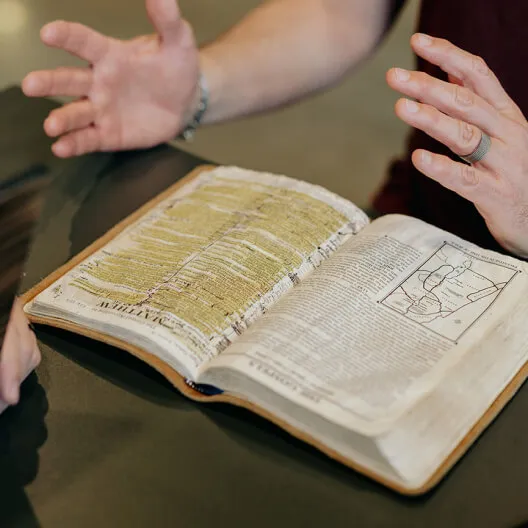


Daily Bible Devotionals


Isaiah 45
“Woe to him who quarrels with his Maker, to him who is but a potsherd among the potsherds on the ground. Does the clay say to the Potter, ‘What are you making?’ Does your work say, ‘He has no hands’?” Isaiah 45:9 (HCSB)
Isaiah 44:28 introduced us once more to Cyrus. It would be difficult to overestimate the importance of Cyrus The Great in Israel’s ancient history. The successive victories of Cyrus against the Medes, Lydians, and Babylonians, ratified in secular history sources, bring into focus the astonishing accuracy of Isaiah’s prophecies given 150 years earlier. It was the Lord who called Cyrus and gave him these victories.
It has been argued that Cyrus was a believer, a convert of sorts, but Scripture indicates that was not the case. He was a pagan who saw the favor of Israel’s God as something to add to his collection of gods. That is not to say that Cyrus was not “used by the Lord.” He was “anointed” and empowered to succeed because the Lord had willed it to accomplish His purposes.
Put bluntly, it is possible to be used of the Lord and not know Him personally, just as it is possible to know Him in a saving way but not be used…shelved because of unrepentant sin. God’s using a person is not always a clear indicator of their salvation…nor is His rebuke of believers a true indicator that He has rejected them. Salvation is by grace through faith. (Ephesians 2:8-9) God is about the business of accomplishing His purposes, and any tool among His creation is at His Disposal. See also Balaam’s donkey and Jonah’s whale.
Everything that happens, even in international affairs, is according to the Lord’s plan. There is no panic in Heaven, only planning. No emergency sessions of the Trinity because we are messing things up! When everything seems shaking all around, God’s sovereignty is of enormous encouragement. This brings us to today’s passage.
The “clay-to-the-Potter” dialogue is the arrogance of unbelief. It questions what God is doing. The Lord who made the stars in the universe can order the course of history. What is this foolishness that questions God’s ability to raise up a Cyrus some 150 years later? It is nothing less than unbelief. This type of unbelief will always be in opposition to prophecy. It questions not only the prophet but also the core reality that the prophet is simply delivering the message of God, who can call His shots 150 years in advance.
Before Israel went into exile, Isaiah was delivering God’s invitation of Grace.
The same level of faith that Israel was commanded to display is required of followers of Jesus. We must believe that Jesus died and was resurrected, a past event, a prophecy already fulfilled, and that He is coming again to gather His followers and judge the unrepentant.
Isaiah 44
“And now listen Jacob My servant, Israel whom I have chosen. This is the Word of the Lord your Maker who shaped you from birth: He will help you: do not fear; Jacob is My servant; I have chosen Jeshurun. For I will pour water on the thirsty land and streams on the dry ground; I will pour out My Spirit on your descendants and My blessing on your offspring. They will sprout among the grass like poplars by the streambeds. The one will say: I am the Lord’s; another will call himself by the name of Jacob; still another will write on his hand: The Lord’s, and name himself by the name of Israel.” Isaiah 44:1-5
Chapter 43 began with redemption and ended with a rebuke. Just a few verses earlier the Lord had promised, “I, even I, am He who blots out your transgressions, for My own sake and remembers your sins no more.” Isaiah 43:25
Isaiah develops this idea in chapter 44. The chapter can be divided into two sections: a promise of revival to God’s true “people”, (His greater Messianic Community, both Jew and Gentile, one in Messiah) and, a contrast between the true God (Who alone can promise salvation/revival) and the dumb, worthless idols of men.
Promises like these in today’s passage, the promise of His Spirit, provision and salvation, abound in Isaiah’s prophecy. We will read later, in chapters 63-64, how Isaiah speaks about the possibility of global revival, including both Israel and the nations.
Consider the Bible’s descriptions of the experience of God’s blessings. (Isaiah 12:3; 55:1; Psalm 42:1; Jeremiah 2:13; John 4:14; 7:37; Revelation 7:17) I have experienced seasons where I felt spiritually parched, and in those times, the Lord’s blessing is truly like refreshing water. The blessing Isaiah now speaks of is the revival of God’s people from their current morbid condition.
The Lord discloses in the Bible how, throughout history, He has advanced His people of faith by intermittent revivals. That is the primary purpose of the book of Judges. Perhaps, the most recent “revival” in our time would have been the “Jesus Movement” in the late 60’-70’s. Isaiah describes such times as periods of great blessing, underlined by the use of the name: Jeshurun, to describe not only Israel but also the community of “upright” believers-at-large. That term was used by Moses when he described the blessedness that redeemed people could expect from God. Deuteronomy 33:5, 26
I believe our generation is ripe for revival, and your getting intimate with God’s Word will no doubt play a part in your ability to be a contributor to that revival. One thing to note is WHO Isaiah says will be affected by the revival. First, there are those among the Nations who reject the gospel. Then, there are those of Israel who worship God’s Servant, Messiah Jesus, who say, “I am the Lord’s”. Next, there are those of Israel who reject Messiah, who identify with “Jacob”, Isaiah’s moniker for apostate Israel. Finally, there are those from among the Nations who believe in Jesus and take determined steps to be identified with the Lord, through faith in Him. So, which group most describes you, and what part is God preparing YOU to play in the forthcoming “revival”?

Isaiah 42
“Who gave Jacob for plunder, and Israel to the robbers? Was it not the Lord, He against Whom we have sinned? For they would not walk in His ways, nor were they obedient to His Law. Therefore, He has poured out His anger and the strength of His battle; it has set him on fire all around, yet he did not know; and it burned him, yet he did not take it to heart.” Isaiah 42:24-25 (NKJV)
Isaiah is prophesying about the coming judgment upon Israel and Judah for having abandoned God by turning to idols. The Jewish mindset, during the days in which Isaiah prophesied, was of the opinion that no matter how greatly His people sinned, God would not utterly destroy them because of His covenant promise. While that is correct to assume, Israel and Judah had no idea the extent His rebuke was about to take. They could not fathom how small of a remnant He would allow to remain of His people. And they could not imagine that God, Whom they called upon for deliverance, was actually the One who was fighting against them; it would be at His command that foreign armies would destroy Jerusalem, the one city they assumed would stand as “home base,” off-limits to foreign reign.
Why would a loving God do such a thing to His people? Because His grace and mercy only have value when set against the backdrop of His standard, which validates His judgment. However, do not assume the Lord has abandoned His people! His rebuke, while strong and determined, is intended to turn His people back to worshipping Him, not to destroy them utterly. If you find yourself under the rebuke of the Lord, it helps to remember that His goal is your repentance. That is His goal for Israel AND the Gentiles, and always has been.
“’Do I take any pleasure in the death of the wicked?’ This is the declaration of the Lord God. ‘Instead, don’t I take pleasure when he turns from his ways and lives?’” Ezekiel 18:23 (HCSB)
"Otherwise, I am going to send all My plagues against you,[a] your officials, and your people. Then you will know there is no one like Me in all the earth.” Exodus 9:14 (HCSB)
Consider Pharaoh’s response to God’s rebuke in contrast with King David’s. Will you harden your heart or humble yourself and be restored?
“And when Pharaoh saw that the rain, the hail, and the thunder had ceased, he sinned yet more; and he hardened his heart, he and his servants.” Exodus 9:34 (NKJV)
“When David saw that his servants were whispering, David perceived that the child was dead. Therefore David said to his servants, ‘Is the child dead?’ And they said, ‘He is dead.’ So David arose from the ground, washed and anointed himself and changed his clothes; and he went into the house of the Lord and worshiped.” 2 Samuel 12:19-20a (NKJV)
Isaiah 41
“Be silent before Me, islands! And let peoples renew their strength. Let them approach, then let them testify; let us come together for the trial. Who has stirred him up from the east? He calls righteousness to his feet. The Lord hands nations over to him, and he subdues kings. He makes them like dust with his sword, like wind-driven stubble with his bow. He pursues them going on safely, hardly touching the path with his feet. Who has performed and done this, calling the generations from the beginning? I, the Lord, am first, and with the last – I am He.” Isaiah 41:1-4 (HCSB)
In the ancient Near East, whenever a vassal failed to satisfy the obligations of a sworn treaty, the suzerain (usually the king) would take out legal proceedings against him by means of a covenant lawsuit. The legal process was conducted by means of messengers. Messengers delivered one or more warnings in the first of its two distinct phases. These were worded in such a way as to reflect non-negotiable terms of the original treaty.
The vassal would be reminded of what he had promised and would be asked to give an explanation for his offense. The vassal would be told to mend his ways. Just in case he did not take the point, the consequences of continued offense would be stated. The curses (retributions) of the covenant would have formed part of the original agreement. Such a procedure as this was an ultimatum. Unless the vassal recruited a neighbor state to help them fight the ensuing battle that would result from their breaking the treaty, wise vassals would quickly mend their ways.
Sometimes, a messenger sent to deliver this ultimatum was rejected, imprisoned, or even killed! The matter would then move on to the next and final phase. This would take the form of a declaration of war.
“Therefore, when the owner of the vineyard comes, what will he do to those farmers?’ ‘He will completely destroy those terrible men,’ they told Him, ‘And lease his vineyard to other farmers who will give him his produce at the harvest.’ Jesus said to them, ‘Have you never read in the Scriptures: The stone that the builders rejected has become the cornerstone. This came from the Lord and is wonderful in our eyes. Therefore, I tell you, the kingdom of God will be taken away from you and given to a nation producing its fruit. Whoever falls on this stone will be broken to pieces; but on whomever it falls, it will grind him to powder!’” Matthew 21:40-44 (HCSB)
When Jesus told the parable of the vineyard, seeing Himself as the last in a succession of messengers, most of whom had been stoned and killed, He had this same judicial process in mind. It is what Isaiah described, with God calling Israel and Judah to account. In Jesus’ day, Israel had rejected God’s Word (as in Isaiah’s day). They were also about to reject the Son of God.
Isaiah 41 begins in a courtroom. At the sight of a conquering king approaching, instead of turning to the Lord, the nations (Israel included) turned to their idols. When faced with difficult times, where do you turn?
Isaiah 40
“Jacob, why do you say, and Israel why do you assert: ‘My ways are hidden from the Lord and my claim is ignored by my God?’ Do you not know? Have you not heard? YHWH is the everlasting God, the Creator of the whole earth. He never grows faint or weary; there is no limit to His understanding. He gives strength to the weary and strengthens the powerless. Youths may faint and grow weary, and young men may stumble and fall, but those who trust in the Lord will renew their strength; they will soar on wings like eagles; they will run and not grow weary; they will walk and not faint.” Isaiah 40:27-31 (HCSB)
Wrong thoughts of God twist our perspective on life. Everything can get bent out of shape and do great harm to the Lord’s cause. In today’s chapter, Isaiah sought to lift our eyes toward heaven and behold God in all His glory. If things are not working out as we would like, it is precisely because life is not all about what we want. Life is about what God intends for us. Waiting on God – His ways, His thoughts, His timing – is the key to spiritual growth and maturity.
Let’s be honest. Have you ever felt that God does not care about you? Trials can make us lose sight of God’s majesty and cause us to feel sorry for ourselves. Some of the people in Isaiah’s time could not reckon God’s timing with His love. They felt that if God loved them, there should be no problems in their lives.
Coping with spiritual depression can be difficult. Almost all of Israel was in the doldrums during Isaiah’s day. The people complained, “God either does not know what we are passing through; or He does not care.” In times such as these, it is important that we recognize certain realities of God: He is Omnipotent, Omnipresent, Omniscient, and His Character never changes.
The problem with Israel’s theology was that they sought religion for what God could do for them and not the other way around. As long as we feel God exists for our pleasure, we will probably be disappointed. But the reason we exist is for God’s pleasure. If we have a proper understanding of mankind’s relationship to God, we will understand that God receives pleasure when we faithfully worship Him through difficult times, as well as easier ones.
The way God dealt with depressed believers in Isaiah’s day was to talk about eagles! It is as if He was saying, “You may feel like a bedraggled sparrow, but if you pay attention to what I’m saying, you will mount up with wings like eagles.” We must remain faithful and wait patiently upon the Lord. If rebuke is necessary, we must accept it. If trials come our way, we must endure them, waiting on God to fulfill His gracious promises.
Isaiah 39
“Then Isaiah said to Hezekiah, ‘Hear the word of the Lord of Hosts: ‘The time will certainly come when everything in your palace and all that your fathers have stored-up until this day will be carried off to Babylon; nothing will be left,’ says the Lord. ‘Some of your descendants who come from you will be taken away, and they will be eunuchs in the palace of the king of Babylon.’ Then Hezekiah said to Isaiah, ‘The word of the Lord that you have spoken is good.’ For he thought: There will be peace and security during my lifetime.” Isaiah 39:5-8 (HCSB)
Sadly, Hezekiah’s greatness is clouded by the sin of pride that developed in his closing years. Merodach-Baladan, the king of Babylon, wanted (according to the Jewish historian Josephus) aid for a rebellion against Assyria. He is identified with Mardukhabaliddina (bummer of a name), who seized the Babylonian throne in 721 B.C., was deposed by Sargon of Assyria, and then came back to rule again for a short time about 704 B.C.
He sent letters and a present to Hezekiah because he had heard about his illness. After having recovered so wonderfully, Hezekiah was congratulated by the Babylonian king. The flattery was too much for Hezekiah. He fell for it, and in a moment of incredible stupidity, he showed the foreign ruler’s envoys all the treasure in his storehouses. It was an act of folly for which Isaiah gave him a severe reprimand. There is a strong hint of boasting in verse 3, as though Hezekiah wanted to underline just how important he was that such great leaders should show him so much honor. There is only one explanation for Hezekiah’s folly: Pride had grown in his heart.
“But Hezekiah’s heart was proud, and he did not respond to the kindness shown him; therefore, the Lord’s wrath was on him and on Judah and Jerusalem.” 2 Chronicles 32:25 (NIV)
Pride is a vice that clinches so tightly to the hearts of men that if we were to strip ourselves of all faults, one by one, we should, no doubt, find it the very last and hardest thing to rip away. It would have been better, had Hezekiah died at the time the Lord appointed, than for him to live and spoil his testimony in this way. After all, Manasseh, the worst king Judah ever experienced, was born during Hezekiah’s “borrowed” time.
Hezekiah made no opportunity to witness to the Babylonian visitors. Instead, he boasted, leading to Babylon’s eventual overthrow of Judah. I believe Hezekiah’s great folly was not restricted to showing off the kingdom treasures. His great folly was actually the fact that he sought his own glory above the well-being of the Kingdom. Once the judgment was pronounced against him, he concurred that it was “good .”But in his mind, the “goodness” had less to do with justice and more with the fact that he escaped direct punishment for his sin. He harbored no remorse for his descendants.
I have met Messianic (Christian) leaders who seemed more concerned with their personal fame than protecting & equipping the next generation. It is incumbent upon us to not just do great things for God but also to prepare the next generation for greatness.
Isaiah 38
“In those days Hezekiah became terminally ill. The prophet Isaiah son of Amoz came and said to him, ‘This is what the Lord says: “Put your affairs in order, for you are about to die; you will not recover.”’ Then Hezekiah turned his face to the wall and prayed to the Lord. He said, ‘Please, Lord, remember how I have walked before You faithfully and wholeheartedly, and have done what pleases You.’ And Hezekiah wept bitterly. Then the word of the Lord came to Isaiah: ‘Go and tell Hezekiah that this is what the Lord God of your ancestor David says: I have heard your prayer; I have seen your tears. Look, I am going to add 15 years to your life.” Isaiah 38:1-6 (HCSB)
I’ve known countless people who have clung to today’s passage as an anchor verse on the effectiveness of healing prayer. From one angle, that is true, but in Hezekiah’s case, he really should have heeded the Word of the Lord, set his house in order, and passed away. After all, the message of his impending death did not come from a secular doctor; it came from the Lord’s spokesman, the prophet Isaiah. Two major negative consequences occurred as a result of Hezekiah’s healing.
1) Babylon
“At that time Merodach-baladan son of Baladan, king of Babylon, sent letters and a gift to Hezekiah since he heard that he had been sick. Hezekiah gave them a hearing and showed them his whole treasure house – the silver, the gold, the spices, and the precious oil - and his armory, and everything that was found in his treasures. There was nothing in his palace and in all his realm that Hezekiah did not show them. Then the prophet Isaiah came to King Hezekiah and asked him, ‘Where did these men come from and what did they say to you?’ Hezekiah replied, ‘They came from a distant country, from Babylon.’ Isaiah asked, ‘What have they seen in your palace?’ Hezekiah answered, ‘They have seen everything in my palace. There isn’t anything in my treasuries that I didn’t show them.’” 2 Kings 20:12-15 (HCSB)
2) Manasseh
Born after Hezekiah’s healing, Manasseh was Israel’s most evil king, vigorously reinstating idolatry. Ironically, he defied Hezekiah’s own words about legacy: “…a father will make Your faithfulness known to children.” Isaiah 38:19
“Then Hezekiah said to Isaiah, ‘The word of the Lord that you have spoken is good,’ for he thought: Why not, if there will be peace and security during my lifetime? The rest of the events of Hezekiah’s reign, along with all his might and how he made the pool and the tunnel and brought water into the city, are written in the Historical Record of Judah’s Kings. Hezekiah rested with his fathers, and his son Manasseh became king in his place.” 2 Kings 20:19-21 (HCSB)
“Manasseh was 12 years old when he became king and reigned 55 years in Jerusalem. His mother’s name was Hephzibah. He did what was evil in the Lord’s sight, imitating the detestable practices of the nations that the Lord had dispossessed before the Israelites.” 2 Kings 21:1-2 (HCSB)
Isaiah 37
“Hezekiah took the letter from the messengers, read it, then went up to the Lord’s temple and spread it out before the Lord. Then Hezekiah prayed to the Lord: Lord of Hosts, God of Israel, who is enthroned above the cherubim, You are God – You alone – of all the kingdoms of the earth. You made the heavens and the earth. Listen closely, Lord, and hear; open Your eyes, Lord, and see. Hear all the words that Sennacherib has sent to mock the living God. Lord, it is true that the kings of Assyria have devastated all these countries and their lands. They have thrown their gods into the fire, for they were not gods but made by human hands – wood and stone. So they have destroyed them. Now, Lord our God, save us from his power so that all the kingdoms of the earth may know that You are the Lord – You alone.’” Isaiah 37:14-20 (HCSB)
Sennacherib’s envoys returned from the outskirts of Jerusalem to find that the Assyrian army had left Lachish to attack the nearby city of Libna, a military fortress in the lowland between the Mediterranean and the hills of Judah. (2 Kings 19:8)
The threat from King Tirhakah forced Sennacherib to retreat, but not before firing a final “missile” threat at Hezekiah. It came in the form of a letter, probably very lengthy and taking up several leather or papyrus scrolls. Sennacherib had nothing new to say, apart from the all-important fact that initially, he had accused Hezekiah of deceiving the people of Jerusalem; now he was accusing the Lord of deceiving Hezekiah.
“Say this to Hezekiah king of Judah: Don’t let your God, whom you trust, deceive you by promising that Jerusalem won’t be handed over to the king of Assyria.” Isaiah 37:10 (HCSB)
Hezekiah’s response was to return to the Temple to engage once more in prayer to the Lord. By spreading out the letter, Hezekiah was making a gesture as if to say, “Lord, look at this!” His prayer is a model, containing both adoration and petition. Hezekiah weaves what he knows about God’s character into worship. Prayer should begin with worship, as Jesus Himself taught in the Lord’s Prayer. (Matthew 6:9-13; Luke 11:2-4)
Even when we are pressed into a corner (as many of us are today), worship should come first when we approach the Lord in prayer. I am not talking about music, which has become synonymous with “worship” in our church culture. I am speaking of approaching the Lord with the attitude that recognizes that God saves men: He hears our prayers, has the power to deliver, is present in our lives, and has a consistent character (as revealed through Scripture) that we can trust.
Isaiah’s friendship and ministry to King Hezekiah, urging prayer as the way of deliverance, won the day. God gave Judah a God-fearing leader (Isaiah) at its most crucial time, and Isaiah has also been given to us by way of the Bible. Will you heed his counsel, as did Hezekiah? Will you worshipfully approach the Lord with your requests?
Isaiah 35
“Strengthen the weak hands, steady the shaking knees! Say to the cowardly: ‘Be strong; do not fear! Here is your God; vengeance is coming. God’s retribution is coming; He will save you.’ Then the eyes of the blind will be opened, and the ears of the deaf unstopped. Then the lame will leap like a deer, and the tongue of the mute will sing for joy, for water will gush in the wilderness, and streams in the desert; the parched ground will become a pool of water, and the thirsty land springs of water. In the haunt of jackals, in their lairs, there will be grass, reeds, and papyrus.” Isaiah 35:3-7 (HCSB)
It has been said that people are like tea bags. You never know what is on the inside until you put them into hot water! I have had many “tea bag” moments in my life. Moments where the Lord, by His grace, dropped me into hot water. And I would like to report that I always steeped righteousness into those hot water pots. But I did not.
I know that the concept of the Lord willingly bringing hardship upon His faithful children seems foreign to some believers. We would rather believe He will spare us from hardship because we choose to follow Him closely. But in His wisdom, He chooses from time to time to allow us to experience difficulty. The therapeutic nature of hardship reveals to us (and to onlookers) how deep our faith really is. More often than not, through hardship, God reveals the difference between our aspirational faith and our core faith. The difference between how faithful we believe we are versus how faithful we actually are.
John the Baptist had a “tea bag” moment. He was in prison and facing execution. He began to doubt, or at the least needed reassurance, that the One whom he had declared, “The Lamb of God, Who takes away the sin of the world,” was really worth dying for.
“When John heard in prison what the Messiah was doing, he sent a message by his disciples and asked Him, ‘Are You the One who is to come, or should we expect someone else?’ Jesus replied to them, ‘Go and report to John what you hear and see: the blind see, the lame walk, those with skin diseases are healed, the deaf hear, the dead are raised, and the poor are told the good news. And if anyone is not offended because of Me, he is blessed.’” Mathew 11:2-6 (HCSB)
Interestingly, Jesus did not answer, “Hold on, John! There, I’ll dispatch a band of angels to rescue you!” He simply quoted today’s Isaiah passage, titled in my Bible “The Future Glory Of Zion.” Jesus reminded John, the “Baptizer,” of God’s promise from His Word. **As concerned as Jesus may have been with John’s reassurance, He was also concerned with John’s followers’ testimonies! Notice how He told John’s disciples, “Go and report to John what YOU hear and see.” That is a valuable lesson! In the midst of suffering, we need to be encouraged by other faithful believers. Furthermore, we can be an encouragement in the midst of our own suffering. Remember: salvation doesn’t always mean the end of earthly suffering. Someday, we will all be liberated from the bonds of earthly suffering and enter the eternal “Glory of Zion,” the New Jerusalem.
Isaiah 34
“You nations, come here and listen; you peoples, pay attention! Let all the earth hear, and all that fills it, the world and all that comes from it. The Lord is angry with all the nations – furious with all their armies. He will set them apart for destruction, giving them over to slaughter. Their slain will be thrown out, and the stench of their corpses will rise; the mountains will flow with their blood. All the heavenly bodies will dissolve. The skies will roll up like a scroll, and their stars will all wither as leaves wither on the vine, and foliage on the fig tree.” Isaiah 34:1-5 (HCSB)
Isaiah once more turns matters far removed from the events of the seventh century B.C. Chapter 33 closed with a glimpse of the new heavens and the new earth. Chapters 34-35 concentrate on the universal judgment of the wicked surrounding the “day of the Lord” and the endless joy of the redeemed, portrayed in terms of the “flowering of the desert.”
The portrayal of the “day of the Lord” focuses (initially at least) on the negative side: it is “…a day of vengeance, a year of retribution…” God is angry with the nations whom He has called before Him. He threatens their total destruction, and the language is apocalyptic.
The apostle John confirms that the Day of the Lord is upon us.
“Then I saw Him open the sixth seal. A violent earthquake occurred; the sun turned black like sackcloth made of goat hair; the entire moon became like blood; the stars of heaven fell to the earth as a fig tree drops its unripe figs when shaken by a high wind; the sky separated like a scroll being rolled up; and every mountain and island was moved from its place. Then the kings of the earth, the nobles, the military commanders, the rich, the powerful, and every slave and free person hid in caves and among the rocks of the mountains. And they said to the mountains and to the rocks, ‘Fall on us and hide us from the face of the One seated on the throne and from the wrath of the Lamb, because the great day of Their wrath has come! And who is able to stand?’” Revelation 6:12-16 (HCSB)
Israel had comfortably forgotten the “vengeance of the covenant,” the jealousy of God at work within the confines of His chosen people to punish transgression, to discipline them unto greater holiness, and to purge evil from His people.
The broad truth is that God’s saving work, the bringing of His people into a covenant of grace, is not intended to induce a spirit of moral complacency. Rather, we should enter into a spirit of determined ambition to be holy to obey God’s Word. Disobedience must expect rebuke and punishment if the disobedience hard-heartedly continues. God loves His people and will never forsake them, but He will chastise us when we fall into sinful ways. Today’s passage is a strong reminder of the predictable end of those who “receive the Lord’s Name” in vain. If He is truly our Bridegroom, shouldn’t we be faithful brides?
God keeps His Word: He is both faithful to judge and faithful to save. How would you choose Him to be faithful toward you?
Isaiah 33
“The sinners in Zion are afraid; trembling seizes the ungodly: ‘Who among us can dwell with a consuming fire? Who among us can dwell with everlasting flames?’ The one who lives righteously and speaks rightly, who refuses gain from extortion, whose hand never takes a bribe, who stops his ears from listening to murderous plots and shuts his eyes to avoid endorsing evil – he will dwell on the heights; his refuge will be the rocky fortress, his food provided, his water assured.” Isaiah 33:14-16 (HCSB)
Isaiah 33 is an “emergency psalm” of sorts. It seems to have three clear divisions: A prayer for the promised destruction of Assyria (2-9), God’s challenging answer (10-16), and the future Messianic kingdom (17-24).
The reason I chose today’s passage is because it deals directly with a very sensitive issue as it pertains to Jewish evangelism. Isaiah answers the volatile question: What happens to those Jewish people who reject Messiah Jesus? It also delineates between those (within Judaism) whom Isaiah describes as “sinners” and those who are “righteous.” And Isaiah reveals their representative consequences: blessing or everlasting flames.
You see, there are some in the “Church-at-large” who believe we should not evangelize the Jewish people because, in the apostle Paul’s words, “All Israel will be saved.” But that argument fails to consider the proper context of Paul’s statement.
“So that you will not be conceited, brothers, I do not want you to be unaware of this mystery: A partial hardening has come to Israel until the full number of the Gentiles has come in. And in this way, all Israel will be saved, as it is written: The Liberator will come from Zion; He will turn away godlessness from Jacob. And this will be My covenant with them, when I take away their sins.” Romans 11:25-27 (HCSB)
Paul had already made a distinction that “Israel,” in a Messianic saving sense, is defined as those Jews who believe Messiah Jesus by faith. Salvation is a choice and not bestowed simply because one comes from Hebrew physical descent. Both Gentiles and Jews must choose to trust Jesus in order to be saved. But Paul does not infer that all people who are Jewish (aka physical Israel) will enter into that saving relationship. That was Isaiah’s message to his all-Jewish audience. Paul simply reinforced Isaiah’s words.
“But it is not as though the word of God has failed. For not all who are descended from Israel are Israel. Neither are they all children because they are all children Abraham’s because descendants.” (Romans 9:6-7a) Salvation is by Grace through Faith. (Ephesians 2:8-9)
Since today’s chapter is also predicting the days of Messiah Jesus, it is important to point out that many Jewish people believed in/followed Jesus during His earthly ministry (He fed 5000 at one point). At the same time, many Jews rejected Him, namely Judas, Caiaphas, and the Sanhedrin. Neither Isaiah nor any other Bible writer would assume the same eternities await both groups. That reality makes our evangelical efforts even more urgent! (See also: John 7:50-53; 9:16; 10:19-21; 12:10-11, 19, 42-43)
Isaiah 27
“On that day the Lord will thresh grain from the Euphrates River as far as the Wadi of Egypt, and you Israelites will be gathered one by one. On that day a great trumpet will be blown and those lost in the land of Assyria will come, as well as those dispersed in the land of Egypt; and they will worship the Lord at Jerusalem on the holy mountain.” Isaiah 27:12-13 (HCSB)
Isaiah’s Apocalypse (Isaiah 24-26) has shown the coming judgment for the world, the downfall of God’s enemies, and of death itself. It has spoken of the safety of God’s people within its own eternal city, promising complete deliverance from His wrath and eventual bodily resurrection.
The aim of God for His people is not only their salvation from sin and its curse; it is that they might be fruitful. The passage in chapter 27 depicting a vineyard must be read in parallel with chapter 5, where we were shown the picture of Israel as having been unfruitful. The Vinedresser had come to His vineyard only to find “bad fruit.” All the attention given to the vineyard had been to no effect. The coming exile into Babylon was God’s chastisement for their backsliding. Interesting, then, the words of Jesus:
“I am the vine; you are the branches. The one who remains in Me and I in Him produces much fruit, because you can do nothing without Me.” John 15:5 (HCSB)
Jesus is the restoring agent for both Israel and the nations. He is the TRUE vine. In addition, salvation comes exclusively through Him.
“Jesus told him, ‘I am the way, the truth, and the life. No one comes to the Father except through me.’” John 14:6 (HCSB)
Today’s chapter ends with a summons to the dispersed Jewish exiles to come home from Assyria and Egypt. A great trumpet sounds, summoning their return. The words are echoed to this day in synagogue worship in the tenth of the Eighteen Benedictions, “Sound the great trumpet for our liberation; lift up the ensign to gather our exiles…” The language is picked up by Paul, who describes the ushering-in of the end:
“For the Lord Himself will descend from Heaven with a shout, with the archangel’s voice, and with the trumpet of God, and the dead in Christ [Messiah] will rise first.” 1 Thessalonians 4:16 (HCSB)
We find the same picture in Psalm 47:5: “God has ascended amid shouts of joy, the Lord amid the sounding of trumpets.” In fulfillment of His plan and purpose, God is going to spread a feast for all kinds of people, including all “Israel,” but not all Jews. (Romans 9:6-7; 11:25-26) Messiah-followers are diverse and cosmopolitan. Heaven and glory await God’s people: those who are the redeemed through Messiah Jesus. And what will our occupations be? Worship leaders, singing His praises!
“On that day sing about a desirable vineyard!” Isaiah 27:2 (HCSB)
Isaiah 32
“Indeed, a king will reign righteously, and rulers will rule justly. Each will be like a shelter from the wind, a refuge from the rain, like streams of water in a dry land and the shade of a massive rock in an arid land. Then the eyes of those who see will not be closed, and the ears of those who hear will listen. The reckless mind will gain knowledge, and the stammering tongue will speak clearly and fluently. A fool will no longer be called a noble, nor a scoundrel said to be important.” Isaiah 32:1-5 (HCSB)
No fools or scoundrels? Sounds like bad news for Washington DC! The unbeliever is a fool. The foolish enjoy the company of folly; their perception is twisted. The folly and confusion which characterized Isaiah’s day changed with the coming of a king.
Having introduced the idea of a new order in chapter 31, Isaiah now launches into a description of the righteous rule of that era’s king. As to the identity of the “king,” commentators have been divided. It seems clear enough, however, that it cannot be Hezekiah, for the king Isaiah has in mind is completely righteous. Isaiah must, therefore, be speaking about a Messianic rule: the righteous government of Messiah Jesus.
But what of this king’s subjects, described by Isaiah as “rulers”? (Which makes sense, because we will reign with Messiah. 2 Timothy 2:12) Whereas the foolish are crafty and cunning, dedicated to doing evil things, using all kinds of tricks and plots to deceive, the disciples of Messiah will be enlightened and noble. Salvation changes men’s minds and makes them wise. This is something God promised to do in Isaiah 29.
“Therefore I will again confound these people with wonder after wonder. The wisdom of their wise men will vanish, and the understanding of the perceptive will be hidden.” Isaiah 29:14 (HCSB) (See also: 1 Corinthians 1:19)
In just over a year's time, things will change drastically for Jerusalem. The description of Jerusalem’s transformation seems to transcend anything that happened in Isaiah’s time. Once again, the prophet is using the events of his day to teach greater truths. Following the judgment of Jerusalem comes the outpouring of the Spirit. Shavuot (Pentecost) naturally comes to mind. (Also see: Joel 2:28; Acts 2:17-18, 33; 10:45)
But there are even greater things here: A new order of things will be established where there is fruitfulness, peace, righteousness, quietness, security, and rest. These “attributes” are descriptive of the new earth, the home of the righteous. They are also given to believers as a deposit of sorts, distinguishing us from the World and reminding us to live in hope of that glorious day when the “New Jerusalem” will be revealed.
“But the fruit of the Spirit is love, joy, peace, patience, kindness, goodness, faith, gentleness, self control. Against such things there is no law.” Galatians 5:22-23 (HCSB)
Isaiah 31
“Woe to those who go down to Egypt for help and who rely on horses! They trust in the abundance of chariots, and in the large number of horsemen. They do not look to the Holy One of Israel and do not seek the Lord’s help. But He also is wise and will bring disaster. He does not go back on what He says; He will rise up against the house of wicked men and against the allies of evildoers. Egyptians are men, not God; their horses are flesh, not spirit. When the Lord raises His hand to strike, the helper will stumble and the one who is helped will fall; both will perish together.” Isaiah 31:1-3 (HCSB)
Isaiah’s warning to Israel was also prophesied generations prior in Psalm 20.
“May the Lord answer you in the day of trouble; may the name of the God of Jacob defend you; may He send you help from the sanctuary, and strengthen you out of Zion; may He remember all your offerings, and accept your burnt sacrifice. – Selah - May He grant you according to your heart’s desire, and fulfill all your purpose. We will rejoice in your salvation, and in the name of our God we will set up our banners! May the Lord fulfill all your petitions. Now I know that the Lord saves His anointed; He will answer him from His holy heaven with the saving strength of His right hand. Some trust in chariots, and some in horses; but we will remember the name of the Lord our God. They have bowed down and fallen; but we have risen and stand upright. Save, Lord! May the King answer us when we call.” Psalm 20:1-9 (NKJV)
100 + years later, Jeremiah was the on-the-scene reporter, testifying that everything Isaiah had prophesied was coming to pass, exactly as predicted. Still, on the verge of judgment, Israel had a choice to repent. The same could be said of America today!
“Thus says the Lord, the God of Israel, to whom you sent me to present your petition before Him: ‘If you will still remain in this land, then I will build you and not pull you down, and I will plant you and not pluck you up. For I relent concerning the disaster that I have brought upon you. Do not be afraid of the king of Babylon, of whom you are afraid; do not be afraid of him,’ says the Lord, ‘for I am with you, to save you and deliver you from his hand. And I will show you mercy, that he may have mercy on you and cause you to return to your own land.’ But if you say, ‘We will not dwell in this land,’ disobeying the voice of the Lord your God, saying, ‘No, but we will go to the land of Egypt where we shall see no war, nor hear the sound of the trumpet, nor be hungry for bread, and there we will dwell’ - Then hear now the word of the Lord, O remnant of Judah! Thus says the Lord of hosts, the God of Israel: ‘If you wholly set your faces to enter Egypt, and go to dwell there, then it shall be that the sword which you feared shall overtake you there in the land of Egypt; the famine of which you were afraid shall follow close after you there in Egypt; and there you shall die. So shall it be with all the men who set their faces to go to Egypt to dwell there. They shall die by the sword, by famine, and by pestilence. And none of them shall remain or escape from the disaster that I will bring upon them.’” Jeremiah 42:9b-17 (NKJV)
Isaiah 28
“Listen and hear my voice. Pay attention and hear my words. Does the farmer plow continually to plant seed? Does he continually turn and break up his ground? Does he not level its surface and sow dill and scatter cumin and plant wheat in rows, barley in its place and rye within its area? For his God instructs and teaches him properly. For dill is not threshed with a threshing sledge, nor is the cartwheel driven over cumin; but dill is beaten out with a rod, and cumin with a club. Grain for bread is crushed, indeed, he does not continue to thresh it forever. Because the wheel of his cart and his horses eventually damage it, He does not thresh it longer. This also comes from the Lord of armies. Who has made His counsel wonderful and His wisdom great.” Isaiah 28:23-29 (NASB)
Today’s chapter ends with a more promising note. A farmer doesn’t keep on plowing indefinitely. He sows in order to reap.
Has God been “turning your soil,” lately perhaps, mixing in a bit of “manure” to boot? God is preparing you as a farmer prepares the land to yield a bountiful crop of spiritual fruit! Spiritual discipline is what this chapter has all been about. Those who see the Father’s hand in it will profit. Yes, it involves hardship.
“Endure suffering as discipline: God is dealing with you as sons. For what son is there that a father does not discipline?” Hebrews 12:7 (HCSB)
It is also unpleasant and painful.
“No discipline seems enjoyable at the time, but painful. Later on, however, it yields the fruit of peace and righteousness to those who have been trained by it.” Hebrews 12:11 (HCSB)
God’s discipline is revealed in a variety of ways; like a farmer who plows and sows, The Lord deals differently with particular children in order to produce a harvest of grace. He may rebuke us through the reading of His Word. (2 Timothy 4:2) He may use sickness. (Romans 5:3-4) Sometimes, He even uses Satan himself. Paul’s “thorn in the flesh” was also a “messenger of Satan.” (2 Corinthians 12:7) That is the lesson of the book of Job.
To those who have eyes to see, there is a smiling face below the surface of a (seemingly) frowning God. Our lives, even when under discipline, are ordered by a God who is “wonderful in counsel” and “gives great wisdom.” God is preparing us, teaching us to faithfully endure pain and trust in Him so that we can stand firm to administer the gospel at a time when others are being crushed by the weight of this World.
Endure His training. Nobody trusts when a poorly trained, out-of-shape soldier says, “I got your back!” Nor do they heed the rhetoric of the undisciplined Christian.
“Consider it great joy, my brothers, whenever you experience various trials, knowing that the testing of your faith produces endurance. But endurance must do its complete work, so that you may be mature and complete, lacking nothing.” James 1:2-4 (HCSB)
Isaiah 30
“Therefore the Lord is waiting to show you mercy, and is rising up to show you compassion, for the Lord is a just God. All who wait patiently for Him are happy. For you people will live on Zion in Jerusalem and will never cry again. He will show favor to you at the sound of your cry; when He hears, He will answer you. The Lord will give you meager bread and water during oppression, but your Teacher will not hide Himself any longer. Your eyes will see your Teacher, and whenever you turn to the right or to the left, your ears will hear this command behind you: ‘This is the way. Walk in it.’ Then you will defile your silver-plated idols and your gold-plated images. You will throw them away like menstrual cloths, and call them filth.” Isaiah 30:18-22 (HCSB)
There is a recent UCLA survey on “spirituality on college campuses,” conducted over a number of years, polling over 1400 higher learning institutions. As it were, spirituality is on the rise on college campuses. But a sobering statistic stands out among the thick pages of data. When asked, “Do you seek spirituality to know what God requires of you?” only 13% said “Yes.” That answer tells us that most people are seeking God for what He will do for them, not what He requires of them.
Given that statistic, it makes sense that many followers of Messiah Jesus find themselves disappointed with God. We often assume that God exists to make us wealthy, successful, or popular. In short, we generally believe He exists for our happiness. The truth is that we exist for HIS pleasure, not the other way around. He is more concerned with our spiritual prosperity than our earthly wealth.
So, if we expect “good standing” with God to mean wealth and prosperity for us, we will experience mostly disappointed lives. Consider the words of today’s passage:
“He will show favor to you at the sound of your cry; when He hears, He will answer you. The Lord will give you meager bread and water during your oppression, but your Teacher will not hide Himself any longer…” Isaiah 30:19b-20a (HCSB)
Israel has turned to the Lord, crying out, and He will hear her cry. But His response was not to shower her with earthly wealth to reward her repentance. No, He gave Israel what was necessary for physical survival and spiritual wealth: Bread, water, and His guidance (His Word). It makes Jesus’ reply to Satan during His desert temptation more stirring:
“Man does not live by bread alone but on every Word that comes from the mouth of God.” Deuteronomy 8:3b, Luke 4:4 (HCSB)
Only after Israel had learned what God required of them (and proved faithful in heeding His Word) did He allow earthly blessings to return to them. So, keep heeding His Word.
“Then He will send rain for your seed that you have sown in the ground, and the food, the produce of the ground, will be rich and plentiful. On that day your cattle will graze in open pastures.” Isaiah 30:23 (HCSB)
No results found.
Join Our Mailing List
Stay current with what's happening at Groundworks Ministries.
