
Daily Bible Devotionals
written by
Pastor Steve Wiggins
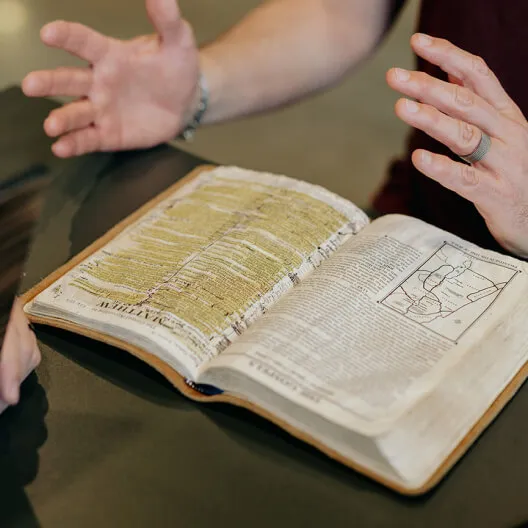


Daily Bible Devotionals


Jeremiah 50
“Call together the archers against Babylon. All you who bend the bow, encamp against it all around; let none of them escape. Repay her according to her work; according to all she has done, do to her; for she has been proud against the Lord, against the Holy One of Israel. Therefore her young men shall fall in the streets, and all her men of war shall be cut off in that day,” says the Lord. “Behold, I am against you, O most haughty one!” says the Lord God of hosts; “For your day has come, the time that I will punish you. The most proud shall stumble and fall, and no one will raise him up; I will kindle a fire in his cities, and it will devour all around him.” Jeremiah 50:29-32 (NKJV)
The Lord allowed the damage that the culture of Babylon had inflicted on the people of Israel (through seductive idolatry – aka spiritual adultery) to physically manifest itself on the Jewish people by their being conquered by the kingdom of Babylon. If Judah were to forsake God for Babylonian idols, then the Lord would withdraw His protection and allow them to live under Babylonian pagan taskmasters! While the kingdom of Babylon was destroyed thousands of years ago, its idolatrous enticements are still seducing God’s people today. Just as Babylon was judged in the Bible, so the lingering “whore” who entices mankind away from following the Lord (Mystery of Babylon) awaits judgment in the last days.
“Then one of the seven angels who had the seven bowls came and talked with me, saying to me, ‘Come, I will show you the judgment of the great harlot who sits on many waters, with whom the kings of the earth committed fornication, and the inhabitants of the earth were made drunk with the wine of her fornication.’ So he carried me away in the Spirit into the wilderness. And I saw a woman sitting on a scarlet beast which was full of names of blasphemy, having seven heads and ten horns. The woman was arrayed in purple and scarlet, and adorned with gold and precious stones and pearls, having in her hand a golden cup full of abominations and the filthiness of her fornication. And on her forehead a name was written: MYSTERY, BABYLON THE GREAT, THE MOTHER OF HARLOTS AND OF THE ABOMINATIONS OF THE EARTH. I saw the woman, drunk with the blood of the saints and with the blood of the martyrs of Jesus. And when I saw her, I marveled with great amazement.” Revelation 17:1-6 (NKJV)
But a remnant of the “Chosen” people will again choose God! (Jerimiah 50:4-5; Rev 7:4)
“Thus says the Lord of hosts: ‘The children of Israel were oppressed, along with the children of Judah; all who took them captive have held them fast; they have refused to let them go. Their Redeemer is strong; the Lord of hosts is His name. He will thoroughly plead their case, that He may give rest to the land, and disquiet the inhabitants of Babylon.’” Jeremiah 50:33-34 (NKJV)
“My little children, these things I write to you, so that you may not sin. And if anyone sins, we have an Advocate with the Father, Jesus Christ the righteous.” 1 John 2:1 (NKJV)
Jeremiah 51
“Thus the slain shall fall in the land of the Chaldeans, and those thrust through in her streets. For Israel is not forsaken, nor Judah, by his God, the Lord of hosts, though their land was filled with sin against the Holy One of Israel.” Jeremiah 51:4-5 (NKJV)
In the Divided Kingdom era of the Hebrew people, both the Northern Kingdom (aka Israel) and The Southern Kingdom (aka Judah) were conquered and sent into exile. So, had God un-chosen His “Chosen People”? By no means! The rebuke of God does not mean the rejection of God for believers, although it may seem like it at times!
Today’s chapter focuses on the judgment of the mother of all idolaters: Babylon. God is telling His people to leave Babylon because He is about to destroy her and her idolatrous, spiritually fornicating ways. He likens Babylon to a whore who entices men by getting them drunk.
“Flee from the midst of Babylon, and every one save his life! Do not be cut off in her iniquity, for this is the time for the Lord’s vengeance; He shall recompense her. Babylon was a golden cup in the Lord’s hand, that made all the earth drunk. The nations drank her wine; therefore the nations are deranged. Babylon has suddenly fallen and been destroyed. Wail for her!” Jeremiah 51:6-8a (NKJV)
Babylon is mentioned as a “golden cup in the Lord’s hand,” but that does not mean God endorsed her ways. He simply allowed those who refused to turn to Him to turn to Babylon’s idolatry. Even in this, we see God’s grace in that He allows us to pursue our sins so that we can come to the end of ourselves. Consider our nation’s present moral compromise. Perhaps, when we reach rock bottom, we will turn from our sin and receive His forgiveness through Messiah Jesus. In the light of Jeremiah’s prophecy, consider John’s words about Babylon in the Revelation:
“After this I saw another angel with great authority coming down from heaven, and the earth was illuminated by his splendor. He cried in a mighty voice: It has fallen, Babylon the Great has fallen! She has become a dwelling for demons, a haunt for every unclean spirit, a haunt for every unclean bird, and a haunt for every unclean and despicable beast. For all the nations have drunk the wine of her sexual immorality, which brings wrath. The kings of the earth have committed sexual immorality with her, and the merchants of the earth have grown wealthy from her excessive luxury. Then I heard another voice from heaven: Come out of her, My people, so that you will not share in her sins or receive any of her plagues. For her sins are piled up to heaven, and God has remembered her crimes. Pay her back the way she also paid, and double it according to her works. In the cup in which she mixed, mix a double portion for her. As much as she glorified herself and lived luxuriously, give her that much torment and grief, for she says in her heart, ‘I sit as a queen; I am not a widow, and I will never see grief.’ For this reason her plagues will come in one day—death and grief and famine. She will be burned up with fire, because the Lord God who judges her is mighty.” Revelation 18:1-8 (HCSB)
Jeremiah 52
“On the twenty-fifth day of the twelfth month of the thirty-seventh year of the exile of Judah’s King Jehoiachin, Evil-Merodach king of Babylon in the first year of his reign, pardoned King Jehoiachin of Judah and released him from the prison. He spoke kindly to him and set his throne above the thrones of the kings who were with him in Babylon. So Jehoiachin changed his prison clothes, and he dined regularly in the presence of the king of Babylon for the rest of his life. As for his allowance, a regular allowance was given to him by the king of Babylon, a portion for each day until the day of his death, for the rest of his life.” Jeremiah 52:31-34 (HCSB)
They say a story’s not a legend ‘till it ends. The last chapter of Jeremiah’s prophecy is in the form of a historical re-telling. It is a short story because its substance has already been relayed. (Jeremiah 39, 2 Kings 24:18 – 25:30) It is a sad story because it concerns the fall of Jerusalem and the tragic suffering of its rulers and people. It is an important story, as it is used here (to close the prophecies), for the very center of the predictions has been the destruction of the sacred city. Now, the fulfillment of prophecy justifies and vindicates the prophet whose stern words have been spoken. It is also significant that it ends with a gleam of comfort and hope.
In recording the capture of the city, special mention is made of the savage treatment given to the king. It’s true that Zedekiah was wicked and proved a treacherous servant of Nebuchadnezzar. However, it is difficult not to feel sorry for his suffering soul as he watches his sons slaughtered and then is blinded & carried in chains to Babylon to spend the rest of his years in torture and darkness. The destruction of the city, the burning of its famous Temple, the ruin of its palaces, and the dismantling of its wall form a sense of horror, while the deportation of the people leaves the impression of a desolated and ravished land.
The spoils carried away by the Chaldean commander included as its chief feature the precious furnishings of brass and gold and silver, which had been the very glory of the Temple. The final notes of cruelty depict the merciless execution by Nebuchadnezzar of the priests, nobles, and surviving defenders of the fallen city. Such atrocities were well within the characters of the Assyrian and Chaldean rulers. The small number of remaining captives carried away to Babylon indicates what havoc must have been wrought among the Jews by slaughter, famine, and pestilence during the long, hopeless months of the Babylonian siege. As Jeremiah predicted, only a “remnant” of the nation remained.
Yet through the remnant, the nation was to be preserved, renewed, and restored. Of this restoration, at least a dim hope can be found in the fate of Israel’s King, Jehoiachin.
After 37 years of captivity, he was brought out of prison, given royal honors, and seated at the table with the ruler of Babylon. Likewise, after years of discipline and suffering, the people of God were to be delivered, restored, and given the high privilege of becoming the nation in which the Savior of the World, Jesus, was to appear.
Lamentations 1
“My transgressions have been formed into a yoke, fastened together by His hand; they have been placed upon my neck, and the Lord has broken my strength. He has handed me over to those I cannot withstand.” Lamentations 1:14 (HCSB)
In this opening elegy, two voices are heard; the first is that of the poet (verses 1-11), and the second is that of stricken Jerusalem (verses 12-22). To arouse sympathy, Jerusalem is personified. She is represented as a widow to indicate her loneliness. The city is alone, not because she is isolated among the hills, but because her streets are silent and houses empty; the “widow” has been robbed of her children. The “princess among the provinces” is now a maidservant.
Jerusalem weeps bitter tears in the night. Her “lovers,” her former allies among the nations and their pagan gods, have proven faithless and become her enemies. Jerusalem is a sad metaphor for what happens to all who depart from God’s Word and set out on their own, seeking to establish for themselves that which only God can provide.
So precisely instructive are the lessons of “Lamentations” that every chapter has 22 lines, corresponding with the 22-letter Hebrew alphabet. Chances are, even your own Bible has the Hebrew letters above every stanza. The idea is that when Jewish children were learning to spell, as part of their curriculum, they would memorize the Book of Lamentations. Every Hebrew letter, then, became a reminder of the consequences of sin. We learn: “A” is for “Apple.” They would learn: “Alef” is for “How she sits alone, the city once crowded with people! She, who was great among the nations, has become like a widow. The princess among the provinces has become a slave.”
In today’s passage, it is with THAT knowledge that EVERY Hebrew learned to read by the primer of Lamentations so that we can better understand the gravity that Jesus’ words would have had upon the hearers of His day. They would have known the book of Lamentations by memory; thus, they were completely aware of what Jesus meant when He said:
“Come to Me, all you who labor and are heavy laden, and I will give you rest. Take My yoke upon you and learn from Me, for I am gentle and lowly in heart, and you will find rest for your souls. For My yoke is easy and My burden is light.” Matthew 11:28-30 (NKJV)
As with Israel’s need for restoration, the United States (and the entire world, for that matter) is in disrepair and in dire need to be repaired to God through Messiah Jesus. True to Chapter 5, Messiah came to establish restoration. Are you suffering under the heavy hand of God’s rebuke of your sin? Do not rebel against Him! (Hebrews 3:8-19) It didn’t work the first time, and it will never work out well, in the end, for those who depart from His instruction. Surrender your will to Him and let Him lead you to that place of rest.

Lamentations 2
Grab your Bible & experience the Groundworks Ministries Podcast as Steve Wiggins leads us through the full chapter of Lamentations 2. Click the links below to watch or listen now!
Lamentations 3
“Remember my affliction and my homelessness, the wormwood and the poison. I continually remember them and have become depressed. Yet I call this to mind, and therefore I have hope: Because of the Lord’s faithful love we do not perish, for His mercies are new every morning; great is Your faithfulness! I say: The Lord is my portion, therefore I will put my hope in Him. The Lord is good to those who wait for Him, to the person who seeks Him. It is good to wait quietly for deliverance from the Lord. It is good for a man to bear the yoke while he is still young.” Lamentations 3:19-27 (HCSB)
Lamentations 3 is the most elaborate of the lamenting elegies. It surpasses its “sisters” in spiritual value because it contains this (above) supreme expression of faith. We cannot overlook the fact that Jeremiah is personifying the nation and personifying Messiah, as he uses vivid word pictures to describe the types of sufferings that were fully realized in Jesus.
For instance, Jeremiah was led around in darkness, and the Lord seemed to have forsaken him. He describes being crushed and broken, surrounded by grief and weariness, bound with heavy chains, and thrown in a dungeon. He is one who was on a journey and blocked by “hewn stones” (an image of the Jewish leaders) and turned aside to perplexing paths. He is hunted, arrows pierce his heart, is derided by his people, and is subject to mocking songs. He feasted on bitterness and was made to drink gall. He is even denied the peace that other sufferers may come to know. These, and several other images, all foreshadow the Messiah’s suffering.
All these accounts build a passionate plea for deliverance. Here, the Lord is presented not as an enemy but a Deliverer and Friend. It is noteworthy, even from a literary point of view, that this beautiful paragraph of confident trust and spiritual instruction is the central section of the central chapter of this lament. It towers above the dark valleys of grief and despair.
In this present generation, one in which we will soon see rebuke for our personal and national sin, we must remember this beautiful promise:
“Be satisfied with what you have, for He Himself has said, ‘I will never leave you or forsake you.’ Therefore, we may boldly say: The Lord is my helper; I will not be afraid. What can man do to me?’ Hebrews 13:5b-6 (HCSB)
Finally, we have an exhortation to seek the Lord while we are young, and to learn to humbly follow Him. This is so we will not be thrown into anxiety when life’s troubles come upon us later in life. That is why it is essential to read His Word daily. When we fast-track Biblical literacy, we are fast-tracking faith! (Romans 10:17)
Lamentations 4
“Daughter of Zion, your punishment is complete; He will not lengthen your exile. But He will punish your iniquity, daughter of Edom, and will expose your sins.” Lamentations 4:22 (HCSB)
Mercy. You never know how great Mercy is until you need it. To refresh our memories, Grace is a free gift. Grace is getting something you do not deserve. Mercy is NOT getting what you deserve. Mercy is when we receive punishment (to teach us our transgressions are offensive) but not to the full extent of the law (to teach us the Judge still holds us to a degree of esteem, although we have transgressed).
Before he wrote Lamentations, Jeremiah delivered God’s message of Mercy to the exiles of Jerusalem. As they walked out of town (because of God’s judgment), Jeremiah sent a message of encouragement: You will someday be restored.
“I will restore the fortunes of Judah and of Israel and will rebuild them as in former times. I will purify them from all the wrongs they have committed against Me. This city will bear on My behalf a name of joy, praise, and glory before all the nations of the earth, who will hear of all the good I will do for them. They will tremble because of all the good and all the peace I will bring about for them.” Jeremiah 33:7-9 (HCSB)
While in exile, the remnant of Jerusalem must have tended to focus on the harshness of God’s rebuke. God had Daniel remind them WHY they were in exile and how it was avoidable. Yet, they refused to accept His terms of reparation.
“Just as it is written in the law of Moses, all this disaster has come on us, yet we have not appeased the Lord our God by turning from our iniquities and paying attention to Your truth.” Daniel 9:13 (HCSB)
It is not difficult for followers of Jesus in our generation to look at the iniquities of our increasingly Godless nation (even Godlessness within the walls of our places of worship) and wonder if the Lord is preparing a reckoning for us soon. And what if He is? Many years before the destruction of Jerusalem, there was a king, Josiah, who was bent on restoring the Temple in Jerusalem. During the Temple renovations, the priest found the Book of the Law. When they read God’s Word to the king, he tore his robe and sought a prophet to seek the Lord on behalf of the people.
“Go. Ask YHWH for me and for those remaining in Israel and Judah, concerning the words of the book that was found. For great is the Lord’s wrath that is poured out on us because our fathers have not kept the word of the Lord in order to do everything written in this book.” 2 Chronicles 34:21 (HCSB)
In response to Josiah’s repentance, which included him ordering the people of his kingdom to repent, the Lord told the prophet to inform Josiah He would turn back his imminent judgment. Lord, let ours be a “Josiah Generation”! We need revival!
Lamentations 5
“Our fathers sinned and are no more, but we bear their iniquities. Servants rule over us; there is none to deliver us from their hand. We get our bread at the risk of our lives, because of the sword in the wilderness. Our skin is hot as an oven, because of the fever of famine. They ravished the women in Zion, the maidens in the cities of Judah. Princes were hung up by their hands, and elders were not respected. Young men ground at the millstones; boys staggered under loads of wood. The elders have ceased gathering at the gate, and the young men from their music. The joy of our heart has ceased; our dance has turned into mourning. The crown has fallen from our head. Woe to us, for we have sinned! Because of this our heart is faint; because of these things our eyes grow dim; because of Mount Zion which is desolate, with foxes walking about on it.” Lamentations 5:7-18 (NKJV)
The Biblical book we know as “Lamentations” is not titled as such in the Hebrew Bible. In Hebrew, it’s called “Eicha” meaning “How?” This title makes more sense than Lamentations because simply judging Jeremiah’s book as a lamentation sells short God’s intended message of hope to the dispersed Jews, staggering in chains as they are being carried off into captivity. This is not a time to simply be emotional. It is time for God’s “Chosen” to seriously contemplate their circumstances and learn! The Jewish people were to ask themselves (for 70 years – Jeremiah 29), “HOW did this happen?” “HOW can we keep this from getting worse?” Most importantly, they were to ask, “HOW can we be forgiven by God, possibly be repaired to a right relationship with Him, and return to the Promised Land?”
“You, O Lord, remain forever; your throne from generation to generation. Why do You forget us forever, and forsake us for so long a time? Turn us back to You, O Lord, and we will be restored; renew our days as of old, unless You have utterly rejected us, and are very angry with us!” Lamentations 5:19-22 (NKJV)
Jeremiah is speaking on behalf of the people, not necessarily his personal opinion…a national confession, as it were. Chapter 5 begins with some blame-shifting. i.e., “Our fathers sinned, and we are suffering because of their poor choices…” While that may be true to some extent, eventually, they get around to their personal choices, “Woe to us, for we have sinned!” And that confession, the recognition that we have fallen short of God’s articulated standard (His Word), is always the trigger that leads to restoration.
Every year, religious Jews read the book of Eicha aloud. It is read softly at first. The volume of the reader’s voice builds to the climax, which is sung aloud by the entire congregation: “Turn us to you, O Lord, and we will return. Renew our days as of old.” But God has already turned, not only to the Jewish community but also to any Gentile who seeks a right relationship with Him. His desire to restore comes through Messiah, Jesus our Lord & Savior! The ball is not on God’s side of the tennis court but on OURS! We must choose Jesus because He has already chosen to redeem us!
“Therefore say to them, ‘Thus says the Lord of hosts: “Return to Me,” says the Lord of hosts, “and I will return to you,” says the Lord of hosts.’” Zechariah 1:3 (HCSB9)
Ezekiel 1
“In the thirteenth year, in the fourth month, on the fifth day of the month, while I was among the exiles by the Chebar Canal, the heavens opened up and I saw visions of God. On the fifth day of the month – it was the year of king Jehoiachin’s exile – the Word of the Lord came directly to Ezekiel the priest, son of Buzi, in the land of the Chaldeans by the Chebar Canal. And the Lord’s hand was on him there.” Ezekiel 1:1-3 (HCSB)
Christianity is a religion of the Word. That is why I cannot trust any congregation or religious institution that does not esteem God’s Word and vigorously exhort its congregants to read it. That is why these Bible devotionals exist. In the Bible, God has revealed all that He requires of us to know concerning Himself, His plans, and purposes. Hundreds of thousands of words, written over 1,500 years by forty-some authors, underline that words are essential to our faith.
But in literature, a stubborn truth persists in making itself known: most people remember pictures better than words. Remember the old saying, “A picture paints a thousand words”? It is true. That is why the Bible’s writers, guided by the Holy Spirit, seasoned their words with vivid word pictures to help communicate something of the thoughts of God to the feeble minds of men. Ezekiel is full of word pictures!
G. K. Chesterton once wrote in a children’s picture book:
Stand up, and keep your childishness,
Read all the pedant’s creeds and strictures
But don’t believe in anything
That can’t be told in colored pictures!
The opening verse of Ezekiel’s book relates how, along with the text of Revelation, this prophecy is packed with intricate word sketches: “I saw visions of God.” Colored pictures abound throughout Ezekiel’s prophecy, but as we will soon see, the images are not Ezekiel’s but God’s. More importantly, these God-given pictures need interpreting. It is a message and not a picture that Ezekiel will be called to deliver to God’s people.
Most followers of Jesus have never read Ezekiel, figuring experts should explain such Scriptures. I say it’s time to grow up, do some thinking, and ask the Lord what He is trying to communicate to you personally. Understand that God gave His Word to share with individuals, not just scholars. It is you with whom He wants an ongoing personal relationship, not an exclusive club of PhDs.
A word of caution, though: Pictures, without correct Biblical interpretation, are dangerous vehicles for truth. People are prone to interpret them however they want. We must remember that the book of Ezekiel is essentially Messianic. While Ezekiel begins with words of unremitting judgments, he ends with restoration and blessing, a message America could use today!
Ezekiel 2
"The children are obstinate and hard-hearted. I am sending you to them and you must say to them: 'This is what the Lord God says'. Whether they listen or refuse to listen – for they are a rebellious house – they will know that a prophet has been among them. But you, son of man, do not be afraid of them or their words, though briars and thorns are beside you and you live among scorpions. Don't be afraid of their words or be discouraged by the look on their faces, for they are a rebellious house. But speak My words to them whether they listen or refuse to listen, for they are rebellious." Ezekiel 2:4-7 (HCSB)
There is a trend spreading through the Church these days where there is a high concern that we do not offend non-believers with the "potentially offensive" aspects of the Gospel. The goal of such a congregation would be to stress only the positive aspects of salvation (love, acceptance, forgiveness), hence making Jesus more "attractive."
"Potentially offensive" aspects of the Gospel would include mankind's sinful hopelessness in our natural state, the exclusivity of salvation through Jesus alone, or the absolute authority of Scripture. And it would extend into social items like sexual sin and abortion. The articulated reason many professing believers stay away from such topics is that they do not want to offend people and thus hinder non-believers from entering into a saving relationship with Jesus. The lingering unasked question in such circles is: When we don't share the whole truth, are people actually entering into a saving relationship with Jesus, or are they simply choosing a convenient Jesus-themed option?
Ezekiel was commanded to share the whole truth and nothing but the truth and not worry about his audience's response. We would do well to heed God's directive to Ezekiel because God's character is unchanging; He might as well be talking directly to us. In that, we can hang our faith on the old saying: If we humiliate God's Word for fear of offending our fellow man, we have offended God. Put simply: Be more concerned with your responsibility to God than man's repose to you.
We are not judged by men's response to the Gospel, only by our faithfulness to preach it. To most people, Jesus is a "Rock of offense" (1 Peter 2:8, Romans 9:33), but He is also the Rock of salvation for many others…us included. You never know who will receive the Gospel or how much they will cling to it. We only know that we are commanded to share it. We should also remember that prophets were not popular men. Not only did they have an unpopular message, but they also had the added charge of speaking primarily to the religious establishment! Still, Paul placed "prophecy" as the most precious gift, one that we can and should seek out.
"Pursue love and desire spiritual gifts, and above all that you may prophesy." 1 Corinthians 14:1 (HCSB)
As you read the Bible, pray that God will reveal His Word and give you the boldness to share it!
Ezekiel 3
"Then I came to the captives at Tel Abib, who dwelt by the River Chebar; and I sat where they sat, and remained there astonished among them seven days. Now it came to pass at the end of seven days that the word of the Lord came to me, saying, 'Son of man, I have made you a watchman for the house of Israel; therefore hear a word from My mouth, and give them warning from Me: When I say to the wicked, "You shall surely die," and you give him no warning, nor speak to warn the wicked from his wicked way, to save his life, that same wicked man shall die in his iniquity; but his blood I will require at your hand. Yet, if you warn the wicked, and he does not turn from his wickedness, nor from his wicked way, he shall die in his iniquity; but you have delivered your soul.'" Ezekiel 3:15-19 (NKJV)
They say everyone wants to be their own boss until they open their own small business! The same seems to be true of followers of God. We want to obey Him until He tells us to do something that makes us feel uncomfortable. Ezekiel knew what that felt like. In response to God's call on his life, Ezekiel nursed his anger for seven days.
And what was God's call on Ezekiel's life? To be the channel through which God's Word comes to a rebellious people. The expression, "the word of the Lord came to me," occurs fifty times in the book of Ezekiel. By this, we know that it is important to God that people walk with Him personally through His Word. As a matter of fact, Jesus was the personification of the Word of the Lord. (John 1) In essence, having a saving relationship with Jesus is a saving relationship with the Word-made flesh.
Why so few professing followers of Jesus read the Bible is beyond me! If God's Word is so important, perhaps the question for our generation should be, "How intently do we seek the Word of the Lord?"
There comes a time when we must stop thinking about how we feel and get on with doing what God wants us to do. God wanted Ezekiel to become a watchman. The duties of a watchman included standing on the city's ramparts, watching for the coming of invaders, and quickly blowing a trumpet to warn the entire city of the onset of danger. Ezekiel's commission contained a sign of God's continued favor for His covenant people. No matter how great their sin, He would not abandon them entirely. Even in Babylonian exile, God gave Israel a "town crier" to warn them of dangers and summon them to action.
As "watchman," Ezekiel's task lay in two directions: to the "wicked" and the "righteous." Under the ministry of the prophets, the people were called to true repentance and to return to God. The call to repentance focused on God's covenant with them. But the deeper message of Ezekiel's calling was not simply to return people to the covenant of God but to return them to the God of the covenant.
These daily devotionals exist primarily to return believers to an ongoing personal relationship with God through His Word. The hope is that people would discover what it means to really KNOW Him and that they would share Him with others.
Ezekiel 5
“And you, son of man, take a sharp sword, take it as a barber’s razor, and pass it over your head and your beard; then take scales to weigh and divide the hair. You shall burn with fire one-third in the midst of the city when the days of the siege are finished; then you shall take one-third and strike around it with the sword, and one-third you shall scatter in the wind: I will draw out a sword after them. You shall also take a small number of them and bind them in the edge of your garment. Then take some of them again and throw them into the midst of the fire, and burn them in the fire. From there, a fire will go out into all the houses of Israel. Thus says the Lord God: ‘This is Jerusalem; I have set her in the midst of the nations and the countries all around her. She has rebelled against My judgments by doing wickedness more than the nations, and against My statutes more than the countries that are all around her; for they have refused My judgments, and they have not walked in My statutes.’” Ezekiel 5:1-6 (HCSB)
Those of us who get weary of what God asks us to do should remember what He asked the prophets to do in His name. Then, we should consider closely the words of Paul:
“Pursue love, and desire spiritual gifts, but especially that you may prophesy.” 1 Corinthians 14:1 (NKJV)
To imagine doing Ezekiel’s job for even a few days is difficult, but Ezekiel’s faithfulness shines in his willingness to do the same task every day for over a year! We might be called upon to perform many tasks that may be regarded as humdrum and others that might attract ridicule from an unbelieving world. But God calls us to be faithful, even if that means becoming fools on behalf of the Gospel.
“We are fools for Christ’s sake, but you are wise in Christ! We are weak, but you are strong! You are distinguished, but we are dishonored!” 1 Corinthians 4:10 (NKJV)
God hates sin. And how had His people sinned? They turned their backs on God and His covenant – a covenant in which the warnings that those who disobeyed it would incur its curses. (Deuteronomy 27, 28) Those who serve other gods are guilty of violating the purpose for which they were created. At the time of today’s chapter, Jerusalem’s destruction was only five years away, and it was the direct result of the people’s sin. In light of that harsh truth, we can appreciate God’s love for us and Jesus’ atoning sacrifice on our behalf.
“But God demonstrates His own love for us in this: While we were still sinners, Christ died for us.” Romans 5:8 (NIV)
As sure as the destruction of Jerusalem was prophesied and fulfilled with complete accuracy, so too will the prophecies of the Day of the Lord in the Book of Revelation come to pass. Will you choose to be a rebel or participate in the Remnant?
Ezekiel 6
“The slain will fall among you, and you will know that I am YHWH. Yet I will leave a remnant when you are scattered among the nations, for throughout the countries there will be some of you who will escape the sword. Then your survivors will remember Me among the nations where they are taken captive, how I was crushed by their promiscuous hearts that turned away from Me and by their eyes that lusted after their idols. They will loathe themselves because of the evil things they did, their detestable practices of every kind. And they will know that I am the Lord; I did not threaten to bring this disaster on them without a reason.” Ezekiel 6:7-10 (HCSB)
In recent years, there has been a movement among parenting circles not to spank children. I say “recent years” because when I was growing up, I remember getting spanked all the time, in public, whenever necessary. I remember people patting my parents on the back and applauding them for disciplining my siblings and me. But, if a parent were to spank a child in public these days, there is a high probability that someone would call the police, and the child would be taken into protective custody. An investigation would be conducted on whether they were fit to raise children.
I am not advocating abusing children. It’s just that there are times when harsh discipline is necessary for the healthy long-term development of children so they transition into law-abiding adults. If you do not believe in the potential necessity of harsh discipline (with the ultimate goodwill of the one undergoing harsh discipline in mind), you will not understand what God is doing to Israel. And you will not understand how a massive reckoning is in store for our generation. Why would God allow Israel and Judah to be defeated and driven from their land? Because they had abandoned His Word. And not just the average Jew. From the pulpit, the whole community was corrupted as God’s Word had been compromised.
“For from the least to the greatest of them, everyone is making profit dishonestly. From prophet to priest, everyone deals falsely. They have treated My people’s brokenness superficially, claiming, ‘Peace, peace,’ when there is no peace.” Jeremiah 6:13-14 (HCSB)
The message of the false prophets was simple: God is only a God of GRACE and not of JUDGMENT. “Peace, peace!” had replaced God’s standard of personal holiness and His hatred of sin. They preached a false hope, assuming that God is a pushover Who is not concerned with the faithfulness of His people. Paul warned the early Messianic community about a coming day that would be just like the days of the Babylonian destruction of Jerusalem. And we see that day quickly approaching!
“About the times and the seasons: Brothers, you do not need anything to be written to you. For you yourselves know very well that the Day of the Lord will come just like a thief in the night. When they say, ‘Peace and security,’ then sudden destruction comes on them, like labor pains come on a pregnant woman, and they will not escape.” 1 Thessalonians 5:1-3 (HCSB)
Ezekiel 7
“Those who survive will escape and be on the mountains Like doves of the valleys, all of them mourning, Each for his iniquity. Every hand will be feeble, and every knee will be as weak as water. They will also be girded with sackcloth; Horror will cover them; Shame will be on every face, Baldness on all their heads. ‘They will throw their silver into the streets, and their gold will be like refuse; Their silver and their gold will not be able to deliver them in the day of the wrath of the Lord; They will not satisfy their souls, Nor fill their stomachs, Because it became their stumbling block of iniquity.” Ezekiel 7:16-19 (NKJV)
Chapters 6 and 7 have focused principally on the reality and nature of God’s wrath. God is angry with Israel because of their sin, particularly their idolatry. There can be no truce between God and sin. When He sees lawlessness and Godlessness, He must react with holy anger. It is His very nature to honor holiness and punish sin. Were God to be without anger toward sin, the World would have no meaning.
But all is not doomed in these chapters. God had an unavoidable purpose, which nothing can destroy – not even the unfaithfulness of Israel! What emerges from today’s chapter of judgment is a theology of Grace…and we must not lose sight of it.
A remnant will be saved despite their spiritual adultery. So, what explains that God perseveres with the constant, unrelenting grumblers of Moses’ day or the thankless apostate people of the seventh and eighth century BC...or us for that matter? It can only be His promise of Grace! As I often say, two things confound a fool: How slow God is to judge sin and how quickly He shows up. Even up to the siege of Jerusalem, the people simply would not believe God would allow His people to fall.
How could this be so? Because the people had abandoned God’s Word and followed after idols. Sure, the Temple was still standing, and many of the forms of worship seemed to follow the methods prescribed by Moses, but they had abandoned their God. Whenever we depart from God’s Word, even the slightest, Satan gets his foot into the doorway of your theology. To not trust in God is only to trust in Satan. Step away from God’s Word, and even if you follow a God-themed religion, you have departed from the real thing.
We are wrong if we simply see the God of the Tanakh (Old Testament) as a God of judgment. His judgment is swift and decisive, but only after His gracious patience, kindness, and longsuffering. Even when every Israelite and Judean was worthy of destruction, God allowed a remnant to survive for the sake of His name and His merciful promise.
Though these chapters are tough and unrelenting, the message of Grace shines in the remnant. It is a remnant that God, and God alone, rescues. This is not just the story that Ezekiel tells; it is the gospel itself that threads its way from Genesis to Revelation.
Ezekiel 8
“He asked me, ‘Human being, have you seen this? Does the house of Judah consider it a casual matter that they commit the disgusting practices they are committing here, thus filling the land with violence, provoking Me still more? Look! They are even putting the branch to their nose! Therefore, I will act in fury, My eye will not spare; I will have no pity. Even if they cry loudly right in My ears, I will not listen to them.’” Ezekiel 8:17-18 (CJB)
Show me a man who sees his wife in the arms of another man, and he doesn’t get jealous, and I’ll show you a man who doesn’t love his wife. God has found His “wife,” the Jewish people, in the arms of foreign gods. And He is extremely jealous!
God asks Ezekiel, “Does the house of Judah consider it a casual matter…?” With God, there is no such thing as “casual sex,” so to speak. But to many in Israel, it seemed trivial to go after foreign gods—no big deal.
In our generation, the idea of Biblical idols/deities seems strange. But what if we substitute ancient idols with sports mascots, a flag, or an automobile insignia? On their own, these things may mean nothing. But, collectively, they represent a set of beliefs about life itself. Yes, we also ascribe power to inanimate objects, which belong solely to God. We are not far removed from Ezekiel’s vision.
Consider Darwinian evolution and how it is worshipped in most classrooms as the origin of all that exists; it is, in essence, worship of nature’s powers. “Evolution” differs very little from what the women wailed about beside the north gate of the temple in Jerusalem. Have you checked your horoscope lately? Astrology is nothing short of worship of the (supposed) powers of the stars. And, of course, secular humanism is the worship of the accomplishments of contemporary man.
Whatever the idol, God finds it “detestable.” Idols are a stench in His nose. Consequently, the Lord promises swift punishment. Though God’s people may cry out in prayer under their penalty, God declares that He will not hear them:
“Therefore, I will act in fury, My eye will not spare; I will have no pity. Even if they cry out loudly right in My ears, I will not listen to them.” Ezekiel 8:18 (CJB)
God has been provoked to anger; His jealousy aroused. God is compassionate and gracious, slow to anger, abounding in love and faithfulness. Yet, He does not leave the guilty unpunished. (Exodus 34:6-7) God’s anger is not a fit of irrational temper, and His judgment is not ruthless and mechanical fate. Nevertheless, His anger & judgment are real, and to prove it, there comes the point where He says, “Enough!”
There will come a day when God’s patience will run out with this world. The sad fact is that while salvation comes exclusively through Jesus and is offered to anyone who would accept it, many will refuse to repent and receive it. Humble yourself in the sight of the Lord, that He might lift you up and spare you from that terrible day.
Ezekiel 9
“So it was, that while they were killing them, I was left alone; and I fell on my face and cried out, and said, ‘Ah, Lord God! Will You destroy all the remnant of Israel in pouring out Your fury on Jerusalem?’ Then He said to me, ‘The iniquity of the house of Israel and Judah is exceedingly great, and the land is full of bloodshed, and the city full of perversity; for they say, ‘The Lord has forsaken the land, and the Lord does not see!’ And as for Me also, My eye will neither spare, nor will I have pity, but I will recompense their deeds on their own head.’ Just then, the man clothed with linen, who had the inkhorn at his side, reported back and said, ‘I have done as You commanded me.’” Ezekiel 9:8-11 (NKJV)
When a newspaper wrongly published in advance an obituary of Mark Twain, he wrote in the paper the next day, “News of my death had been greatly exaggerated.” In contrast, Judah’s obituary was no exaggeration. The fall of Israel in the 8th century B.C. and that of Judah in the sixth century B.C. are foretastes of the coming of another day, the Day of the Lord. John saw this day and warned of it.
“And if anyone’s name was not found written in the book of life, he was thrown into the lake of fire.” Revelation 20:15 (NASB)
Ezekiel has been taken from the banks of the Kebar River in Babylon to the Temple in Jerusalem. There, he showed how far the Israelites had fallen from their true faith. Their worship had become thoroughly idolatrous. God’s patience had run out. Executioners had done their work. First to fall were the elders and then the city itself. The destroyers showed no pity. The Day of Judgment had arrived…and what a day it was. Ezekiel prophesied the death of Jerusalem. This had been Judah’s obituary – in advance!
Every follower of Jesus should have the burden of lost souls that Ezekiel had. The certainty of judgment should make us all fall on our knees and plead that souls be gathered into God’s Kingdom. Ezekiel laid hold, not of God’s reluctance, but His willingness and promise to save.
The return of the seventh angel, having accomplished what he had been asked to perform, indicates that the wrath is tempered with mercy. It is a further incentive for us to pray, knowing that, unlike the prayers of the unbeliever, God hears the prayers of His children.
“Therefore I also will act in fury. My eye will not spare nor will I have pity; and though they cry in My ears with a loud voice, I will not hear them.” Ezekiel 8:18 (NKJV)
By “children,” of course, the Bible talks of those who follow the Lord, as He requires, through faith in the Messiah and obedience to His Word.
“Jesus answered, ‘If anyone loves Me, he will keep My word. My Father will love him, and We will come to him and make Our home with him.’” John 14:23 (HCSB)
Ezekiel 10
“Then the glory of the Lord departed from the threshold of the temple and stood over the cherubim. And the cherubim lifted their wings and mounted up from the earth in my sight. When they went out, the wheels were beside them; and they stood at the door of the east gate of the Lord’s house, and the glory of the God of Israel was above them.” Ezekiel 10:18-19 (NKJV)
At one time, I lived in a neighborhood where the homes were built in the 1950s, so I know that termites eventually make their way into every residence. One morning, on my way to a coffeehouse where I studied my Bible, I noticed a house in my neighborhood had been “tented” by an exterminating company. When termites are discovered, the worst-case scenario is that the owners must evacuate the structure for a weekend while exterminators cover the home with a tent and fill the house with potent gaseous pesticides. After the smoke clears (literally), the occupants may return home.
This is a good picture of what today’s chapter is communicating. Because of the nagging destructive presence of sin in His house, God is leaving home for a God-sized weekend while His “exterminators” get to work. What needs to be grasped is that this is worse than any of God’s judgments thus far. The presence of a God who judges, however terrible His rebuke, is indeed preferable to the absence of God and His mercy!!
God’s presence is His most treasured gift. It is at the heart of His promises, i.e., He “covenants” to His people. “You are with me,” David says in Psalm 23:4, and we get the sense that it was the truth that David cherished most. Other Bible writers echoed that thought: God is with us (Matthew 28:20), around us (Psalm 34:7; 139:5), in us (John 14:7), in the midst of us (Psalm 46:5), underneath us (Deuteronomy 33:27), near us (Psalm 148:14) and before us (John 10:4).
Most importantly, He promises never to leave or forsake His faithful children:
“Keep your lives free from the love of money and be content with what you have, because God has said, ‘Never will I leave you; never will I forsake you.’” Hebrews 13:5 (NIV)
In essence, because God is everywhere, He can never really leave. Even so, some aspects of God’s presence may well be withdrawn, even from God’s people. He may remove all perception of visibility so that we may not feel it even though He is present. He may decide to withdraw His help – as Samson discovered with Delilah. But what happens here in Ezekiel 10 is of a different order. Here, God is withdrawing from His “Temple,” the place where the people went for comfort.
Today’s chapter gives us better insight as to the seriousness of God’s warnings in Revelation 3:12-17, where God threatens to fight against the Pergamum church because of their moral and spiritual deviances, and in Revelation 3:14-22, where He threatens to “spit” the Laodicean church out of His mouth. Not all who say, “Lord! Lord!” follow Him as He requires regarding salvation. (Matthew 7:21) God clearly distinguishes between His true Church and the “synagogues of Satan” (Revelation 2:9; 3:9). In such cases, where the congregation ceases to be “His” in their practices, Ichabod, God departs.
Ezekiel 11
Grab your Bible & experience the Groundworks Ministries Podcast as Steve Wiggins leads us through the full chapter of Ezekiel 11. Click the links below to watch or listen now!
Ezekiel 12
“Again the word of the Lord came to me, saying, ‘Son of man, look, the house of Israel is saying, “The vision that he sees is for many days from now, and he prophesies of times far off.” Therefore say to them, ‘Thus says the Lord God: “None of My words will be postponed anymore, but the word which I speak will be done,” says the Lord God.’” Ezekiel 12:26-28 (NKJV)
Warnings about the future often go unheeded. At least, that’s what happens when I promise to discipline my kids if they don’t clean their rooms! For many years, we have become familiar with forecasts of doom for planet Earth unless mankind curbs its wastefulness. Al Gore once considered himself the World’s prophetic spokesman concerning global warming. In response to his message, millions of Americans decided to go “green,” trying to do their part to try and stave off a fiery climate-driven apocalypse. Yet, notice how many people would rather go “green” than humble themselves to receive salvation and escape the coming Day of the Lord.
Isaiah cried out, “Who has believed our message?” (Isaiah 53:1). Things were no different in Ezekiel’s day.
In the words of Charles Spurgeon, “Men display great ingenuity in making excuses for rejecting the message of God’s love. They display marvelous skill, not in seeking salvation, but in fashioning reasons for refusing it; they are dexterous in avoiding grace and in securing their own ruin. They hold up first the sword and then the shield to ward off the gracious arrows of the Gospel of Jesus Christ, which are only meant to slay the deadly sins which lurk in their bosoms.” This was precisely Ezekiel’s experience.
One section of Ezekiel’s culture derided his message, while the other postponed acting on it urgently, passing its curses on to another generation. Perhaps the biggest lie of the enemy is not that there is no God or Heaven but that there is no urgency for people to choose to follow Jesus now. In short, the Devil’s biggest lie is that men have more time to determine whether they will follow God’s Word. This was the message of Jerusalem’s false prophets in today’s passage, those men who claimed to speak on God’s behalf. They said, “Ezekiel’s words are true, but not for our generation. The destruction he prophesies is far off.”
The same lie is alive and well in our culture. Sadly, similar destruction is awaiting those who refuse to trust in the Messiah Jesus. Some people reject the Gospel as foolishness, while others intend to follow Jesus at a more convenient time. I get it. I grew up around the Church and heard people saying, “Jesus is coming!” And I would answer, “When is He coming? Probably not today.” But, by God’s grace, I heard the gospel one night and felt my heart respond, “I believe!” And I have committed my life to follow Him and share the Gospel, repeating Ezekiel’s message: ‘Repent! For the Day of the Lord is coming…”
Ezekiel 13
“The Word of the Lord came to me: ‘Son of man, prophesy against the prophets of Israel who are prophesying. Say to those who prophesy out of their own imagination: Hear the Word of the Lord! This is what the Lord God says: Woe to the foolish prophets who follow their own spirit and have seen nothing. Your prophets, Israel, are like jackals among ruins. You did not go up to the gaps or restore the wall around the house of Israel so that it might stand in battle on the day of the Lord. They see false visions and speak lying divinations. They claim, ‘This is the Lord’s declaration,’ when the Lord did not send them, yet they wait for the fulfillment of their message.’” Ezekiel 13:1-6 (HCSB)
I have met my fair share of know-it-alls in my life, but I have met very few folks who actually know it all! Perhaps the worst kind of know-it-all is the person who claims to be an expert on the Bible and speaks on the authority of God yet puts forth (as truth) things the Bible clearly opposes. That is what the Bible calls a “false prophet.”
Before we dig deeper into today’s passage of Scripture, it is important to understand what Biblical prophecy is in our generation. The apostle Paul said we should desire prophecy above all spiritual gifts.
“Pursue love and desire spiritual gifts, and above all that you may prophesy.” 1 Corinthians 14:1 (HCSB)
So, what is this prophecy Paul is saying we should pursue? First, it does not predict new future Biblical events, per se. It is also not the process of writing new books of the Bible. Modern-day prophecy for believers is simply the Spirit-enabled ability to read and understand God’s Word. Upon salvation, every new follower of Jesus is given the gift of the Holy Spirit. The ministry of the Holy Spirit is to reveal the truth of God’s Word. Paul exhorted the Messianic community in Corinth to seek God’s revelation through His Word. This is precisely what Spirit-filled believers do when they read God’s Word, and He allows them to understand it, contextualize it within the times in which we live, apply it to our lives, and share that revelation with others.
So, what is a false prophet? A false prophet is anyone who, apart from the Spirit’s revelation of God’s perfect Word, claims to speak on behalf of God. What is so dangerous about that? It gets well-meaning Believers to hope in things God never promised!
“Delayed hope makes the heart sick, but fulfilled desire is a tree of life.” Proverbs 13:12 (HCSB)
The danger of false hope is that we genuinely believe the Lord has spoken through the (unbeknownst to us) false prophet. When the prophecy is not fulfilled, we blame God! Our trust in Him is strained. That is why WE must read the Word for ourselves, as the Holy Spirit, to reveal its truth and live according to its revelation.
Ezekiel 14
“For thus says the Lord God: “How much more it shall be when I send My four severe judgments on Jerusalem—the sword and famine and wild beasts and pestilence—to cut off man and beast from it? Yet behold, there shall be left in it a remnant who will be brought out, both sons and daughters; surely they will come out to you, and you will see their ways and their doings. Then you will be comforted concerning the disaster that I have brought upon Jerusalem, all that I have brought upon it. And they will comfort you, when you see their ways and their doings; and you shall know that I have done nothing without cause that I have done in it,” says the Lord God.” Ezekiel 14:21-23 (NKJV)
Once again, Ezekiel receives a visit from some of the exiled elders in Babylon. We might assume that these elders would be in better shape than their counterparts in war-torn Jerusalem, but that would be a false assumption. They, too, worshipped their idols, even though it was in secret, “in their hearts.” No doubt, living in Babylon brought its own sources of temptation to idolatry. One thing is sure: Idolatry cannot be hidden from God. He sees into our hearts and reads us like the proverbial “open book.”
Idolatry is a covenant violation, and as such, it is cursed. Idolaters are guilty of separating themselves from God, the opposite of what it meant to be “covenanted.” Since the idolaters had cut themselves off from God (all the while attempting to have the “best of both worlds” by hiding their idolatry), God cut his covenant with them. He literally released them from the covenant to fend for themselves, now with God’s face against them.
What if a true prophet is enticed into accepting a bribe that the idolater offers? He, too, is cut off. The lure of money could entice even true prophets. Many Christian workers’ usefulness has been curtailed by the love of the “idol’s bribe.” No wonder Paul addressed Timothy:
“For the love of money is the root of all kinds of evil. Some people, eager for money, have wandered from the faith and pierced themselves with many griefs.” 1 Timothy 6:10 (NIV)
God purifies believers so that His true people might emerge bearing the covenant relationship of fellowship with Him: “They will be My people, and I will be their God.” Undoubtedly, this whole process must have deeply hurt Ezekiel personally because God concludes today’s chapter with a Word of encouragement - there will be a Remnant!
Even if Ezekiel’s listeners were initially skeptical about the fairness of God’s actions toward Judah, when the second wave of exiles came among them, they would see that God's punishments had been right for the prevailing ungodliness of these people. They would be consoled regarding the disaster, and they would testify to the rightness of God’s actions. Will the same be said of us whenever God is finished “sifting” America? More importantly, will Americans say that the Lord was right in allowing our country to suffer to expose our idolatry?
Ezekiel 15
“Therefore thus says the Lord God: ‘Like the wood of the vine among the trees of the forest, which I have given to the fire for fuel, so I will give up the inhabitants of Jerusalem; and I will set My face against them. They will go out from one fire, but another fire shall devour them. Then you shall know that I am the Lord, when I set My face against them. Thus I will make the land desolate, because they have persisted in unfaithfulness,’ says the Lord God.” Ezekiel 15:6-8 (HCSB)
Every Bible teacher knows the value of a good illustration. The Bible uses several kinds of illustrations, including allegories – stories in which the meaning of something is symbolically portrayed. Between chapters 15-23, a variety of allegories are used. They begin with the grapevine, an image that will reappear in Jesus’ teaching.
A gigantic golden vine decorated the temple gates and had grape clusters over six feet long. It was a reminder that Israel was the vine God had taken out of Egypt and planted in a chosen land. Five Parables of Jesus relate to the figure of a vine: the fig tree in the vineyard (Luke 13:6-9); the laborers in the vineyard (Matthew 20:1-16); New wine in old wineskins (Matthew 9:17); the two sons (Matthew 21:28-32); and the wicked tenants (Mathew 21:33-41; Mark 12:28-32; Luke 20:9-18).
Of even greater significance is Jesus’ own allusion to Himself as the “true vine” in John 15:1-7. Despite the cultivation Israel had received as God’s chosen vine branch, they produced bitter fruit and were now fit, only to be cut down and burned. (John 15:6) Ezekiel puts it more bluntly. Instead of comparing Israel to the grapes themselves, he points out the vine's wood. Apart from producing fruit, the vine branch itself has no value except for firewood, and even then, its value is limited.
Following the devastation of the Assyrian invasion of Israel in 722 B.C. and the Babylonian invasions of Judah in 605 and 598 B.C., the Northern kingdom (aka “Israel”) was already a piece of charred wood. If the wood of a vine is too pliable even to make a peg to hang a pot on, half a part of the burnt vine had no use at all! Soon, the fire would rekindle, Babylon would siege a third time, and Jerusalem - the rest of the “wood” in Ezekiel’s allegory - would burn to the ground. (2 Chronicles 36:19)
“I am the vine; you are the branches” John 15:5 (NKJV)
Jesus’ words, set against the backdrop of Israel’s dubious past, would have been a message of hope and comfort for those who heard Him. A truth had now developed within the New Covenant: Messiah, together with His people (those who choose to confess He is Lord and believe in their hearts that God has raised Him from the dead), comprise the “vine” from which the fruit of the Holy Spirit should emerge – 9 attributes that distinguish followers of Messiah Jesus as “Messiah-like.” (Galatians 5:22)
But, lest the Church get haughty, we must remember the point of Ezekiel’s message: God will punish His own!! As my Messianic Jewish friend says to his Gentile Christian counterparts, “If rebuke happened to us (Jews), it could happen to YOU (Christians)!”
Ezekiel 16
“For this is what the Lord God says: I will deal with you according to what you have done, since you have despised the oath by breaking the covenant. But I will remember the covenant I made with you in the days of your youth, and I will establish an everlasting covenant with you. Then you will remember your ways and be ashamed when you receive your older and younger sisters. I will give them to you as daughters, but not because of your covenant. I will establish My covenant with you, and you will know that I am Yahweh, so that when I make atonement for all you have done, you will remember and be ashamed, and never open your mouth again because of your disgrace.” This is the declaration of the Lord God.” Ezekiel 16:59-63 (HCSB)
Today’s chapter makes use of blunt words to convey Israel’s spiritual prostitution. Charles Spurgeon, who preached in Victorian England, felt that Ezekiel 16 was so graphic that “A minister could scarcely read it in public.”
Though the chapter comprises a single unit, Ezekiel is actually speaking of Israel – referred to by its capital city, Jerusalem – in three dimensions: Past, present, and future. It is the future that I wanted to focus on in today’s passage.
The secret to a good marriage is good communication and the willingness to extend an unlimited amount of grace! But some kinds of behavior in a marriage cannot be overlooked. And such behavior goes against the very essence of a marriage relationship. Of course, I am speaking of infidelity, and that was precisely the case with the “marriage” of God and His people. Divorce courts are full of such relationships; one party chooses to be unfaithful, and the other simply cannot live in such conditions.
But the rare couple is one where infidelity has taken place, some level of separation or divorce takes place, true repentance occurs on the part of the unfaithful spouse, and in response, the offended spouse agrees to re-enter the marriage covenant. Instead of focusing on the “true Hollywood stories” aspect of today’s chapter, I chose to spotlight the hope that unfaithful followers of God have once they repent.
The Church-at-large may become so corrupt that it no longer deserves to be called “Christian”; nevertheless, there will always be a group of believers to worship God as He prescribes. That is something to bear in mind as we read this chapter. Also, we can’t think of ourselves above the level of judgment that God levied on Jerusalem. Jesus said:
“He who has My commandments and keeps them, it is he who loves Me. And he who loves Me will be loved by My Father, and I will love him and manifest Myself to him.” John 14:21 (NKJV)
Jesus did not say we are “saved” by keeping His commands. Instead, He was saying that those who are truly “saved” desire to obey Him. What if believers disobey?
“If we confess our sins, He is faithful and just and will forgive us our sins and cleanse us from all unrighteousness.” 1 John 1:9 (NKJV)
Ezekiel 17
“Thus says the Lord God: ‘I will take also one of the highest branches of the high cedar and set it out. I will crop off from the topmost of its young twigs a tender one, and will plant it on a high and prominent mountain. On the mountain height of Israel I will plant it; and it will bring forth boughs, and bear fruit, and be a majestic cedar. Under it will dwell birds of every sort; in the shadow of its branches they will dwell. And all the trees of the field shall know that I, the Lord, have brought down the high tree and exalted the low tree, dried up the green tree and made the dry tree flourish; I, the Lord, have spoken and have done it.’” Ezekiel 17:22-24 (NKJV)
In chapters 15-17, three allegories have been presented: a vine, a wayward woman, and two eagles. In all three, the rebellious nature of Judah has been portrayed, together with their consequent judgments by the Babylonians. What Ezekiel has presented here was less than five years away. The wrath of God was imminent. What was the cause of this? God’s people had “nullified” the covenant blessings and ran headlong into its curses.
Israel had chosen worldly and selfish lifestyles. In doing so, they had turned their backs on God and would face the consequences. It is difficult for me to read these accounts and not compare where America is heading. Founded by Christians who desired a place to worship the Lord freely, America has become little more than a secular society, which seeks hard after its idolatry and denies the Lord whose guidance allowed its founders to establish such a nation. And if a similar scenario exists, an inevitable end is sure to follow. Just ask Ezekiel.
All is not lost, though. Throughout the impending judgments, Ezekiel has spoken of a remnant, according to God’s grace, who will be brought back to Jerusalem. Further into the future, still, Ezekiel sees the coming of Messiah Himself and the Kingdom of God flourishing as the result of His coming.
And that is, perhaps, the important thing to remember: God is not concerned with building a secular city or nation. He is about the establishment of His Kingdom. It is a kingdom where, if people could be described as “birds,” it would contain every “kind” of bird. (Luke 13:18-19) The requirement of citizenship in His Kingdom has nothing to do with national or ethnic heritage or a certain quota of good deeds; it has everything to do with the kind of faith that would compel a person to turn from “idolatry” and commit to following the Messiah described by the Bible.
Suppose Ezekiel’s words can be taken as a warning for the apostate Messianic community (aka “the Church-at-large”). In that case, he also assures his listeners that the true Messianic community has a beautiful and secure future. The future is as bright as the promise of God to those who live according to His Word!
Let’s keep seeking that Word daily!
Ezekiel 18
Grab your Bible & experience the Groundworks Ministries Podcast as Steve Wiggins leads us through the full chapter of Ezekiel 18. Click the links below to watch or listen now!
Ezekiel 19
“‘Your mother was like a vine in your bloodline, planted by the waters, fruitful and full of branches because of many waters. She had strong branches for scepters of rulers. She towered in stature above the thick branches, and was seen in her height amid the dense foliage. But she was plucked up in fury, she was cast down to the ground, and the east wind dried her fruit. Her strong branches were broken and withered; the fire consumed them. And now she is planted in the wilderness, in a dry and thirsty land. Fire has come out from a rod of her branches and devoured her fruit, so that she has no strong branch—a scepter for ruling.’” Ezekiel 19:10-14 (NKJV)
Today’s passage is the 2nd half of a lament. The first half used the imagery of a lioness and her cubs to depict the false hopes of Israel to raise up a leader to deliver her. Deliverance comes not from man’s efforts but God’s design. It is not Judah’s “lions” but the Lion of Judah who will deliver these people from their bondage.
Moving beyond the lion imagery, Ezekiel chooses a different image: that of a vine and its branches. We should note that the theme is altogether different from the allegory of chapter 17 and the transplanted vine.) The mother of the last kings of Israel, Hamutal, was like a vine planted “by the water.” Her family grew abundantly, sprawled out, and bore the fruit of success. Her branches represent twenty-two kings that appeared from David’s day to Zedekiah’s day. But this vine had been pulled up, left lying on the ground, its roots exposed and dried by the east wind, and burnt. She reminds me of a “lost dog” poster I once saw: Blind, three legs, no tail, goes by the name of “Lucky.”
Apart from their fruit, grapevines aren’t useful for much more than fire fuel. Even Jesus alluded to Israel’s past as He warned of the consequences of apostasy.
“I am the vine; you are the branches. The one who remains in Me and I in him produces much fruit, because you can do nothing without Me. If anyone does not remain in Me, he is thrown aside like a branch and he withers. They gather them, throw them into the fire, and they are burned.” John 15:5-6 (HCSB)
What happened next to this vine seems impossible; it was planted in a dry and thirsty land. This is in Babylon. Even assuming that such a thing might be possible, any vestige of hope is removed at a stroke; the vine catches fire, consuming its fruit. Zedekiah’s rebellion against Babylon brought the collapse of Judah; the nation was defeated. Ezekiel gave a glimpse of what lay ahead of Judah in the not-too-distant future. Judah fell in a few short years, and this dirge was her song of lament.
At first glance, it appears cruel to tell these Judean exiles that Judah will be destroyed in a few short years. We tend to want to assure people that some hope remains, no matter how dark the circumstances might be. But Judah’s problem lay in the object of her hope: herself! What saves us from our sin is not ourselves or the combined resources of other sinners! Our “Yeshua” (Salvation) comes from the power of the Messiah alone!
Ezekiel 20
“’You will know that I am Yahweh, house of Israel, when I have dealt with you because of My Name rather than according to your evil ways and corrupt acts.’ This is the declaration of the Lord God.” Ezekiel 20:44 (HCSB)
Salvation is by Grace through Faith: “For you are saved by grace through faith, and this is not from yourselves; it is God’s gift - not from works so that no one can boast.” Ephesians 2:8-9 Lest we entertain the idea that salvation by Grace through Faith (and not through the works of the Law) is a New Testament idea, Ezekiel lets us know that this has ALWAYS been God’s standard. If we were weighed by our deeds, without the gracious leniency of the Lord, we could never enter into a saving relationship with Him, whereby He would consider us co-inheritors with the Messiah. To be clear, the Grace of God is not that He gives us the faith to believe. God’s Grace is that He considers our faith (the faith of imperfect and unrighteous people) as if it were righteousness. How can this be? We can be counted as righteous because the OBJECT of our faith (Messiah Jesus) is perfect and righteous. It is not our works of the Law, but rather His atoning work on our behalf that the Father accepts as righteousness.
Getting back to Ezekiel, religion in Israel had become so corrupt that idolatry was mixed with YHWH worship. Worship was polluted and became worthless in God’s eyes. Salvation (God’s favor) was not determined by simply being Jewish and “going through the religious motions.” Just pursuing the culture of worship (while ignoring the ongoing pursuit of God’s Word) was dangerous because so many pagan ideologies & practices had been added, and they steered both the practice and philosophy of worship. So, God had to step in. He brought trauma to the kingdom and allowed the people who merely bore His Name in a national sense to be conquered and deported. Why would He do that? Because He is a just God. Also, He was separating the people who merely bore His Name NATIONALLY from those who would choose to bear His Name PERSONALLY. By God’s Grace, through the faith of the individual who chose to repent and follow Him as He prescribed, He (one by one) rebuilt His people, a Chosen People who had chosen Him. Have you chosen to follow God, Who has chosen you to be saved through your faith in Messiah Jesus?
“‘I will bring you from the peoples and gather you from the countries where you were scattered, with a strong hand, an outstretched arm, and outpoured wrath. I will lead you into the wilderness of the peoples and enter into judgment with you face to face. Just as I entered into judgment with your fathers in the wilderness of the land of Egypt, so I will enter into judgment with you.’ This is the declaration of the Lord God. ‘I will make you pass under the rod and will bring you into the bond of the covenant. And I will also purge you of those who rebel and transgress against Me. I will bring them out of the land where they live as foreign residents, but they will not enter the land of Israel. Then you will know that I am YHWH. As for you, house of Israel, this is what the Lord God says: Go and serve your idols, each of you. But afterward you will surely listen to Me, and you will no longer defile My holy Name with your gifts and idols.’” Ezekiel 20:34-39 (HCSB)
Ezekiel 21
“It will seem like false divination in the eyes of those who have sworn an oath to the Babylonians, but it will draw attention to their guilt so that they will be captured. Therefore, this is what the Lord God says: Because you have drawn attention to your guilt, exposing your transgressions, so that your sins are revealed in all your actions, since you have done this, you will be captured by them.” Ezekiel 21:23-24 (HCSB)
Pretending to be the King of Babylon, Ezekiel – standing at some imaginary crossroads – decides whether to take his army eastward and attack Rabbah of the Ammonites or go westward and attack Jerusalem. In his typical “performance art” manner, Ezekiel marked the two routes by drawing a simple map on the ground. Then, using an elaborate method of divination – something on which the Babylonians relied extensively – Ezekiel portrays the King of Babylon casting lots (dice), shooting arrows, and consulting idols to indicate the possible course of action. The lot falls upon Jerusalem.
Verse 22 outlines the battle plans, including “battering rams” to break down the city walls, a “ramp” to scale the city wall, and “siege works” – wooden or stone structures that the enemy would use to gain cover from attack. Those who remained in Judah simply would not believe Ezekiel’s message, partly because those left behind after the siege of 598 B.C. made an oath with King Nebuchadnezzar to be loyal to him. Interesting, God knows our rebellion before we do! And yet, He chooses to love us, not only despite the sin we have committed but also despite the sin we have yet to commit. And how has God chosen to love us?
“But God demonstrated His own love for us in this: While we were still sinners, Christ died for us.” Romans 5:8 (NIV)
Another reason Israel refused to believe Ezekiel’s message was that they simply chose to believe the lies of the false prophets instead of trusting in God’s Word. Whenever people follow a false prophet, it is always because they are void of an intimate knowledge of God’s Word. Had they known God’s Word, they would have been able to distinguish the false prophecies because of their inconsistencies with God’s Heart.
Lest we fall into the same delusion as apostate Judah and believe such a blatant ignorance of God’s Word (among His people) is only a thing of the past, perhaps we should be reminded of what is prophesied for the Church-at-large’s future:
“For the time will come when they will not endure sound doctrine, but according to their own desires, because they have itching ears, they will heap up for themselves teachers; and they will turn their ears away from the truth, and be turned aside to fables. But you be watchful in all things, endure afflictions, do the work of an evangelist, fulfill your ministry. For I am already being poured out as a drink offering, and the time of my departure is at hand.” 2 Timothy 4:3-6 (NKJV)
Ezekiel 22
“‘So I sought for a man among them who would make a wall, and stand in the gap before Me on behalf of the land, that I should not destroy it; but I found no one. Therefore I have poured out My indignation on them; I have consumed them with the fire of My wrath; and I have recompensed their deeds on their own heads,’ says the Lord God.” Ezekiel 22:30-31 (NKJV)
When I read Ezekiel, my heart breaks for the United States because I know what is in store if she does not repent. My heart also breaks for Israel because I read what happened to her when she did not repent. And when I read the Revelation, my heart breaks for those who refuse the gospel and remain in the World; I know what is in store for them because they will refuse to repent.
The 16th-century Scottish protestant preacher John Knox was known for advocating violent responses to Catholic atrocities of his day. He was eventually imprisoned, yet, in the final two days of his life, Knox informed his friends that he had spent the last two days “battling on behalf of the Church.” He ended his days doing the work of an intercessor. Intercessory prayer has been practiced by all the best of God’s leaders.
Think of Abraham, the “father of the faithful,” praying for his son Ishmael: “If only Ishmael might live under Your blessing!” (Genesis 17:18) Abraham also pleaded for Sodom. (Genesis 18:16-33) Think of the many times Moses and Aaron fell on their faces before the Lord, standing between God & Israel. Think about Paul pleading for Messiah followers, too, that they might be strengthened with power. (Ephesians 3:14-19)
In Ezekiel’s day, no intercessors could be found for Jerusalem. That was a shame because God indicates (in today’s passage) that Jerusalem’s ultimate fall came expressly because no intercessor was prepared to stand between the city’s sin and God’s wrath.
Take a moment and ask yourself an honest question: In leu of our present cultural tensions, have you focused your prayers more on your personal escape than on God’s relenting from judging our nation as a whole? Have you sought how He might use you to stand in the gap for others? The reason I ask is that we must have intercessors’ hearts. Prayer works! And there have been times when the entire course of history has been changed by the prayers of God’s intercessors…or the lack thereof.
Some believers hold that God is unmovable, and our worship/prayer does not sway His plans in any way. It is, to them, as if God set history into motion, wound up a clock at the beginning of time, and He is patiently waiting for the buzzer to go off, signaling time’s end. I am sad for those people because nothing could be farther from the truth. Don’t take my word for it; take God’s! He searched for an intercessor for Jerusalem (as there had been in days past) but to no avail.
Let’s take today’s chapter as a challenge to recommit ourselves to the Lord, seek Him with all that is within us and pray on behalf of those who are yet to believe! Perhaps God will respond, as in the days of Judah’s King Josiah. (2 Chronicles 34:26-28)
Ezekiel 23
“Therefore thus says the Lord God: ‘Because you have forgotten Me and cast Me behind your back, therefore you shall bear the penalty of your lewdness and your harlotry.’” Ezekiel 23:35 (NKJV)
In today’s chapter, God refers to Israel as “Ohoah” (tent) and Jerusalem as “Ohlivah” (My tent is in her). The image of the tent most likely refers to the Tent of Meeting, the Tabernacle. Long since abandoned in exchange for the Temple in Jerusalem, the Tabernacle was still symbolic of spiritual intimacy, which was supposed to distinguish Israel’s relationship to God from all the other nations’ relationships with their false gods.
Of course, we all know the intimate activities of a man & wife in their “tent,” and that is exactly the point God is making to Israel. They had a “marriage” relationship, and the worship relationship between God and His people should be the most significant and intimate thing on earth. Yet Israel had “whored” herself to the non-gods of the nations.
Let’s put this in somewhat graphic yet contemporary terms. Suppose a man & woman get married, and one day, the man comes home early and sees an unfamiliar car in his driveway. When he enters his home, the husband sees a strange gentleman sitting at his kitchen table. When the husband asks who the man is, the wife says he is just a friend.
Several days go by, and every day, when the husband comes home, the stranger is there; he is eating at the husband’s table, playing with his children, and joking with his wife. Then, one day, the husband comes home to find the stranger abusing his wife. When the husband rushes in, yelling for the man to stop, the wife turns to the husband and says, “I would rather be abused by him than loved by you.”
I apologize for describing such a horrible scenario, and you may believe I have overstepped my bounds by publishing it, but that is precisely what we tell God when we choose to be abused by the World and give ourselves over to its “idols” allowing them to control and exploit us. In essence, we tell God, “We would rather be abused by the world, our flesh, and the devil than loved by You.”
I will continue to say that Ezekiel is a wake-up call for the Church, especially here in America. When will we return from our “lovers” to the Lord? And what will be the catalyst for true hope and real change? It’s when we return to a personal relationship with God through a saving relationship with Messiah Jesus and spending time with God in His Word.
There will be no return to America’s prominence until there is a spiritual revival, which goes for any country. And there is no revival without a hardcore return to God’s Word, to the point where it saturates the souls of the individual believer so that they begin acting faithfully toward God, as a husband/wife relationship was created to operate.
Ezekiel 24
“Also the word of the Lord came to me, saying, ‘Son of man, behold, I take away from you the desire of your eyes with one stroke; yet you shall neither mourn nor weep, nor shall your tears run down. Sigh in silence, make no mourning for the dead; bind your turban on your head, and put your sandals on your feet; do not cover your lips, and do not eat man’s bread of sorrow.’ So I spoke to the people in the morning, and at evening my wife died; and the next morning I did as I was commanded.” Ezekiel 24:15-18 (NKJV)
Covenant-breakers can expect the curses of the covenant upon them. That is what happened to God’s people in Ezekiel’s day. In a day of compromise by false ecumenism, secularism, and ritual formality, it is a lesson that today’s Church-at-large needs to hear. It is not a popular message and anyone who proclaims it will be as despised as any of the ancient prophets were. But we need to be as faithful as Ezekiel was. His testimony, his willingness to subject his most sensitive feelings in submission to the Lord’s overall purpose, is a singular mark of his discipleship.
During the time of today’s chapter is an incident that is undoubtedly one of the saddest in Scripture. Ezekiel’s wife dies, and the Lord commands the prophet to use her death (by his response) as an illustration to the exiles of how they are to respond to what is going to take place in Jerusalem. Ezekiel was to hide his grief and show no mourning.
Many readers have considered Ezekiel weak or inhumane for not mourning. But on the contrary, Ezekiel’s strength allowed him to willingly comply with the Lord’s request. At no point does Ezekiel give way to his feelings, as Jeremiah does time and again. We can identify with Jeremiah’s sense of frustration, but because our present generation dislikes authority and absolutes, Ezekiel comes off as aloof and bland. Yet, the greatness of Ezekiel’s testimony lies in the fact that, for God’s Word to be magnified, Ezekiel himself must hide behind it entirely.
Our generation seems preoccupied with not offending people. In many Christian circles, the self-imposed prerequisite that we are sensitive to the feelings of others and “politically correct” completely neutralizes the restorative message of God’s Word. Ezekiel was commanded to divorce himself from emotions, even toward his beloved wife. And therein lies the real gravity of Chapter 24: God’s holiness is paramount, and His empathy toward His “bride” is completely in accordance with that holiness.
When we attach the 1st half of chapter 24 with the 2nd, we clearly see that God’s “burning-away” of the “dross” within His people must be accomplished without His personal or emotional attachment. Otherwise, judgment will be compromised, and what comes forth from the fire will be less than perfect gold.
Have you ever wondered why God allows difficult times to fall upon “good” people, even His own children? Perhaps it is because we only judge one another as “good” from a human perspective, while God, in His Mercy, shows us the “dross” in our lives by turning up the heat.
Ezekiel 25
Grab your Bible & experience the Groundworks Ministries Podcast as Steve Wiggins leads us through the full chapter of Ezekiel 25. Click the links below to watch or listen now!
Ezekiel 26
“For thus says the Lord God: ‘When I make you (Tyre) a desolate city, like cities that are not inhabited, when I bring the deep upon you, and great waters cover you, then I will bring you down with those who descend into the Pit, to the people of old, and I will make you dwell in the lowest part of the earth, in places desolate from antiquity, with those who go down to the Pit, so that you may never be inhabited; and I shall establish glory in the land of the living. I will make you a terror, and you shall be no more; though you are sought for, you will never be found again,’ says the Lord God.” Ezekiel 26:19-21 (NKJV)
Fraud and greed have become so commonplace in our culture that our conditioned response is typically a yawn instead of outrage. As long as there are financial sections of newspapers, their headlines will mostly read of scandal in the marketplace. Tyre was the commercial center of the ancient Middle East. In the following three chapters, she comes under the scrutiny of the divine Accountant and judge. The previous chapter dealt mainly with the violence of the nations to the east of Judah, and the following three chapters will focus largely on the commercial life of the nations to the northwest.
Tyre was the capital of Phoenicia, which included Gebal and Sidon. These were all Mediterranean ports, and (together with the Philistines) the Phoenicians were great merchant traders of the ancient Near East, hence, The gate of the nations. (26:2)
During the reigns of David & Solomon, Tyre established good relations with Israel; there is no record of any war between Israel and these Mediterranean coastal states. In fact, they are mostly known for their cooperation: King Hiram 1st of Tyre provided wood and artisans for Solomon’s temple (1 Kings 5:1-18) and sailors for his commercial fleet (1 Kings 9:27). But there had been moments of tension over economic matters. Extra-biblical historical accounts reveal that the Phoenicians had taken advantage of Judah’s battle with the Babylonians by plundering them from the northwest and exploiting them with high trade tariffs and over-inflated prices on essential goods.
Tyre’s primary offense, though, was its arrogance. Their greatest idol was the one they saw looking back as they stared into the mirror! As the major shipping giant, Tyre was unstoppable at sea, and since they were strategically located partly on the mainland and partly on an adjacent island, they were virtually impenetrable. Of course, in the words of Ezekiel, one tsunami could cure the excessive pride of any island empire. Indeed, Tyre was about to face a tsunami in the likes of a Babylonian wave, which destroyed the inland portion of Tyre’s empire. A later “tsunami wave,” named Alexander the Great, would take the rubble of Babylon’s inland destruction and build a bridge with it. In that bridge of rubble, Alexander marched to the island and defeated Tyre once & for all.
So, how did Tyre’s self-worship display itself in such a way to anger God to the extent that He would have her virtually destroyed? 1. Tyre depended on her physical resources. (26:4, 7, 9-11) 2. Tyre put her trust in her leaders. (26:16) 3. Tyre was materialistic. (26:12) 4. Tyre was in love with the “good life.” (26:13) Sadly, these traits describe America perfectly. When you feel the urge to brace for impact, pray for Revival!
Ezekiel 27
“Your wealth, merchandise, and goods, your sailors and captains, those who repair your leaks, those who barter for your goods, and all the warriors within you, with all the other people on board, sink into the heart of the sea on the day of your downfall. The countryside shakes at the sound of your sailors’ cries. All those who handle an oar disembark from their ships. The sailors and all the captains of the sea stand on the shore. They raise their voices over you and cry out bitterly. They throw dust on their heads; they roll in ashes. They shave their heads because of you and wrap themselves in sackcloth. They weep over you with deep anguish and bitter mourning. In their wailing they lament for you, mourning over you: Who was like Tyre, silenced in the middle of the sea? When your merchandise was unloaded from the seas, you satisfied many peoples. You enriched the kings of the earth with your abundant wealth and goods. Now you are shattered by the sea in the depths of the waters; your goods and the people within you have gone down. All the inhabitants of the coasts and islands are appalled at you. Their kings shudder with fear; their faces are contorted. Those who trade among the peoples mock you; you have become an object of horror and will never exist again.” Ezekiel 27:27-36 (HCSB)
Today’s passage is eerily repeated in Revelation 18 over a future kingdom (the kingdom of the Great Whore, Babylon) that will seduce the nations with her goods & wares. Lest we simply shake our heads in shame at ancient Tyre, perhaps we should look at how we have imitated her idolatry so that we might avoid her judgment!
“The kings of the earth who have committed sexual immorality and lived luxuriously with her will weep and mourn over her when they see the smoke of her burning. They will stand far off in fear of her torment, saying: Woe, woe, the great city, Babylon, the mighty city! For in a single hour, your judgment has come. The merchants of the earth will also weep and mourn over her because no one buys their merchandise any longer - merchandise of gold, silver, precious stones, and pearls; fine fabrics of linen, purple, silk, and scarlet; all kinds of fragrant wood products; objects of ivory; objects of expensive wood, brass, iron, and marble; cinnamon, spice, incense, myrrh, and frankincense; wine, olive oil, fine wheat flour, and grain; cattle and sheep; horses and carriages; and slaves and human lives. The fruit you craved has left you. All your splendid and glamorous things are gone; they will never find them again. The merchants of these things, who became rich from her, will stand far off in fear of her torment, weeping and mourning, saying: Woe, woe, the great city, dressed in fine linen, purple, and scarlet, adorned with gold, precious stones, and pearls, for in a single hour such fabulous wealth was destroyed! And every shipmaster, seafarer, the sailors, and all who do business by sea, stood far off as they watched the smoke from her burning and kept crying out: “Who is like the great city?” They threw dust on their heads and kept crying out, weeping, and mourning: Woe, woe, the great city, where all those who have ships on the sea became rich from her wealth, for in a single hour she, was destroyed. Rejoice over her, heaven, and you saints, apostles, and prophets, because God has executed your judgment on her!” Revelation 18:9-20 (HCSB)
Ezekiel 28
“The word of the Lord came to me: ‘Son of man, lament for the king of Tyre and say to him: This is what the Lord God says: You were the seal of perfection, full of wisdom and perfect in beauty. You were in Eden, the garden of God. Every kind of precious stone covered you: carnelian, topaz, and diamond, beryl, onyx, and jasper, sapphire, turquoise and emerald. Your mountings and settings were crafted in gold; they were prepared on the day you were created. You were an anointed guardian cherub, for I had appointed you. You were on the holy mountain of God; you walked among the fiery stones. From the day you were created you were blameless in your ways until wickedness was found in you.’” Ezekiel 28:11-15 (HCSB)
Behind the description of the fall of the King of Tyre lies the shadow of Satan. Many commentators have believed that behind this passage (and a similar one of the fall of the King of Babylon in Isaiah 14:12-14) lies a traditional account of the fall of Satan, whose image these arrogant monarchs bore. But other commentators believe Ezekiel’s description also bears a striking resemblance to Adam.
Commentators may be correct in both instances because, in essence, Ezekiel is poetically portraying the idea of a great fall from a “perfect” existence (28:12). The king seemed to have everything: he is decked out in high-class “bling” – and falls! Adam had everything – and fell! And with Adam, we, too, fell!
Satan had everything – and fell, as well! Ezekiel compares the King of Tyre to a guardian “cherub” on the “holy mountain of God” (28:14). This expression was a common way of alluding to the “place” where God was thought to dwell. Thus, the King of Tyre, who claimed to be a god, resides in the “mountain of God” but falls: unrighteousness is found in him (28:15). And the cause of his unrighteousness? Greed and self-aggrandizement, set up in a single, self-condemning sentence: Your heart became proud. (28:17)
It has been suggested that these were the elements that Adam found so alluring that pride was the essence of Adam’s sin in Eden because pride is the essence of sin in general. The King of Tyre’s fall, spectacular and shocking as it was, symbolizes what sin can expect, no matter where it is found. Adam was banished from Eden, and the fault lay entirely within himself. Regardless of the number of angles & attempts temptation takes in pursuit of our worship, it is impossible to con an honest man. As any sea-faring man knows (and surely the King of Tyre was the Sea-Farer of all seafarers), all the water in the World cannot sink even the smallest boat unless it finds a way inside!
And now another warning for America…are we not guilty of the same pride and position as Tyre? Have we not boasted of being the World’s “provider & protector”? Yes, American Christians sponsor the bulk of ministry and give more to charity than any other people group…yet wasn’t it Tyre who provided all the supplies for the building of Solomon’s temple? Our “island” is overwhelmed by the moral & financial tsunami we have created. Jesus is the only “ark” into which we must run to be saved! (Acts 4:12)
Ezekiel 29
“Then all the inhabitants of Egypt will know that I am Yahweh, for they have been a staff made of reed to the house of Israel. When Israel grasped you by the hand, you splintered, tearing all their shoulders; when they leaned on you, you shattered and made all their hips unsteady.” Ezekiel 29:6-7 (HCSB)
Throughout the Bible, the observant reader will notice the image of the “staff” recurring. Moses had a miracle staff, but only after God changed it to be so. (Ex 4:2) The night before he was to be reunited with his brother Esau, that “heel-catching” deceiver, Jacob, said, “I have crossed-over with my staff and behold: I have become two camps” (Genesis 32:1-2). Judah gave his staff as a down payment for having sex with his daughter-in-law-feigned prostitute, Tamar. (Genesis 38:1-26) Many people remember David’s slingshot, but how many recall that he also took his staff to fight Goliath? (1 Samuel 17:40)
So, what is a staff, and what does it represent in Scripture? The “staff” symbolizes what a person relies on to get through life. It is important to recognize that the culture of ancient Bible times was mostly nomadic, and the Middle East was very rocky and dangerous. Recall how, for 40 years, the entire nation of Israel wandered throughout such wilderness. In short, the staff is the support system for the journey.
Even people on a short hike know the importance of a good walking stick. The staff is something to lean on if you are tired; it is a means of defense in times of trouble; when secured to a tarp of canvas, it helps provide simple shelter; and, of course, depending on the craftsmanship & detailing, it can be a symbol of status. Again, the “staff” is emblematic of how one “does life.” Perhaps this insight helps us better appreciate the familiar passage:
“Thy rod and Thy staff, they comfort me.” Psalm 23:4 (KJV)
If there was ever a time for Israel to reflect on Psalm 23, it was when they were deciding whether to trust in the “perceived” glory & power of Egypt instead of faithfully seeking the “actual” power & glory of the Invisible God. (Colossians 1:10-17) Sadly, trusting God would not be Israel’s choice. Egypt was to go down hard by the hand of the Babylonians, and Israel was soon to follow. All for choosing the wrong “staff.”
Some believe our present national woes will be solved politically, financially, or militarily. But the Bible clearly points out that our only hope is living God’s way. And that means adopting His ways, choosing His “staff.” If we would simply separate ourselves from our ways, God will reveal those ways to be sin. He did this for Moses. Moses’ staff became the symbol of sin, the snake. You may think God’s ways will bite you like a snake! Moses did, but when he faithfully humbled himself, bending down to lift up God’s staff, the Lord began using him in a mighty way.
“Some trust in chariots and some in horses, but we trust in the Name of the Lord our God” Psalm 20:7 (NIV)
Ezekiel 30
“The word of the Lord came to me again, saying, ‘Son of man, prophesy and say, “Thus says the Lord God: ‘Wail, “Woe to the day!” For the day is near, Even the day of the Lord is near; It will be a day of clouds, the time of the Gentiles.’” Ezekiel 30:1-3 (NKJV)
For the first time in Ezekiel’s book, we read the phrase “the day of the Lord.” While the “day of the Lord” can sometimes refer to an event in the near future, it usually describes the consummation, the end of time, when God will come to judge the World.
In today’s passage, we find Ezekiel is describing an event that is not in the too-distant future: the ransacking of North Africa by the Babylonians. But we must understand that all these passages are forecasts and foretastes of the judgment of what will most definitely come upon the World at the END of time.
For centuries, Israel had entertained the thought that the “day of the Lord” would bring nothing but blessings for them. But that was a naïve view. Isaiah had warned Israel before its collapse to the Assyrians:
“The Lord Almighty has a day in store for all the proud and lofty, for all that is exalted (and they will be humbled) …the arrogance of man will be brought low and the pride of men humbled; the Lord alone will be exalted in that day.” Isaiah 2:12, 17 (NIV)
Ezekiel, like Amos, warns that the “day of the Lord” will be “dark” (30:18; Amos 5:18, 20; 8:9) And Zephaniah spoke of it as”
“…a day of wrath, a day of distress and anguish, a day of trouble and ruin, a day of darkness and gloom, a day of clouds and blackness” Zephaniah 1:15 (NIV)
Four particular features of the “Day of the Lord” are worth noting. 1) It is a day of distress, 2) The “day” is imminent, 3) It is a day of judgment, and 4) No one (apart from the atonement of Messiah) can escape the effects of this day.
As mentioned before, the error of Israel has been that they believe the Day of the Lord will be a day of judgment against the Gentiles and the vindication of the Jewish people. But upon closer observation, while today’s chapter deals with Gentile nations, a day was appointed by the Lord when Israel was judged and routed by the Babylonians, along with all the other nations. So, the judgment is against apostasy, regardless of nationality.
Ultimately, not ALL Israel was delivered during the “day of the Lord.” On the contrary, only the Remnant - those who faithfully followed the Lord and believed in His Word – were delivered amid His judgment. Likewise, on the coming Day of the Lord, it will be the Remnant of Israel (those who trust in Jesus alone) who will be saved, along with Gentile believers. (Acts 4:12; Romans 9:6)
Ezekiel 31
“Therefore, this is what the Lord God says: ‘Because you (Pharaoh, King of Egypt) are so tall, because he has lifted his head above the leafy boughs, because he has grown so arrogant about his height, I am handing him over to the mightiest of the nations, who will certainly deal with him as his wickedness deserves; I reject him.” Ezekiel 31:10-11 (CJB)
In today’s chapter, the Lord of history reveals Himself to be in charge of momentous international affairs. In a day when believers in Jesus conveniently confine God to purely personal issues, we need to regain the cosmic perspective of the prophets, as they spoke of the Lord of the universe, intimately involved in the international issues of their day. There is not an item of news that the Lord is not involved in.
Some of my fondest memories involve spending time at my grandparents’ home in Arkansas. Built on a 2-acre lot, their estate contained a fair amount of old-growth trees. Once, a tree trimmer was giving an estimate to my grandfather. As he patted the tree trunk in question, the expert stated, “You know, this tree is about 100 years old!” “It’s older than that,” my grandfather shot back, “Because I am 100 years old, and it was this big when I showed up!” There is something proud about a majestic old tree, but as you have undoubtedly heard, pride comes before a fall!
This fifth prophecy against Egypt, dated 53 days after the preceding one, is in the style of the funeral dirge. Its subject: Egypt’s past glories. It takes the form of a poem likening Egypt to a “Lebanon cedar.” Generally, these massive trees are impressive, but the cedar Egypt is compared to is a great tree, fallen by the lumberjacks. Just as Assyria had fallen a century earlier at the battle of Carchemish, Egypt’s power will be destroyed.
The poem describes the greatness of the tree, even esteeming it above any tree to be found in Eden. The image portrayed is, of course, Egypt’s self-appraisal, not God’s honest appraisal. Like Assyria before her, all the conquering nations, since the pride of Egypt’s nationalism, knew no bounds. The lesson: their pride precedes their fall.
Babylon, the “ruler of the nations,” will cut Egypt down to size with its massive battle-ax, but the actual cause of Egypt’s fall is her wickedness. In a somber passage, Egypt is depicted as Sheol (the grave), lying alongside other trees (nations) who have died because of their prideful opposition to God. The point of the allegory is comparative: If Egypt were to fall, what chance did the tiny nations that depended on her for their survival have?
The doom of those who live in habitual sin is to “lie among the uncircumcised” (31:18; 28:10). Un-circumcision is a word used by the prophets to depict uncleanness, defilement, and unworthiness. In short, it is the symbolic distinction between the believer and unbeliever, the Remnant and the fallen, the saved and unsaved. The sad truth is the two extremes are separated not by education, wealth, nationality, or DNA; the object of their faith separates them. The only “tree” we should associate with is Messiah Jesus's cross.
Ezekiel 32
Grab your Bible & experience the Groundworks Ministries Podcast as Steve Wiggins leads us through the full chapter of Ezekiel 32. Click the links below to watch or listen now!
Ezekiel 33
“So you, son of man: I have made you a watchman for the house of Israel; therefore you shall hear a word from My mouth and warn them for Me. When I say to the wicked, ‘O wicked man, you shall surely die!’ and you do not speak to warn the wicked from his way, that wicked man shall die in his iniquity; but his blood I will require at your hand. Nevertheless if you warn the wicked to turn from his way, and he does not turn from his way, he shall die in his iniquity; but you have delivered your soul.” Ezekiel 33:7-9 (HCSB)
I love action movies, particularly those James Bond/Mission Impossible/Bourne Identity types of thrillers. I’m always fascinated with those scenes where the characters get past high-tech security to accomplish their missions. We have come a long way since the wild-west bank robbing days, when a cowboy would pull his bandana over his nose and run into a bank with guns drawn, yelling, “Stick ‘em up!”
As in the wild-west days, ancient cities were extremely vulnerable to attack at almost any moment. In the days of Ezekiel, no surveillance cameras, radar, or infrared detection devices existed. There was just the Watchman. Occupying a suitable vantage point from which he could survey the surrounding countryside, the Watchman would blow a trumpet to warn any approaching parties, whether they be friendly or not. The amount of time a city would have to get its villagers safely within its city walls and ready for defensive action largely depended on the swift actions of its Watchman. The lives of the people were dependent on the Watchman’s vigilance.
The “Watchman” in today’s chapter is a spiritual one. The focus falls on both the Watchman's duty and the people's response. The Watchman had two responsibilities: 1) Watch for danger and 2) Warn of approaching danger. But the people were likewise responsible: 1) Listen to the Watchman, and 2) React accordingly. Having given adequate warning, the Watchman could not be held accountable if the people ignored him. If the people failed to run into the city, they had only themselves to blame if they fell under the sword of the invading army.
Ezekiel has been Israel’s spiritual Watchman. He has sounded the notes of warning concerning God’s judgment. Israel should have been fully aware that their sin had placed them smack in the middle of Babylon’s warpath. Being a Watchman is also the commission of every follower of Jesus. It is the responsibility of each of us to give a full warning (to both the believer and non-believer) of the consequences of rebellion against God and of having rejected His offer of salvation. We are the Lord’s representatives:
“Now then, we are ambassadors for Christ, as though God were pleading through us: we implore you on Christ’s behalf, be reconciled to God.” 2 Corinthians 5:20 (NKJV)
We are accountable for warning the lost, and they are accountable for their response.
Ezekiel 34
“The Word of the Lord came to me: ‘Son of man, prophesy against the shepherds of Israel. Prophesy, and say to them: This is what the Lord God says to the shepherds: Woe to the shepherds of Israel, who have been feeding themselves! Shouldn’t the shepherds feed their flock? You eat the fat, wear the wool, and butcher the fattened animals, but you do not tend the flock. You have not strengthened the weak, healed the sick, bandaged the injured, brought back the strays, or sought the lost. Instead, you have ruled them with violence and cruelty. They were scattered for lack of a shepherd; they became food for all the wild animals when they were scattered. My flock went astray on all the mountains and every high hill. They were scattered over the whole face of the earth, and there was no one searching or seeking for them.’” Ezekiel 34:1-6 (HCSB)
God loves a good shepherd! When we think of shepherds of the Bible, we typically gravitate to David, the worship-leading shepherd boy who transcended the sheep fields to slay a giant, command an army, and eventually shepherd a nation. But even David, in his flesh, could act as a bad shepherd. We recall how David commanded for one of his “sheep” (Uriah the Hittite) to be led into the heat of battle, then abandoned so David could steal Uriah’s “lamb” (his wife) Bathsheba. Through David, we learn that even the most upright human shepherds will fail us in fleshly ways. Perhaps that is why David sang, “The Lord is my shepherd…” Surely, he knew at the deepest level that only God could adequately shepherd His people.
And that is precisely Ezekiel’s point in today’s passage! The shepherds of Israel were concerned more with the wool and mutton (exploitable byproducts of ministry) than with the wellbeing of the sheep themselves. Feed the sheep? Bad shepherds feed off the sheep, literally eating them for dinner! Perhaps that is why Jesus addressed this issue with the apostle Peter.
“He asked him the third time, ‘Simon, son of John, do you love Me?’ Peter was grieved that He asked him the third time, ‘Do you love Me?’ He said, ‘Lord, You know everything! You know that I love You.’ ‘Feed My sheep,’ Jesus said.” John 21:17 (HCSB)
And since the Lord is truly our Shepherd, we can understand why Jesus addressed Himself in this manner:
“‘I am the good shepherd. The good shepherd lays down his life for the sheep. Since he is not the shepherd and doesn’t own the sheep, the hired man leaves them and runs away when he sees a wolf coming. The wolf then snatches and scatters them. This happens because he is a hired man and doesn’t care about the sheep. I am the good shepherd. I know My own sheep, and they know Me, as the Father knows Me, and I know the Father. I lay down My life for the sheep.’” John 10:11-15 (HCSB)
And, precisely, who are the sheep of Messiah’s pasture? Are they not ALL who trust in Him, both Jew and Gentile, who by faith believe in Him? (John 10:16-17)
Ezekiel 35
“Moreover the word of the Lord came to me, saying, ‘Son of man, set your face against Mount Seir and prophesy against it, and say to it, “Thus says the Lord God: ‘Behold, O Mount Seir, I am against you; I will stretch out My hand against you, and make you most desolate; I shall lay your cities waste, and you shall be desolate. Then you shall know that I am the Lord.’” Because you have had an ancient hatred, and have shed the blood of the children of Israel by the power of the sword at the time of their calamity, when their iniquity came to an end…” Ezekiel 35:1-5 (NKJV)
When nations encounter difficult situations, their enemies will take advantage of them. It will be very interesting to know who America’s allies will be in 5 years… Following the collapse of Jerusalem, Judah was in no position to fight its enemies to the south. Indeed, the description of things given by Jeremiah is of a land of internal violence.
Edom, one such long-standing enemy to the south-east, saw a golden opportunity to wage war. Ezekiel has already delivered a prophecy against Edom in which he warned of God’s vengeance on them for their treachery towards Judah in her time of weakness. Now, Ezekiel expands on the theme once more.
Since the previous chapter took us to the heights of the glory of Israel’s restoration, why would Ezekiel follow up with repeating a prophecy against Edom? The answer seems to lie in the fact that these chapters were delivered soon after the news of Jerusalem’s collapse had come to Ezekiel. That is to say, when he was prophesying Israel’s restoration, Ezekiel received news that what he prophesied earlier, in chapter 25, was now actually coming to pass. Therefore, he was commenting on the Word of the Lord being fulfilled.
We should note that the word “Edom” does not occur in this prophecy section. Rather, “Mount Seir” – the mountainous region east of the Arbah, the rift valley running south from the Dead Sea, where the Edomites lived. Today, this area lies in the Kingdom of Jordan. Chapters 35-36 speak of a contrast between Mount Seir (Edomites) and the “Mountains of Israel” (the Israelites).
Edom was comprised of the descendants of Esau. Israel is comprised of the descendants of Jacob. Of course, the Arab peoples were descended from Ishmael. All three men were descended from Abraham…as was Jesus, through His mother. (After all, He is God, made flesh) There is a saying in the World today that goes, “We are all children of Abraham.” The idea behind the statement is that it doesn’t matter what religion you choose; we are all in right standing with God. Ezekiel would have issues with that statement because God distinguishes between “Abraham’s children” throughout this prophecy. He even divides His own people between apostate and “remnant.” “Faithful Abraham” is as “faithful Abraham” does. (Romans 9:6-13) My main takeaway from today’s short chapter is that God has a standard by which the World is being judged, and just because He takes His time (in our estimation), getting around to His judgment doesn’t mean it won’t eventually come to pass.
Ezekiel 36
“The word of the Lord came to me: ‘Son of man, while the house of Israel lived in their land, they defiled it with their conduct and actions. Their behavior before Me was like menstrual impurity. So I poured out My wrath on them because of the blood they had shed on the land, and because they had defiled it with their idols. I dispersed them among the nations, and they were scattered among the countries. I judged them according to their conduct and actions. When they came to the nations where they went, they profaned My holy name, because it was said about them, “These are the people of Yahweh, yet they had to leave His land in exile.” Then I had concern for My holy name, which the house of Israel profaned among the nations where they went.’” Ezekiel 36:16-21 (HCSB)
Imagine a special dinner with the one you love. You spend months planning and saving up. Then, the day comes. You arrive at the restaurant and are escorted to their finest table. You think to yourself, “This couldn’t be better!” Just then, a family is seated at the next table...and that’s when you meet the most annoying child ever! An uncontrollable child pretty much ruins any event. Israel had become God’s “brat” among the nations.
I have four children, so my wife and I have first-hand experience with “brattiness.” One thing to understand about a brat is that the blame for the child’s behavior doesn’t always go to the parents. Believe it or not, some kids are simply strong-willed and would be brats even if raised by Mother Theresa! Obviously, God does not need “coaching” so as to improve His parenting skills. God Himself called Israel a “stiff-necked people.” (Exodus 32:9; Acts 7:51). Jesus expressed a similar sentiment, communicating that He wanted to gather Israel as a mother hen gathers her chicks, but they would not listen. (Luke 19:13-34-35)
Sometimes, we get so fed up with our kids that we tell them to go outside and play. We love them, but their proximity and bratty attitudes grate our nerves so much that we are literally protecting them by sending them out! But suppose, while the kids are outside, they continue being brats, to the point where we have to bring them back inside the house just to protect our family’s reputation and our Christian witness in the neighborhood! When we bring our kids back into the house, in such a situation, we would not reward them for any change of attitude. We would simply be protecting the neighborhood from our super brats!! This was the case with Israel’s expulsion and return from exile. Could this scenario be repeated today with the “brats” among those who claim to be God’s children through Jesus? Why not? Just because God is working around us doesn’t mean He is pleased with us or isn’t working despite us.
“Therefore, say to the house of Israel: This is what the Lord God says: It is not for your sake that I will act, house of Israel, but for My holy name, which you profaned among the nations where you went. I will honor the holiness of My great name, which has been profaned among the nations—the name you have profaned among them. The nations will know that I am Yahweh”—the declaration of the Lord God— “when I demonstrate My holiness through you in their sight.’” Ezekiel 36:22-23 (HCSB)
Ezekiel 37
“They will not defile themselves anymore with their idols, their detestable things, and all their transgressions. I will save them from all their apostasies by which they sinned, and I will cleanse them. Then they will be My people, and I will be their God. My servant David will be king over them, and there will be one shepherd for all of them. They will follow My ordinances, and keep My statutes and obey them. They will live in the land that I gave to My servant Jacob, where your fathers lived. They will live in it forever with their children and grandchildren, and My servant David will be their prince forever. I will make a covenant of peace with them; it will be an everlasting covenant with them. I will establish and multiply them and will set My sanctuary among them forever.” Ezekiel 37:23-26 (HCSB)
It is the most remarkable testimony to God’s faithfulness that the blessings of His promises were obtained despite Israel’s sinful ways. Of course, Israel’s apostasy brought upon them God’s judgment of exile. But in today’s passage, Israel was prophesied to return to the land and be blessed in ways they could hardly imagine.
God promised to gather His people and “circumcise their hearts.” But the blessing God has in store is not exclusively for ethnic Israel. Here in Ezekiel, the definition of “Israel” begins to take on an expanded definition. Glimpses of God’s grand design had been given already: the famine that Elijah brought down on Israel resulted in the blessing of a Gentile widow (1 Kings 17:8-24; Luke 4:26). Naaman (the Syrian general), whom God raised up as a scourge in Israel, was healed by Elisha to continue his vengeance on Israel. Jonah was commanded to preach the Word of God to the enemy Gentile city of Nineveh. Israel’s restoration set up the coming of Jesus: the redemption of the World. His continued blessing of Israel encourages us that not only is He faithful to His Word, but He has redemptive plans for Israel yet to unfold. (Revelation 7:4)
Jesus, whom Matthew calls the “Son of David” (Matthew 1:1), called Himself the “Good Shepherd.” (John 10:11). Jesus went on to say that He had sheep, who were not of the fold of Israel and that He must “bring them in also so that there would be one flock and one shepherd. (John 10:16) In short, Gentile believers have not replaced Israel as God’s people; rather, they have been included among those “Messianic” Jews who believe in Him rightly. Together, they form the greater flock of the Messiah.
“It is not as though God’s Word had failed. For not all who are descended from Israel are Israel.” Romans 9:6 (HCSB)
Jesus also said: “Greater love had no one than this, that one lay down his life for his friends. You are My friends if you do what I command.” John 15:13-14 (NKJV)
When we combine these Scriptures with other evidence, like the restoration of the nation of Israel and the gift of the Holy Spirit to believers, it becomes apparent that Jesus is the central figure in fulfilling the prophecy in today’s chapter because He is Messiah!
Ezekiel 38
“This is what the Lord God says: Are you the one I spoke about in former times through My servants, the prophets of Israel, who for years prophesied in those times that I would bring you against them? Now on that day, the day when Gog comes against the land of Israel”—this is the declaration of the Lord God— ‘My wrath will flare up. I swear in My zeal and fiery rage: On that day there will be a great earthquake in the land of Israel. The fish of the sea, the birds of the sky, the animals of the field, every creature that crawls on the ground, and every human being on the face of the earth will tremble before Me. The mountains will be thrown down, the cliffs will collapse, and every wall will fall to the ground. I will call for a sword against him on all My mountains”—the declaration of the Lord God— “and every man’s sword will be against his brother. I will execute judgment on him with plague and bloodshed. I will pour out torrential rain, hailstones, fire, and brimstone on him, as well as his troops and the many peoples who are with him. I will display My greatness and holiness, and will reveal Myself in the sight of many nations. Then they will know that I am Yahweh.’” Ezekiel 38:17-23 (HCSB)
The promises in the previous chapters of a return to the land might have sounded fine if Babylon was all there was to contend with. After all, the Babylonian empire was already beginning to diminish. But, as Paul put it,
“For our struggle is not against flesh and blood, but against rulers, against authorities, against the power of this dark world, and against the spiritual forces of evil in the heavenly realms.” Ephesians 6:12 (NIV)
You see, the “Enemy” was never Babylon. The Enemy is the Devil. He is the root source of all opposition to Godliness. Jonah did not understand this concept. That is why he resisted God’s call to preach to Nineveh, Israel’s international enemy, in Jonah’s day. If the enemy were Nineveh, how could they repent and follow God? And if the true enemy were Babylon, how could Nebuchadnezzar eventually repent? (Daniel 4:34-36)
All of Israel’s past international (and intra-national) enemies have been humbled by the Lord, as will be the case of their present and future enemies. If God is FOR His people, who could be against them? (Romans 8:31) In today’s passage, Ezekiel is speaking prophetically of the rise of an international enemy called “Gog.” The nation of Gog didn’t exist at the time of Ezekiel’s prophecy, nor does it today (although it may be forming at the moment). But of course, that is an arbitrary item because we know who the real enemy is, and we can spot his lies & tactics if we are familiar with God’s Word.
It is easy to misinterpret chapters 38-39. For example, citing that a figure called “Gog” comes out of the North, many theologians with a Bible in one hand and a TV remote in the other have proclaimed Gog to be Russia for the past century. However, the collapse of the Soviet Union has challenged that interpretation. Who knows? Have you considered that, while Babylon was prophesied to have been an invader from the North, they actually resided in the East? When they conquered Israel, Babylon invaded from the North, but my point is that anyone in Ezekiel’s time looking for a northern invader would have ruled out Babylon. All we must know is that what God promises, He brings to pass.
Ezekiel 39
Grab your Bible & experience the Groundworks Ministries Podcast as Steve Wiggins leads us through the full chapter of Ezekiel 39. Click the links below to watch or listen now!
Ezekiel 40
“In the twenty-fifth year of our exile, at the beginning of the year, on the tenth day of the month in the fourteenth year after Jerusalem had been captured, on that very day the Lord’s hand was on me, and He brought me there. In visions of God He took me to the land of Israel and set me down on a very high mountain. On its southern slope was a structure resembling a city. He brought me there, and I saw a man whose appearance was like bronze, with a linen cord and a measuring rod in his hand. He was standing by the gate. He spoke to me: ‘Son of man, look with your eyes, listen with your ears, and pay attention to everything I am going to show you, for you have been brought here so that I might show it to you. Report everything you see to the house of Israel.’” Ezekiel 40:1-4 (HCSB)
Prophecy can typically be analyzed in three stages: Immediate/present-day, Messianic era, and End Times. That is, a prophecy would generally be given for the (somewhat) immediate observation within the prophet’s generation (using the word “generation” in the greater sense). But that same prophecy might have Messianic implications, pointing to Jesus, as if to say, “Remember the last time these circumstances aligned themselves, and God judged sin & delivered His Remnant? That was a trial run for our greater deliverance through Messiah.” And, of course, a prophecy fulfilled in the prophet’s generation (as well as being more greatly fulfilled in the days of Jesus) may still be “unfulfilled” in relation to the Day of The Lord or the coming Kingdom.
At first glance, today’s chapter appears to be written as an “impressionist painting.” It is as if Ezekiel is conveying truths using abstract and exaggerated details. It can be compared to Debussy's music or Renoir's paintings. But simultaneously, he is communicating the concrete truth of God’s Word. For men to understand prophecy rightly, God’s truth must transcend the “impression” and be revealed as “concrete” by the Holy Spirit. Ezekiel understood what he saw because he was spiritually enabled to “see, hear, and pay attention.” He was commanded to communicate that truth to the House of Israel. This idea is nothing new to anyone who has closely read the parables of Jesus.
“He told them, ‘The secret of the Kingdom of God has been given to you, but to those on the outside everything is said in parables so that, “They may be ever seeing but never perceiving, and ever hearing but never understanding; otherwise, they might turn and be forgiven!”’” Mark 4:11-12 (NIV)
Isaiah was given a similar charge to preach God’s Word, but with the caveat that his audience would not believe.
“He said, ‘Go and tell this people: Be ever hearing, but never understanding; be ever seeing, but never perceiving.’” Isaiah 6:9 (NIV)
It is not that God only wants certain people to know the truth, yet others do not believe. Rather, He knows that men will not believe unless they earnestly seek truth in Him. (Matthew 7:7; John 6:44; Jeremiah 29:12-14) Keep seeking Him in His Word!
Ezekiel 41
“On his way out, he measured the thickness of the wall of the house at ten-and-a-half feet (at ground level), and the width of all the side-rooms surrounding the house, seven feet (at ground level). There were three floors of side-rooms, thirty on each floor, and the wall around the house was terraced so that the side rooms rested on the terraces and were not supported on the vertical parts of the wall.” Ezekiel 41:5-6 (CJB)
The Temple was used for storing all kinds of treasures, including money (offerings), cups, bowls, silverware, candlesticks, and incense burners. These needed storage areas, and so, as in Solomon’s Temple (1 Kings 6:5-10), Ezekiel’s Temple provides chambers (side rooms) on all three sides of the Temple. Some of the features are worth noting:
1) Its Perfection: It is no coincidence that the temple area and its courtyards measured a hundred cubits square. The dimensions of the entire temple area, including the outer courtyard, are said to have been five hundred cubits square. Everything about God’s plan for the future worship of His people is perfection. The meticulous care over the design of this structure, given in a way that Ezekiel’s listeners would readily appreciate, was meant to convey how carefully He plans every detail.
2) Its Purpose: The entire function of this elaborate building was to facilitate the worship of God. As such, it provided a place where God would come and take up residence. It had been David’s longing to provide a place for God to dwell that would prove to be a house of prayer for his sons and the whole of Israel. Isaiah expanded on this intent to include people of all nations. (Isaiah 56:6-7)
3) Its Beauty: The interior of the Temple was wood-paneled, and many surfaces were adorned with intricate carvings of cherubim – no doubt reminding the onlooker of divine things. Also, Ezekiel saw images of palm trees – perhaps, reminding them of an oasis, something appreciated in the hot Middle Eastern desert climate. Maybe the trees were symbols of Eden: In chapter 47, Ezekiel describes the Sanctuary as containing the river and trees of life.
4) Its Symbolism: The main temple worship event consisted of the sacrifice of “burnt offerings, sin offerings, and guilt offerings.” Every detail of its architecture was intended to reinforce that this building was designed to take away sin and present the sinner with a way to approach the “Holy One of Israel.” The writer of Hebrews makes it clear that the Sanctuary and the Temple were meant to be “copies” of Heavenly realities. Ezekiel is describing the glorious future of the people of God in terms that the Jews of Ezekiel’s day (and any future generation who reads God’s Word) would understand.
Ezekiel 42
“Then the man said to me, “The northern and southern chambers that face the temple yard are the holy chambers where the priests who approach the Lord will eat the most holy offerings. There they will deposit the most holy offerings—the grain offerings, sin offerings, and restitution offerings—for the place is holy.” Ezekiel 42:13 (HCSB)
It is difficult to find much drama in these last few chapters of Ezekiel. Most of it reads like an architect’s blueprints! But the essence of what is being communicated is fascinating: we serve a precise God who is fully aware of every detail. Not only does He concern Himself with construction details, but He is also intimately aware of His standard for mankind and how each of us “measures up” to His requirements.
God’s standard for mankind is perfect holiness, an impossible goal for men to reach by their own achievement. The reason is that we are sinful and fall short of God’s requirements. That is why Jesus’ atoning work on the cross was so important. Only Jesus, “God made flesh” (John 1), could accomplish atonement for us, making up the good works lacking in our lives.
“And you, who once were alienated and enemies in your mind by wicked works, yet now He has reconciled in the body of His flesh through death, to present you holy, and blameless, and above reproach in His sight— if indeed you continue in the faith, grounded and steadfast, and are not moved away from the hope of the gospel which you heard, which was preached to every creature under heaven, of which I, Paul, became a minister.” 1 Colossians 1:21-23 (NKJV)
Whenever a building inspector steps onto a worksite, everyone gets nervous. If he is a good inspector, he will explore every detail of construction, ensuring everything meets the standard set by the building codes. The building inspector has the power to shut a whole construction site down, making the contractors start again, even pouring a new foundation.
Similarly, people will stand before the Lord in the last days and be judged according to God’s “building codes”: the Ten Commandments. Each life will be thoroughly scrutinized, and not one detail will be allowed to “slip by” the Inspector’s eye. That is why I am so grateful that Jesus is not just the architect of my salvation but also the finishing carpenter.
“Fixing our eyes on Jesus, the pioneer and perfecter of faith. For the joy set before him he endured the cross, scorning its shame, and sat down at the right hand of the throne of God. Consider him who endured such opposition from sinners, so that you will not grow weary and lose heart.” Hebrews 12:2-3 (NIV)
Ezekiel 43
“After this, he brought me to the gate facing east. There I saw the glory of the God of Israel approaching from the east. His voice was like the sound of rushing water and the earth shone with all His glory. The vision seemed like the vision I had seen when I came to destroy the city; also the visions were like the vision I had seen by the K’var River; and I fell on my face. The Lord’s glory entered the house through the gate facing east.” Ezekiel 43:1-4 (CJB)
One of the saddest moments in Israel’s history occurred when the Ark of the Covenant was taken into Philistine hands, and Israel was left deprived of the symbol of God’s help. When Eli heard of the consequential death of his two sons, he fell backward and broke his neck. In the shock of all the events, his daughter-in-law gave premature birth, dying in the process. Before she died, she gasped out that the child should be called “Ichabod,” meaning, “The glory has departed” (1 Samuel 4).
Israel’s condition in Ezekiel 43 was a similar “low point.” The collapse of Jerusalem and the destruction of Solomon’s Temple symbolized the idea that God had departed from His Holy City. (Of course, we know God never truly leaves.) Ezekiel had been taken to Jerusalem in a vision in chapter 10 to see God depart! That was in 592 B.C. Almost 20 years had passed since that awful day. Nothing could be worse than that. If the description of the new Temple in Ezekiel’s vision is to hold any significance (other than for architects), the essential nature of its glory has to be underlined. This involves the return of God to dwell in His Temple again. This is what these verses now describe.
Ezekiel is brought to the east gate of the temple complex; this gate leads directly to the Temple area. It was from this gate that God’s glory departed in chapter 10. In chapter 43, we have the reverse of chapter 10: God is going to come back through the same gate by which He left. What Ezekiel sees, he tells us, is a reminder of the glory of God that he first encountered in the opening chapters: a vision of glory in chapter 1 and a vision of God coming to destroy the city in chapter 9 (43:3). Ezekiel, for the third time in this book, has come face-to-face with the living God.
If sin had driven the Lord from His Temple, then the holy pursuit of His people would keep Him there - holiness, which is unobtainable by men within the confines of their sinful flesh. But that is the power of the “good news” of the gospel. Jesus has accomplished what we could not. He paid a debt we could not pay, a debt He did not owe, all because He loves us and desires to make us whole and holy.
Ezekiel 44
“This will be their inheritance: I am their inheritance. You are to give them no possession in Israel: I am their possession.” Ezekiel 44:28 (HCSB)
Priests were chosen from the line of Aaron’s descent. However, a further narrowing of the priestly line occurred at the time of David, when Zadok, the priest, successfully backed Solomon as David’s successor. Only those Levites descended from Aaron through Zadok could serve as priests at the Temple.
According to Ezekiel, the Zadokites alone remained free from the charge of apostasy during the reign of the Israelite kings. Only those priests were allowed to offer sacrifices of “fat and blood.” The fat was burned after the sacrifice, and the blood poured out on the altar as gifts to the Lord.
One would suppose that this people group, favored by the Lord, should expect God’s favor to include wealth and worldly possessions. In fact, many Christian leaders would claim that God’s people should expect wealth and prosperity to be the natural outflow of faithfulness. Nothing could be more untrue.
The priests were given no inheritance in the land of Israel. Though a portion of the land surrounding the Temple was given to them, God Himself was to be their inheritance. They were to live off the various sacrifices which they were allowed to share. The pastor’s office as “spiritual shepherd” does not include fleecing or butchering the “sheep” for a profit. Instead, it is to tend to and care for the flock of the Master.
This is a point the New Testament makes clear, underlining the principle that those who live by the Gospel are to be maintained by the Gospel but not exploit it. Paul says that Elders who direct the affairs of the congregation are worthy of double honor – not double pay, as some preachers of our day have suggested. Those doing the work of the Gospel were to receive a twofold honor: the honor of respect and the honor of remuneration. (1 Timothy 5:17; 1 Corinthians 9:7-14; 1 Thessalonians 2:9; 2 Corinthians 11:8-9)
Those who might consider ministry purely as an entrepreneurial pursuit should consider changing their motives and expectations to align themselves with God’s Word!
Of course, the New Testament calls ALL believers “priests.” This means we should all maintain a temporal view of Worldly things and a continual understanding that our “inheritance” is other-worldly: serving & worshipping the Lord for all eternity.
Ezekiel 45
“When you divide the land by lot for inheritance, you are to set aside an offering for the Lord, a holy portion of the land.” Ezekiel 45:1a (HCSB)
If you want to start a fight in the Middle East today, all you have to do is ask a simple question: Who truly owns this land?
Talk of land ownership can become a source of heated debate in almost any country, but most certainly so in Israel. To the exiled Israelites along the banks of the Keber River, whose land and homes had been taken away from them, talk of future land ownership must have been very encouraging. It is definitely more encouraging to them than to us, who read this chapter 2,500 years later!
Israel had been formed on the promise that everyone would be given his own portion of land to live and work. (Genesis 12:17) This was not simply the hopeful promise of a religious sage or the empty promise of political leader. The assurance came straight from the God of all creation! Israel’s exile had shown (more clearly than anything else) the disturbance not only of Israel’s dream but also of God’s favor. No doubt, they listened attentively as Ezekiel described the division of the land in New Jerusalem. Once again, Israel would have the opportunity to return to the land, fortunes restored. But more importantly, they would return to God’s abundant favor, the source of all hoped-for blessings.
The promise of the land of Canaan to the patriarchs’ descendants was an everlasting promise, which brings us to modern Israel. Many claim that God’s favor toward His people, the faithful of Israel (Remember: there are Jews who follow Jesus), has somehow failed or been replaced by the Church. Gentile Christians must recall that they are “grafted in” to the existing covenant promises to retain a proper perspective on God’s relationship to Israel and how both Jewish and Gentile followers of Jesus fit together in the big picture. (Re-read Romans 11:11-31)
It may not be a popular stance, socially, academically, or politically, but God has not forgotten His people or His promises. That fact alone should give Gentile believers in Jesus reason to hope! Because if God can be trusted to keep His promises to the faithful of Israel, He can be trusted to keep His promises to Gentile believers…those of us who are not Jewish but are considered “grafted-in” through Messiah.
In that sense, the question, “Who owns this land?” becomes irrelevant in the greater kingdom of Messiah. It is irrelevant because the Jerusalem to be inherited in the Olam HaBa (Kingdom to come) is not the Jerusalem one visits today. For those of us who await the New Jerusalem, there is no piece of property we hold eternally sacred! This earth will pass away. That frees us to serve the Messiah with no earthly distractions or affections. We serve the Messiah, who chose to atone for our sin, while we (both Jew & Gentile) were yet sinners, so we could be ONE flock, shepherded by Messiah Jesus, awaiting a common, undisputed Heaven-made homeland. (John 10:16)
Ezekiel 46
Grab your Bible & experience the Groundworks Ministries Podcast as Steve Wiggins leads us through the full chapter of Ezekiel 46. Click the links below to watch or listen now!
Ezekiel 47
“Then he brought me back to the entrance of the temple and there was water flowing from under the threshold of the temple toward the east, for the temple faced east. The water was coming down from under the south side of the threshold of the temple, south of the altar.” Ezekiel 47:1 (HCSB)
One fine Thanksgiving Day, my wife noticed that our kitchen floor was warmer in a particular area. Since we did not have heated floors, we quickly deduced that a hot water pipe had burst. If we hadn’t repaired it quickly, we might have fulfilled Ezekiel’s prophecy, for water would flow out from under our home and begin filling our town with its life-giving stuff!
The Bible begins with a description of a river that flowed through the Garden of Eden and broke into four tributaries as it left (Genesis 2:10-14). This is a theme that runs throughout the Bible. The Psalmist speaks of a river “whose streams make glad the city of God, the holy place where the Most High dwells” (Psalm 46:4). Several of the prophets picture something similar: Joel speaks of a fountain that will flow out of the Lord’s house (Joel 3:8), and Zechariah describes “living water” which will flow out from Jerusalem, half to the eastern sea, and half to the western sea (Zechariah 14:8). Of course, the Bible ends with a description of the New Jerusalem, from which emerges a river flowing from God’s throne (Revelation 22:1-2). The Revelation reference is, in fact, based directly on Ezekiel’s vision in today’s chapter. The interpretation of one affects the understanding of the other.
The river Ezekiel describes emerges from under the Temple threshold and runs (apparently) underground to emerge under the eastern gate, through the city, and into the countryside. After 2,500 yards, the river has become so wide and deep that no man can cross it. This is a big river! Eventually, it empties into the Dead Sea. Along its banks are signs of abundant life and prosperity - essentially, Eden, restored. It is all a picture of the kind of blessing God’s people may expect in the new kingdom: Every provision for every need will be taken care of by the Lord Himself.
The key to understanding the river that flows beneath the Temple is found in John’s gospel. There, Jesus, on the final day of Sukkot (the Feast of Tabernacles), stands up and proclaims:
“‘If anyone is thirsty, he should come to Me and drink! The one who believes in Me, as the Scripture has said, will have streams of living water flow from deep within him.’ He said this about the Spirit. Those who believed in Jesus were going to receive the Spirit…” John 7:37-39 (HCSB)
Every day of Sukkot, a priest took a golden flask filled with water from the pool of Siloam near Jerusalem, carried it through the Water Gate, went up the ramp to the altar, and poured it out. In one sense, Ezekiel’s prophecy is being fulfilled every time a person chooses to follow Jesus and is given the gift of the Holy Spirit to dwell inside them (1 Corinthians 6:19). In a greater sense, imagine a picture of all believers gathered in the New Jerusalem, all with God’s Spirit flowing from them.
Ezekiel 48
“These are the exits of the city: On the north side, which measures 1½ miles, there will be three gates facing north, the gates of the city being named for the tribes of Israel: one, the gate of Reuben; one, the gate of Judah; and one, the gate of Levi. On the east side, which is 1½ miles, there will be three gates: one, the gate of Joseph; one, the gate of Benjamin; and one, the gate of Dan. On the south side, which measures 1½ miles, there will be three gates: one, the gate of Simeon; one, the gate of Issachar; and one, the gate of Zebulun. On the west side, which is 1½ miles, there will be three gates: one, the gate of Gad; one, the gate of Asher; and one, the gate of Naphtali. The perimeter of the city will be six miles, and the name of the city from that day on will be: Yahweh Is There.” Ezekiel 48:30-35 (HCSB)
In yesterday’s chapter, which began today’s chapter dividing the land of Israel after the exiles' return, we are (again) enlightened to God’s love of Gentiles who choose to follow Him. Not only are Gentiles to be tolerated, living among the faithful of Israel, but they are also gracefully granted land as an inheritance among the faithful of Jewish descent!
“‘You are to divide this land among yourselves according to the tribes of Israel. You will allot it as an inheritance for yourselves and for the foreigners living among you, who have fathered children among you. You will treat them as native-born Israelites; along with you, they will be allotted an inheritance among the tribes of Israel. In whatever tribe the foreigner lives, you will assign his inheritance there.’ This is the declaration of the Lord God.” Ezekiel 47:21-23 (HCSB)
Before Gentile Christians rush to modern-day Israel to claim their “birthright in Messiah” property, let us consider that Ezekiel’s vision closer mirrors the New Jerusalem of the Revelation than the old one we visit on our yearly pilgrimage tours.
“Then one of the seven angels, who had held the seven bowls filled with the seven last plagues, came and spoke with me: ‘Come, I will show you the bride, the wife of the Lamb.’ He then carried me away in the Spirit to a great and high mountain and showed me the holy city, Jerusalem, coming down out of heaven from God, arrayed with God’s glory. Her radiance was like a very precious stone, like a jasper stone, bright as crystal. The city had a massive high wall, with 12 gates. Twelve angels were at the gates; the names of the 12 tribes of Israel’s sons were inscribed on the gates. There were three gates on the east, three gates on the north, three gates on the south, and three gates on the west.” Revelation 21:9-13 (HCSB)
Given that today’s Ezekiel passage says the names of the patriarchs are written on the EXITS of the prophetic city, we can conclude that people will live outside of the walls of the New Jerusalem, coming in and going out.
“Each day its gates will never close because it will never be night there. They will bring the glory and honor of the nations into it. Nothing profane will ever enter it: no one who does what is vile or false, but only those written in the Lamb’s book of life.” Revelation 21:25-27 (HCSB)
Daniel 1
“In the third year of the reign of Jehoiakim king of Judah, Nebuchadnezzar king of Babylon came to Jerusalem and besieged it. And the Lord gave Jehoiakim king of Judah into his hand, with some of the articles of the house of God, which he carried into the land of Shinar to the house of his god; and he brought the articles into the treasure house of his god.” Daniel 1:1-2 (NKJV)
Those of us who have surrendered to the Lordship of Jesus are at war. Like it or not. And the warfare we are “born again” into is a spiritual war. (Ephesians 6:12) We are relentlessly pursued by an enemy that makes itself known in three forms: The World, the Flesh, and the Devil. (Ephesians 2:1-3) And exactly what do we possess that the enemy wants to steal (by re-appropriation) or to utterly destroy? 1) Our identity as a people, 2) Our places of worship and their articles, 3) Our manhood (or womanhood) /gender identity, 4) Our intellect/language, 5) Our names/purpose, 6) Our diet, the very sustenance of our existence. (Mark 4:4) We see the Church-at-large attacked in these ways in our day, and we see all of those areas of life being attacked in the very first few paragraphs of the book of Daniel.
“Then the king instructed Ashpenaz, the master of his eunuchs, to bring some of the children of Israel and some of the king’s descendants and some of the nobles, young men in whom there was no blemish, but good-looking, gifted in all wisdom, possessing knowledge and quick to understand, who had ability to serve in the king’s palace, and whom they might teach the language and literature of the Chaldeans.” Daniel 1:3-4 (NKJV)
"And the king appointed for them a daily provision of the king’s delicacies and of the wine which he drank, and three years of training for them, so that at the end of that time they might serve before the king.” Daniel 1:5 (NKJV)
“Now from among those of the sons of Judah were Daniel, Hananiah, Mishael, and Azariah. To them the chief of the eunuchs gave names: he gave Daniel the name Belteshazzar; to Hananiah, Shadrach; to Mishael, Meshach; and to Azariah, Abed-Nego.” Daniel 1:6-7 (NKJV)
“But Daniel purposed in his heart that he would not defile himself with the portion of the king’s delicacies, nor with the wine which he drank; therefore he requested of the chief of the eunuchs that he might not defile himself. Now God had brought Daniel into the favor and goodwill of the chief of the eunuchs.” Daniel 1:8-9 (NKJV)
So, how can we defend ourselves against such a spiritual onslaught? Moreover, how can we move beyond reactionary measures and attack-the-attacker, as it were? We must armor up! (Ephesians 6:10-18) And we must swing the sword of God’s Word!! How did Daniel & Co find the faithful fortitude to stand for the Lord? They believed the Word of the Lord. (Jeremiah 29:1-11) And the Lord proved Himself faithful to His Word! With what armor have you clothed yourself? What Word do you swing?
Daniel 2
“Then Daniel responded with tact and discretion to Arioch, the commander of the king’s guard, who had gone out to execute the wise men of Babylon. He asked Arioch, the king’s officer, “Why is the decree from the king so harsh?” Then Arioch explained the situation to Daniel. So Daniel went and asked the king to give him some time, so that he could give the king the interpretation. Then Daniel went to his house and told his friends Hananiah, Mishael, and Azariah about the matter, urging them to ask the God of heaven for mercy concerning this mystery, so Daniel and his friends would not be killed with the rest of Babylon’s wise men. The mystery was then revealed to Daniel in a vision at night, and Daniel praised the God of heaven…” Daniel 2:14-19 (HCSB)
In the business management world, there is a saying: Maximize your strengths and manage your weaknesses. Good leaders understand they can’t do everything, and they know the importance of having a good team. They know how to delegate tasks outside their strengths so they don’t find themselves bogged down doing things they aren’t good at. From this, we can reason that the purpose of community is to make our weaknesses ineffective. That is, in a healthy community, we only have to operate on our strengths because someone else’s strength is covering our weaknesses.
“Though one may be overpowered, two can defend themselves. A cord of three strands is not quickly broken.” Ecclesiastes 4:12 (HCSB)
We learned yesterday that Daniel was skilled in interpreting dreams and visions. This ability was a gift from the Lord, but Daniel was not about to take the Lord’s blessings for granted. Knowing that lives were at stake, Daniel rallied his three friends and enlisted them to pray on his behalf. Daniel was not a lone ranger. He did not simply rely on his “giftedness”; he understood the importance of a strong spiritual community and the power of prayer. Daniel knew the problem needed a level of discernment that could only be reached by the counsel of God-seeking men.
Today’s passage is also a challenge to us. Do you attempt to face life’s trials alone, perhaps too afraid to share your weaknesses with others? Or do you lean into the community of believers the Lord has given you? Because of Daniel’s willingness to share his situation with other strong believers, the Lord gave him an insight into the humanly impossible. Remember: We may not know what the future holds, but we know Who holds the future. Daniel sought the Lord, and the unseeable was revealed.
Daniel 3
“Shadrach, Meshach, and Abednego replied to the king, ‘Nebuchadnezzar, we don’t need to give you an answer to this question. If the God we serve exists, then He can rescue us from the furnace of blazing fire, and He can rescue us from the power of You, the king. But even if He does not rescue us, we want you as king to know that we will not serve your gods or worship the gold statue you set up.’” Daniel 3:16-18 (HCSB)
As a child, I learned about all the heroes of the Bible: David, Samson, Daniel, Noah, Shadrach, Meshach, and Abednego. These were men and women (and sometimes boys and girls) whose faith led them to overcome impossible odds because their God was bigger than any situation the world could trap them in. The book of Hebrews recounts many of those great faith victories.
“And what more can I say? Time is too short for me to tell about Gideon, Barak, Samson, Jephthah, David, Samuel, and the prophets, who by faith conquered kingdoms, administered justice, obtained promises, shut the mouths of lions, quenched the raging of fire, escaped the edge of the sword, gained strength after being weak, became mighty in battle, and put foreign armies to flight. Women received their dead they were raised to life again.” Hebrews 11:32-35a (HCSB)
That was a pretty impressive advertisement for faithfulness, and it was only the end of a long list of faith champions. But just after telling their stories - the ones we all want to emulate - the writer of Hebrews describes another group of faithful followers.
“Some men were tortured, not accepting release, so that they might gain a better resurrection, and others experienced mockings and scourgings, as well as bonds and imprisonment. They were stoned, they were sawed in two, they died by the sword, they wandered about in sheepskins, in goatskins, destitute, afflicted, mistreated. The world was not worthy of them. They wandered in deserts, mountains, caves, and in holes in the ground. All these were approved through their faith, but they did not receive what was promised, since God had provided something better for us, so that they would not be made perfect without us.” Hebrews 11:35b-40 (HCSB)
We may not know what the future holds (even the earthly outcomes of our day-to-day faithfulness), but we know Who holds the future. That is, we seek an eternal kingdom, which makes whatever hardship we must endure in this life worth it. We don’t look to our circumstances to determine whether we will be faithful; we look to our faith to determine how we will respond to our circumstances.
Notice Shadrach, Meshach, and Abednego did not know whether God would rescue them. Neither we nor the “heroes of the faith” did. They knew God could rescue them if He desired. He had already saved them from the blazing fires of burning besieged Jerusalem! Still, the object of their faith was God Himself, not His deliverance. If you are struggling, hold on!! Either in this life or the next, God will deliver His faithful children, those whose hope is in Messiah.
Daniel 4
“Twelve months later, as the king was walking on the roof of the royal palace of Babylon, he said, ‘Is not this the great Babylon I have built as the royal residence, by my mighty power and for the glory of my majesty?’ Even as the words were on his lips, a voice came from heaven, ‘This is what is decreed for you, King Nebuchadnezzar: Your royal authority has been taken from you. You will be driven away from people and will live with the wild animals; you will eat grass like the ox. Seven times will pass by for you until you acknowledge that the Most High is sovereign over all kingdoms on earth and gives them to anyone he wishes.’” Daniel 4:29-32 (NIV)
As Nebuchadnezzar was collecting the “best of the best” intellects from the conquered nations, he would have done well to have sought out this proverb from among the Judean leaders.
“Pride goes before destruction, a haughty spirit before a fall.” Proverbs 16:18 (NIV)
In a scenario opposite of Job’s, Nebuchadnezzar was the antithesis of humility and blamelessness. It is easy to prophesy (or at least hope for) the downfall of a proud man. But what about his restoration? We serve a God who not only judges; He also forgives. That is, His justice (at least up to His final judgment) is intended to bring people to repentance. That was Nebuchadnezzar’s response, to repent and give glory and honor to God.
“And at the end of the time I, Nebuchadnezzar, lifted my eyes to heaven, and my understanding returned to me; and I blessed the Most High and praised and honored Him who lives forever: For His dominion is an everlasting dominion, and His kingdom is from generation to generation. All the inhabitants of the earth are reputed as nothing; He does according to His will in the army of heaven and among the inhabitants of the earth. No one can restrain His hand or say to Him, 'What have You done?'" Daniel 4:34-35 (NKJV)
Notice that Nebuchadnezzar’s understanding came back when he “looked up,” seeking the Lord. Often, we endure hardship by looking down and concentrating on our circumstances. Restoration begins by worshipping the One who alone can affect the kind of change that can affect our circumstances, even down to influencing the esteem and opinions of others.
“At the same time my reason returned to me, and for the glory of my kingdom, my honor and splendor returned to me. My counselors and nobles resorted to me, I was restored to my kingdom, and excellent majesty was added to me. Now I, Nebuchadnezzar, praise and extol and honor the King of heaven, all of whose works are truth, and His ways justice. And those who walk in pride He is able to put down.” Daniel 4:36-37 (NKJV)
Daniel is the only Biblical book with sections written by a Gentile. As in the book of Jonah, Daniel exposes that God has always accepted Gentiles who worship Him rightly.
Daniel 6
“Then these men said, ‘We shall not find any charge against this Daniel unless we find it against him concerning the law of his God.’ So these governors and satraps thronged before the king, and said thus to him: ‘King Darius, live forever! All the governors of the kingdom, the administrators and satraps, the counselors and advisors, have consulted together to establish a royal statute and to make a firm decree, that whoever petitions any god or man for thirty days, except you, O king, shall be cast into the den of lions.’” Daniel 6:5-7 (NKJV)
Today’s chapter is one of the best-known Bible stories. What child, whether Christian or Jewish, has not heard the story of Daniel in the lion’s den? Just the thought of it makes me crave goldfish crackers! But within the story of Daniel’s deliverance are other important narratives. I chose today’s passage because I wanted to highlight the method that Daniel’s enemies used to trap him. Daniel was a man of such upright character and sought to please the Lord to the extent that he was blameless, according to both the Torah of God and the laws of the Medes and Persians. So, the only way Daniel could be brought down was to make worshipping God a crime. I love Daniel’s response to the King’s decree.
“Now when Daniel knew that the writing was signed, he went home. And in his upper room, with his windows open toward Jerusalem, he knelt down on his knees three times that day, and prayed and gave thanks before his God, as was his custom since early days. Then these men assembled and found Daniel praying and making supplication before his God.” Daniel 6:10-11 (NKJV)
I would like to believe Daniel remembered Solomon’s prayer at the dedication of the Lord’s Temple and that he was faithfully praying following Solomon’s words.
“May your eyes be open toward this temple night and day, this place of which you said, ‘My Name shall be there,’ so that you will hear the prayer your servant prays toward this place.” 1 Kings 8:29 (NIV)
Years ago, I wrote a song titled “If Loving God Was a Crime.” The song was based on today’s chapter and posed the question: If loving God were against the law, would there be enough evidence to convict you? At the time, it seemed a bit far-fetched and futuristic, but these days, I wonder how much longer it will be before the song’s message becomes less of a personal challenge and more of a rebel anthem! It is becoming increasingly difficult to follow God and remain an upright “politically correct” American citizen. If you don’t believe me, try articulating the Bible’s teaching in the classroom or workplace on issues like abortion, homosexuality, or creation. And do I even have to mention what believers in places like China or the Muslim nations must endure? (Heb 11:32-38)
Daniel’s example is a challenge for us all. We must choose rightly between the worldly, culturally approved “wide path” or the righteous “narrow path” of the Lord. It’s not always easy, but we should live to honor the God who never leaves or forsakes us.
Daniel 7
“I watched, then, because of the sound of the arrogant words the horn was speaking. As I continued watching, the beast was killed and its body destroyed and given over to the burning fire. As for the rest of the beasts, their authority to rule was removed, but an extension of life was granted to them for a certain period of time.” Daniel 7:11-12 (HCSB)
In today’s chapter, we learn that in addition to being a superior intellect and physical specimen with the ability to interpret dreams and visions, Daniel was given the gift of having dreams and visions of his own. It always amazes me what prophets see when they are “taken up” to heaven. Their experiences always seem like deleted scenes from some science fiction movie. What’s bizarre is how God’s perspective on reality seems like fantasy to us. But doesn’t that mean that God’s perspective IS reality and ours is the fantastic distortion?
Have you ever considered how God sees things? For instance, in today’s chapter, who we would consider to be world leaders (those guys we see getting out of limos for a U.N. meeting), God sees as vicious, power-hungry beasts who are bent on destroying anything in their paths for the sake of national and personal ambition. Personally speaking, such a vision would have disturbed me, as well. But, when all seems out of control, we catch a glimpse of Messiah, Jesus.
“I continued watching in the night visions, and I saw One like a son of man coming with the clouds of heaven. He approached the Ancient of Days and was escorted before Him. He was given authority to rule, and glory, and a kingdom; so that those of every people, nation, and language should serve Him. His dominion is an everlasting dominion that will not pass away, and His kingdom is one that will not be destroyed.” Daniel 7:13-14 (HCSB)
We may not know what the future holds, but we know Who holds the future. And God has shown us a glimpse of the future He holds. It is comforting to know that everything the Lord allowed Daniel to see has unfolded exactly as predicted. So, in light of such evidence, why would some people still be inclined to reject Jesus as Lord? Why would they seek another “god” and worship in defiance of God’s Word?
It has been said that the definition of insanity is doing the same thing over and over but expecting different results. Or, as Albert Einstein put it, “We cannot attempt to move beyond our present circumstances by utilizing the methods that brought us here.”
The nature, purpose, and ultimate goal of sin have not been altered since the fall of man. Satan continues to steal, kill, and destroy throughout the generations. What Daniel saw prophetically, we can literally see 24-7 online and on television. That means our dependence on the certainty of redemption and the accuracy of Biblical prophecy is as necessary as ever. Messiah Jesus is Lord! He has been Lord from eternity past (Micah 5:2), and He will be Lord forever in the Kingdom to come.
Daniel 8
“While he was speaking, I fainted and lay there with my face to the ground. But Gabriel roused me with a touch and helped me to my feet. Then he said, ‘I am here to tell you what will happen later in the time of wrath. What you have seen pertains to the very end of time. The two-horned ram represents the kings of Media and Persia. The shaggy male goat represents the king of Greece, and the large horn between his eyes represents the first king of the Greek Empire. The four prominent horns that replaced the one large horn show that the Greek Empire will break into four kingdoms, but none as great as the first. At the end of their rule, when their sin is at its height, a fierce king, a master of intrigue, will rise to power. He will become very strong, but not by his own power. He will cause a shocking amount of destruction and succeed in everything he does. He will destroy powerful leaders and devastate the holy people. He will be a master of deception and will become arrogant; he will destroy many without warning. He will even take on the Prince of princes in battle, but he will be broken, though not by human power. This vision about the 2,300 evenings and mornings is true. But none of these things will happen for a long time, so keep this vision a secret.” Daniel 8:18-26 (NLT)
Hanukkah is the Jewish holiday that remembers both a military victory and a miracle of light. In Hebrew, the word Hanukkah means “dedication.” I mention Hanukkah because the events surrounding Hanukkah are prophesied (and explained by the angel Gabriel) in today’s chapter. After the untimely death of the young Greek king, Alexander the Great, four rulers (horns) arose and contended for the kingdom. The smallest “horn” was a man named Antiochus, who called himself “Epiphanes,” meaning “Manifestation of God.” He conquered his way along the Mediterranean Sea and down to Israel. In Jerusalem, Antiochus entered the Temple, defiled it, and declared his so-called deity. An Israelite named Judah Maccabee (a “messiah” of sorts) gathered his family & friends, and believing God’s Word through the prophet Daniel, against overwhelming odds, he routed the Seleucid Greeks. Perhaps, now, you can understand the conversation with Jesus at Hanukkah.
“It was now winter, and Jesus was in Jerusalem at the time of the Festival of Dedication (Hanukkah). He was in the Temple, walking through the section known as Solomon’s Colonnade. The people surrounded him and asked, ‘How long are you going to keep us in suspense? If you are the Messiah, tell us plainly.’ Jesus replied, ‘I have already told you, and you don’t believe me. The proof is the work I do in my Father’s name. But you don’t believe me because you are not my sheep. My sheep listen to my voice; I know them, and they follow me. I give them eternal life, and they will never perish. No one can snatch them away from me, for my Father has given them to me, and he is more powerful than anyone else. No one can snatch them from the Father’s hand. The Father and I are one.’ Once again the people picked up stones to kill him. Jesus said, ‘At my Father’s direction I have done many good works. For which one are you going to stone me?’ They replied, ‘We’re stoning you not for any good work, but for blasphemy! You, a mere man, claim to be God.’” John 10:22-30 (NLT)
Daniel 9
“In the first year of Darius the son of Ahasuerus, of the lineage of the Medes, who was made king over the realm of the Chaldeans— in the first year of his reign I, Daniel, understood by the books the number of the years specified by the word of the Lord through Jeremiah the prophet, that He would accomplish seventy years in the desolations of Jerusalem. Then I set my face toward the Lord God to make request by prayer and supplications, with fasting, sackcloth, and ashes. And I prayed to the Lord my God, and made confession, and said, “O Lord, great and awesome God, who keeps His covenant and mercy with those who love Him, and with those who keep His commandments, we have sinned and committed iniquity, we have done wickedly and rebelled, even by departing from Your precepts and Your judgments. Neither have we heeded Your servants the prophets, who spoke in Your name to our kings and our princes, to our fathers and all the people of the land.” Daniel 9:1-6 (NKJV)
There are many Biblical heroes whom we should seek to emulate, but aside from Jesus, Daniel, perhaps, displayed the most integrity. It is rare to see followers of Jesus who will make a public stand for Him these days, much less those who repeatedly put their lives on the line for their faith. Daniel was that kind of believer. But how did Daniel become so faithful? Today, we get a peek into the source of Daniel’s faith: Scripture.
Before Daniel’s great epiphany, his personal and corporate confession, today’s passage tells us he was reading the Scriptures. He was reading the Scriptures and thinking. That is what we call “meditating” on the Scripture. He was not simply reading it out of duty, and he was not reading it just to hurry up and get to the end. Daniel wanted to know God, personally, and he knew that nothing could give him such a relationship, except for time in God’s Word. Time spent in God’s Word is time spent with God; it is time spent with Jesus because He is, after all, the “Word made flesh.” (John 1:1-2, 14)
Daniel was reading the writings of a prophet named Jeremiah, who, years earlier, had predicted the destruction of Israel and prophesied that Jerusalem’s renewal and rebuilding would act as a catalyst for Israel’s spiritual return to the Lord. Even though the prophetic message Daniel was reading was old, Daniel understood that all Scripture is “living” hence, relevant to every generation.
“For whatever was written in earlier times, was written for our instruction, so that through perseverance and the encouragement of the Scriptures we might have hope.” Romans 15:4 (NKJV)
Daniel found hope in Jeremiah’s rebuke, for wrapped in the indictment of sin was the gift of grace if the sinner would repent and follow the Lord! As we continue to read the Bible each day, we should seek that God would reveal the truth of His Word to us, personally, as He did to Daniel. For certain, the apostle Paul esteemed such revelation above all spiritual gifts and a thing we should seek after and share with others.
“Follow the way of love and eagerly desire gifts of the Spirit, especially prophecy.” 1 Corinthians 14:1 (NIV)
Daniel 10
“Then again, the one having the likeness of a man touched me and strengthened me. And he said, ‘O man greatly beloved, fear not! Peace be to you; be strong, yes, be strong!’ So when he spoke to me I was strengthened, and said, ‘Let my lord speak, for you have strengthened me.’ Then he said, ‘Do you know why I have come to you? And now I must return to fight with the prince of Persia; and when I have gone forth, indeed the prince of Greece will come. But I will tell you what is noted in the Scripture of Truth. (No one upholds me against these, except Michael your prince.’” Daniel 10:18-21 (NKJV)
In today’s passage, the angel Gabriel comes to deliver a message of comfort to Daniel. To better understand what is going on, it is essential to know a little background concerning the two angels mentioned: Gabriel and Michael. Based on Biblical understanding, Gabriel is a messenger of God, and Michael is the commander of the Lord’s army.
Also important to acknowledge is that the mission field is a spiritual battlefield! When we seek the truth of God’s Word and share the Gospel, we are doing battle, and we must keep that truth at the forefront of our minds because, quite honestly, freaky stuff happens whenever people get serious about following the Lord!! Otherwise, why would the apostle exhort us to be prepared for such warfare?
“Put on the whole armor of God, that you may be able to stand against the wiles of the devil. For we do not wrestle against flesh and blood, but against principalities, against powers, against the rulers of the darkness of this age, against spiritual hosts of wickedness in the heavenly places.” Ephesians 6:11-12 (NKJV)
When we experience persecution, for the sake of the Gospel, we must remember that the enemy is not necessarily the people who are persecuting us. Instead, the real “enemy” is the World, the Flesh, and the Devil and their influence over a particular individual or group. That is why a radical Muslim may seek to kill you, but after his/her conversion to Jesus, they love you and call you brother/sister. Paul, perhaps, understood this idea best because he sought to kill followers of Jesus. But after he was radically saved from the evil influence, Paul became the most fervent evangelist (and ardent Christian brother) in the early community of believers.
But we should not fear evil’s attempts to destroy us. As with Daniel, God is on our side!
“Dear friends, do not believe every spirit, but test the spirits to see whether they are from God, because many false prophets have gone out into the World. This is how you can recognize the Spirit of God: Every spirit that acknowledges that Messiah Jesus has come in the flesh is from God, but every spirit that does not acknowledge Jesus is not from God. This is the spirit of the antichrist, which you have heard is coming and even now is already in the world. You, dear children, are from God and have overcome them, because the One who is in you is greater than the one who is in the World.” 1 John 4:1-4 (NIV)
Daniel 11
“At the appointed time he will come again to the South, but this time will not be like the first. Ships of Kittim will come against him, and being intimidated, he will withdraw. Then he will rage against the holy covenant and take action. On his return, he will favor those who abandon the holy covenant. His forces will rise up and desecrate the temple fortress. They will abolish the daily sacrifice and set up the abomination of desolation.” Daniel 11:29-31 (HCSB)
I was 14 when I got my first job, working for a country club. We used to videotape important tennis matches and re-ran them throughout the day on the big screen TV in the men’s locker room. Once, during the U.S. Open, I watched a club member win hundreds of dollars off another club member, betting on the outcome of a match he had seen the end of earlier in the day. That’s what we call “cheating.”
There are theological skeptics who try to late-date Daniel’s prophecies. That is, they claim the prophecies were written after the events prophesied had unfolded and then attributed them to Daniel. The reason they give for their allegations is purely the fact that Daniel’s prophecies are so accurate. Basically, they accuse the Bible’s compilers of cheating, knowing the outcome, and then writing the prophecy.
Prophecies yet to unfold, can be trusted because of prophecy fulfilled. Of course, that is exactly what irks the skeptics! Not only were Daniel’s prophecies accurate for the events close to his day & age, but they are also predicting apocalyptic events of the end times. Daniel’s prophecy about the coming of the Greek king, Antiochus Epiphanes, was also predicting the coming of the anti-messiah (aka antichrist) and is echoed in Revelation, Matthew’s gospel, and other places in the Bible.
“So when you see standing in the holy place ‘the abomination that leads to desolation,’ spoken of through the prophet Daniel – let the reader understand…” Matthew 24:15 (NIV)
“And all the world marveled and followed the beast. So they worshiped the dragon who gave authority to the beast; and they worshiped the beast, saying, ‘Who is like the beast? Who is able to make war with him?’ And he was given a mouth speaking great things and blasphemies, and he was given authority to continue for forty-two months. Then he opened his mouth in blasphemy against God, to blaspheme His name, His tabernacle, and those who dwell in heaven.” Revelation 13:3b-6 (NKJV)
“Those who do wickedly against the covenant he shall corrupt with flattery; but the people who know their God shall be strong, and carry out great exploits. And those of the people who understand shall instruct many; yet for many days they shall fall by sword and flame, by captivity and plundering. Now when they fall, they shall be aided with a little help; but many shall join with them by intrigue. And some of those of understanding shall fall, to refine them, purify them, and make them white, until the time of the end; because it is still for the appointed time.” Daniel 11:32-35 (NKJV)
Hosea 1
“When the Lord first spoke to Hosea, He said this to him: Go and marry a promiscuous wife and have children of promiscuity, for the land is committing blatant acts of promiscuity by abandoning the Lord.” Hosea 1:2 (HCSB)
The story of the prophet Hosea is disturbing for many followers of Jesus. The modern Messianic community has very little understanding of “Calling.” Our operational theology has almost no room for the idea that God would call righteous men and women to actions that would result in our suffering and humility. That is because it is hard for us to imagine there are times when our suffering may have nothing to do with our sin, that it may be a product of God’s Grace.
Hosea was a prophet, so there is no indication that he was willfully sinning against the Lord. Could it be that God would call Hosea to suffer, not to punish his sinfulness, but to reward his righteousness? Had Hosea earned the trust of the Lord in that He would lead Hosea into a situation that a less-faithful person could not endure? What does that mean to us? Are we so preoccupied with protecting our reputation and trying to market God’s image in a positive light that we cannot follow God’s call into uncomfortable or unsavory situations?
God had a message for Israel, and it was going to take a special messenger to deliver it. God’s chosen venue to relay His message was through an unholy and promiscuous marriage. God’s messenger needed to trust Him through any situation. If this story has been written (at least in part) to encourage us to trust God even when it goes against social and cultural norms, then how was Hosea able to answer God’s call?
Hopefully, we are all aware of how Jesus trusted the Father, enduring even death by the cross. So, we are also familiar with how Jesus was raised from the grave and is alive today! The apostle Paul is another example of someone given a “calling” that most of us would never choose. Let’s consider some of Paul’s statements.
“For this reason, I, Paul, the prisoner of Christ Jesus on behalf of you Gentiles— you have heard, haven’t you, about the administration of God’s grace that He gave to me for you?” Ephesians 3:1-2 (HCSB)
“So then I ask you not to be discouraged over my afflictions on your behalf, for they are for your glory.” Ephesians 3:13 (HCSB)
“For it has been given to you on Christ’s behalf not only to believe in Him, but also to suffer for Him, having the same struggle that you saw I had and now hear that I have.” Philippians 1:29 (HCSB)
As we explore the book of Hosea, let’s pray the Lord will open our hearts to His calling wherever and however He leads.
Hosea 2
“I will respond to the sky and it will respond to the earth. The earth will respond to the grain, the new wine, and the oil, and they will respond to Jezreel. I will sow Israel in the land for Myself, and I will have compassion on No Compassion; I will say to Not My People: You are My people, and he will say: You are My God.” Hosea 2:21b-23 (HCSB)
It is important to remember that the people and events in the book of Hosea are both actual and metaphorical. God was using Hosea’s life example to send a message primarily to the half of the Divided Kingdom known as Judah (which consisted of both the tribes of Judah and Benjamin and people from the other tribes who wanted to worship God in Jerusalem). Secondarily, he spoke to the other ten tribes of the Divided Kingdom, referred to as “Israel.” He is also speaking to us today.
Hosea lived during the last 25 years of Israel’s existence as a nation. During this time, six Kings reigned through a period of near anarchy and bloodshed. Israel’s spiritual condition had deteriorated to the point where knowledge of the Lord had almost been forgotten. Canaanite religion had been mixed with the worship of the Lord until the Lord could hardly be recognized. Priests and prophets also fell into this mixed religion. Rather than speaking out against idolatry, they promoted and participated in it.
In my opinion, the Church at large is headed down a similar path. The more believers absorb secular philosophy into their worship (and pastors not only tolerate it but also endorse it themselves), I can’t help but believe we are in for very difficult days. God simply will not tolerate it. In Chapter 1, the Lord told Hosea to marry a promiscuous wife named Gomer. Gomer bore Hosea three children. It is unclear whether they were Hosea’s children or whether they were children of Gomer’s promiscuous relationships with other men. In Hebrew, the children’s names are Yzre’el (God Sows), Lo-Ruchama (No Compassion), and Lo-‘Ammi (Not My People). They represent the progression of Israel’s spiritual decline. They are reversing the process of God’s having sown them into Canaan, shown them compassion, and called them His people.
As a result, the Lord punished Israel at the hands of the Assyrians, scattering them throughout the nations. Afterward, He again “sowed” Israel back into their land; God showed them compassion and identified them as His people. Israel’s return was largely in part to the fact that they repented, having been “persuaded” and “spoken tenderly to” by the Lord, in the wilderness of the nations. ( Hosea 2:14-16) God always honors repentance, humility, and honest worship. As a result, the “prophecies” of the meanings of the names of Hosea’s children have been reversed!
Similarly, our spiritual conditions change when we turn from spiritual harlotry and cultural idolatry, i.e., modern-day paganism. God’s Grace, Mercy, and Forgiveness toward the repentant sinner are the hallmarks of His character. These marked the return of God’s favor for “adulterous” Israel, and they are extended to the repentant worldly believer today.
Hosea 3
“Then the Lord said to Me, 'Go again; show love to a woman who is loved by another man and is an adulteress, just as the Lord loves the Israelites, though they turn to other gods and love raisin cakes.'” Hosea 3:1 (HCSB)
Today’s passage comes with the heading, “Waiting For Restoration.” In a sense, it could be the title of this present era of world history, especially for the Jewish people. Many are truly awaiting restoration: restoration to the land of Israel, and most importantly, awaiting restoration to God through Messiah Jesus.
Upon reading modern rabbinical interpretation, there is no argument against the fact that Israel was expelled from the Promised Land because of sin and idolatry. There is very little debate among rabbis concerning the idea that the spiritual condition of the Jews will be restored through the Messiah Jesus.
The debate rages at the suggestion that Jesus is, indeed, the Messiah that Israel has been waiting for!
“Husbands, love your wives as the Messiah loved the church and gave himself for it, so that he might make it holy by cleansing it, washing it with water and the word, and might present the church to himself in all its glory, without a spot or wrinkle or anything of the kind, but holy and without fault.” Ephesians 5:25-27 (ISV)
Consider the level of love God commanded Hosea to love his wife. Then, consider the level of passion that Messiah-following husbands are called to love their wives with. It is easy to recognize how Hosea was a “picture” of the Messiah. Hosea’s story casts an image of marital love and reconciliation that Jesus would accomplish spiritually for unfaithful Israel. Messiah’s Grace and Mercy are extended to the Church, that is, all who by faith believe He is Messiah and have committed themselves to follow Him.
“So I bought her for 15 shekels of silver and five bushels of barley.” Hosea 3:2 (HCSB)
Can you imagine a husband who would be willing to purchase his prostitute wife just to rescue her and spend time with her? That is precisely what Jesus has done for us! We have been purchased by Jesus’ blood so that we might respond by loving Him. Consider Hosea 3 against the backdrop of 1 Peter 1:17-21
Hosea 3 ends with the promise that “Israel” will be restored to God, but do not assume that ALL Jews will enter His kingdom. (Romans 9:6) Remember that “Israel” was delivered into Canaan, yet a whole generation was not allowed to enter because of sin. So it will be, for all who reject Messiah, having rejected so great a love and salvation.
This is a “waiting for restoration” season for the whole world. There is great urgency in this season, yet also great hope, in that Messiah extends His invitation to all mankind.
Hosea 4
“My people are destroyed for lack of knowledge. Because you (priests) have rejected knowledge, I will reject you from serving as My priest. Since you have forgotten the law of your God, I will also forget your sons.” Hosea 4:6 (HCSB)
There are many different ways to do “church.” Some congregations emphasize music. Others are into drama, visual arts, or creativity. Some are very emotional, and some are quite stoic. Some want to preach the Bible in declarative terms as if motivating a football team, while others are subtle in their teaching as if trying to catch a butterfly.
While I have my preferences, none of these approaches in and of themselves are wrong. They are simply ministry models, methods designed to reach the unreached. If Christians live long enough, they will probably use varied approaches in sharing the gospel because none of them go against God’s character, as He has revealed Himself in the Bible.
God is undoubtedly dramatic, visual, and creative. Scripture informs us that Jesus displayed a wide range of emotions. Jesus quoted the Bible directly and taught with questions and parables designed to make people think.
That said, there is a way of “doing church,” which the Lord detests. That detestable way is the one that withholds the complete knowledge of God and His Word from the disciple.
Where many Christians take issue with one or more of these ministry models is when a church presents its particular way as the “only” way. According to Scripture, God is not ambiguous about the issue. Regardless of their method of presentation, church leaders are responsible for communicating the entire character of God. Those who refuse or neglect to teach the complete knowledge of God will be judged.
Consider two other Biblical examples of how God’s leaders fell short of His standard and were challenged to rise up in faith:
1) The book of Joshua (chapters 13-24) confronts seven tribes who entered the land of Canaan yet failed to take possession of their inheritance.
2) The book of Revelation (chapters 2-3) lists seven gifted churches, yet each fails to teach the complete knowledge of God. The Lord commands them to repent.
We read the Bible every day because we are zealous to grow in the knowledge of God. And we can only share His Word to the extent that we have received and believe it! So, let’s continue reading and asking the Lord to reveal His plan and purpose for us and that He will direct us to people who need to hear it, as well!
Hosea 5
“For I am like a lion to Ephraim and like a young lion to the house of Judah. Yes I will tear them to pieces and depart. I will carry them off, and no one can rescue them. I will depart and return to My place until they recognize their guilt and seek My face; they will search for Me in their distress.” Hosea 5:14-15 (HCSB)
Upon first reading today’s passage, my initial reaction was focused on the severity of Adonai’s judgment. He describes Himself as a lion, even a “young” lion eager to destroy and devour without restraint. There is an image of God put forth by many congregation leaders these days that He is a giant, all-loving “Grandfather” type of God. To those who hold to this view of God, He is the type who will never judge wrongdoing and who has infinite lap space for us to crawl up into. Perhaps those folks would read these verses and ask, “Where is the all-loving, all-accepting God we believe in? How could He do such a thing to His grandchildren?
I once heard a new Grandfather say he liked to spoil his grandchildren with gifts, fill them with sugar, and give them back to the parents, like “Top that!”. Grandfathers are supposed to be generous and more gracious than our parents. Grandfathers are always pardoning offenses because their age-honored wisdom has taught them that not every hill is worth “dying on” and because discipline is the Father’s job. Let’s face it: Grandfathers are pushovers, and we take advantage of them! And they like it that way. I can see why this image of God is popular. Because kids don’t have to live with Grandfathers all of the time, they get a distorted view of what it would be like to be that Grandfather’s child. But if a child were to ask their parents to describe growing up under the (now) Grandfather’s authority, the parents would recite a similar situation as every child/parent relationship.
But the truth is, God is never described in Scripture as a “Grandfather.” He is our Father in heaven. (Matthew 6:9) While He is gracious and merciful, He will not be taken advantage of. Anyone who holds to a passive view of God’s judgment will be caught unaware when that judgment comes. We know He will judge sin because He has promised to. The fact that His judgment does not come immediately should not be taken as if He doesn’t see, care, or have the ability to levy rebuke.
“The Lord is not slow about His promise, as some count slowness, but is patient toward you, not willing for any to perish, but for all to come to repentance.” 2 Peter 3:9 (NASB)
Let’s shift focus now from God’s judgment to His redemption. God’s love for His people is displayed through His rebuke, in that He hopes Israel would whole-heartedly turn to Him in their distress. His rebuke is intended not to destroy His people but to align them with His righteousness. If you have sinned against the Lord and you are feeling the pain of His rebuke, do not continue to rebel. Recognize your guilt and repent by turning back to Him, seeking His face. Only He can deliver you, and He desires your return to fellowship with Him.
Hosea 6
“Come let us return to the Lord. For He has torn us, and He will heal us; He has wounded us, and He will bind up our wounds. He will revive us after two days, and on the third day He will raise us up so we can live in His presence. Let us strive to know the Lord. His appearance is as sure as the dawn. He will come to us like rain, like the spring showers that water the land.” Hosea 6:1-3 (HCSB)
As we learned in chapter five, God had determined to rebuke Israel for their sin of spiritual promiscuity. That is to say, He punished their idolatry. Not only did God judge their sin, but He established their only way of escape would be through their repentance as they earnestly turned back to Him. No other form of rescue exists when God rebukes.
“Yes, I will tear them to pieces and depart. I will carry them off and no one can rescue them” Hosea 5:14b (HCSB)
In chapter six, Hosea pleads with Israel to accept that their only means of salvation is through their humble repentance. If God promised to judge our sins, and He specified that His judgment would take a certain form, and if it happened as He said it would, why would we refuse to accept His prescribed resolution to our dilemma? Only our pride would keep us from repenting. Yet, I see such pride in my life all too often.
Have you ever considered how Yeshua’s ministry is so foreign to our human nature? He humbled Himself before the Lord and said, “Not Mine, but Thy will be done.” Scripture tells us that Jesus never sinned, but to pay our sin penalty, He took the sin of the world upon Himself. (2 Corinthians 5:21) In doing this, Jesus also showed us His love for us and the severity of God’s hatred of (and His impending judgment of) our sin. When we consider Jesus’ suffering on our behalf, we are reminded that, apart from His atonement, the same level of suffering on the Roman cross would be awaiting us on the Day of Judgment.
“Yet the Lord was pleased to crush Him severely. When You make Him a restitution offering, He will see His seed, He will prolong His days, and by His hand, the Lord’s pleasure will be accomplished.” Isaiah 53:10 (HCSB)
Jesus’ willingness to atone for the sins of the world pleased God. Lest we get hung up on that word “pleased,” it is essential to clarify that Jesus’ suffering did not make God happy. The idea conveyed in Scripture is more transactional. When a convenience store sells a pack of gum for $1, and you pay the clerk $1, it pleases the clerk because you have satisfied the price requirement, and you owe nothing more than what was required. In the same manner, Jesus satisfied God’s righteous requirements for our sin debt.
In forecasting God’s forgiveness of repentant Israel, Hosea is also alluding to the story of Jesus’ death, burial, and resurrection. In this, God is communicating, even to you & me, that we humble ourselves, turn from our sin, and accept Messiah’s sin self-offering; that we receive His atonement offered to us, by His Grace, through our Faith in Him.
Hosea 8
“They have installed kings, but not through Me. They have appointed leaders, but without My approval. They make their silver and gold into idols for themselves for their own destruction. Your calf-idol is rejected, Samaria. My anger burns against them. How long will they be incapable of innocence? For this thing is from Israel – a craftsman has made it and it is not God. The calf of Samaria will be smashed to bits!” Hosea 8:4-6 (HCSB)
When people hear the word “innocence,” they may have varied definitions of what that means. As a matter of fact, “innocence” in the Bible has various meanings. When the Bible was translated into English, “innocence” became a “catch-all” term for several Hebrew words. As one could imagine, each Hebrew word bears a subtle yet distinct difference in definition.
In the book of Daniel is the word “ZAKHU,” meaning “absence of guilt of disloyalty to God.” Then, in 1 Kings 2:31, there is “CHINNAM,” denoting “undeserved or without cause,” i.e., “victims of murder.” Job 33:9 uses “CHAPH” to describe “clean, by scraping or polishing” and refers to “forgiven sin,” which leads to moral purity. In all other places, the word “NIQQAYON” is found. It means “The absence of pollution,” connected with blood, and carries the idea of divine acquittal or forgiveness. In the New Testament, it is used twice in connection with blood. (Matthew 27:4, 24)
In Hosea 8 and 10, the word “niqqayon” is used. It means. “absence of pollution.” Hosea is referencing Israel’s pollution due to idolatry. Hence, Israel was incapable of innocence as long as they worshipped idols.
We all remember the “golden calf” that Israel had made in direct defiance of God’s command to “not make any graven images” in Exodus 32. No doubt, every Hebrew child would have been taught this story. Yet, by Hosea’s generation, the Hebrew kingdom was split (two kingdoms, two kings). The pedestrian Jewish indifference to Adonai (the Lord) had reached the point where two more “golden calves” had been forged and were being worshipped.
Today’s challenge is for us to ask God to reveal our “idols.” Where are those we ascribed power (ergo, worship) to - power and worship that belongs only to God?
In the eyes of God, Christians remain in a constant state of “CHAPH” through the enduring atonement of the Messiah. That said, we may incur severe rebuke whenever we find ourselves lacking “NIQQAYON.” Thus, we find ourselves in the crosshairs of God’s righteous rebuke due to our allowing idolatry to creep back into our lives.
Hosea 9
“The days of punishment have come; the days of retribution have come. Let Israel recognize it! The prophet is a fool, and the inspired man is insane, because of the magnitude of your guilt and hostility. Ephraim’s watchman is with my God. The prophet encounters a fowler’s snare on all his ways. Hostility is in the house of his God! They have deeply corrupted themselves as in the days of Gibeah. He will remember their guilt; He will punish their sins.” Hosea 9:7-9 (HCSB)
To comprehend Israel’s moral & spiritual depravity at the time of Hosea, we must understand what the prophet means by the term “days of Gibeah.” The answer is found in Judges, chapter 19.
A Levite living in the hill country of Ephraim, was traveling with his concubine to go and worship in Jerusalem. On their journey, the Levite and his concubine spent the night with an elderly gentleman in the city of Gibeah. Gibeah is in the territory of Benjamin.
It was there that the following incident took place:
“While they were enjoying themselves, all of the sudden, perverted men of the city surrounded the house and beat on the door. They said to the old man who was the owner of the house, ‘Bring out the man who came to your house so that we can have sex with him!’” Judges 19: 22 (HCSB)
The older man offered his virgin daughter to the mob, and the Levite offered his concubine. This scene mirrors the one that brought judgment upon Sodom and Gomorrah, except it directly involved tribes of Israel instead of pagan Gentiles. The Levite awoke the following morning to find his concubine dead in his doorway. She had been raped repeatedly. He cut her dead body into 12 pieces and sent them throughout Israel to rally the rest of Israel against the tribe of Benjamin.
The event is known as “The Outrage in Benjamin” because the tribe of Benjamin would not admit any wrongdoing or punish those directly responsible.
Hosea tells us that Israel had corrupted themselves “as in the days of Gibeah.” Do you feel the gravity of his statement?
Consider the culture we live in today: legalized abortion, legalized homosexual marriage, liberal judges, and scandalous clergy. There is even opposition in many congregations toward Biblical preaching and anyone who holds the Bible as the infallible, authoritative Word of G_d. Is Hosea not warning our generation, along with his own?
Let’s join together in prayer for revival: personal, corporate, national, and global.
Hosea 10
“Ephraim is a well-trained calf that loves to thresh, but I will place a yoke on her fine neck. I will harness Ephraim; Judah will plow; Jacob will do the final plowing. Sow righteousness for yourselves and reap faithful love; break up your unplowed ground. It is time to seek the Lord until He comes and sends righteousness on you like the rain.” Hosea 10:11-12 (HCSB)
As we move into the latter half of the Tanakh (Old Testament), the name “Ephraim” is used frequently among the prophets. “Ephraim” is synonymous with idolatry, primarily because Jeroboam, the Ephraimite, led Israel astray. He did so by dividing the kingdom politically and spiritually.
Jeroboam set up two golden calves: One in Bethel and the other in Dan. The fashioning of these idols was intended to prevent the people from worshipping in Jerusalem. In doing so, Jeroboam significantly diminished the chances of the people’s hearts returning to the Lord.
Eventually, idolatry spread throughout the whole nation, hardening hearts. This is the generation that Hosea is primarily writing to. This generation was about to be crushed and expelled from the land, dispersed among the nations.
Hosea’s comparison of Ephraim to a cow is possibly an allusion to their calf idol worship. The largest Israelite tribe, Ephraim, prided itself on treading upon Israel with what they believed was more open-minded and enlightened worship (because of its worldliness), crushing and dividing the Hebrew nation as a farm animal would tread out grain.
God is telling Ephraim (aka Israel in the divided kingdom) that He is about to re-purpose their “bull-headedness,” as it were. God will make them disciplined and meek by subjecting them to the yoke of His rebuke. Eventually, Ephraim will be “broken,” as a horse must learn to obey its rider.
Today’s passage contains some beautifully simple agrarian imagery. With Ephraim harnessed and out of the way, Judah takes the leadership role in Hebrew restoration. Judah was more accustomed to challenging works of faith, so they plowed the hardened land. The rest of Israel follows Judah’s example by further breaking up the clods that Judah broke up.
In simple terms, Israel’s national heart was like hardened earth. By driving Israel out to live among (and be subject to) the Gentiles, God maximized their potential to turn back to Him. They would have no other choice but to turn to Him eventually. Like the turning of soil, God was softening their hearts to receive someday the chosen “seed” of Abraham, Messiah Jesus. Have you chosen the God who has chosen you? Or are you continuing to rebel against Him, hardening your heart toward Messiah Yeshua, like Pharaoh, Korah, Ephraim, and a host of others who suffered the Lord’s rebuke?
Hosea 11
“When Israel was a child, I loved him, and out of Egypt I called My son. As they called them, so they went from them; they sacrificed to the Baals, and burned incense to carved images. I taught Ephraim to walk, taking them by their arms; but they did not know that I healed them. I drew them with gentle cords, with bands of love, and I was to them as those who take the yoke from their neck. I stooped and fed them.” Hosea 11:1-4 (NKJV)
It is important to note that the name “Ephriam” is used in the Bible in three senses. First, Ephriam was one of Joseph’s boys (along with his brother Manasseh) fathered with his Egyptian (not Jewish) bride. (A foreshadowing of spiritual intimacy) Still, Jacob blessed them as if they were his own sons.
“And now your two sons, Ephraim and Manasseh, who were born to you in the land of Egypt before I came to you in Egypt, are mine; as Reuben and Simeon, they shall be mine.” Genesis 48:5 (NKJV)
Secondly, “Ephriam” is associated with the land of Ephriam, a territory given to the tribe of Ephriam by the Lord when Israel crossed the Jordan 40 years after leaving Egypt. We must also remember that the only two faithful reports about the Promised Land (from the 12 tribal spies) came from Caleb (the tribe of Judah) and Joshua (the tribe of Ephriam). (Joshua 16-17)
Thirdly, “Ephriam” is synonymous with apostasy and idolatry (spiritual adultery). After the death of King Solomon, his son, Rehoboam, acted foolishly, and an Ephraimite named Jeroboam arose and persuaded 10 of the 12 Israelite tribes to follow him. To keep the people from uniting in worship (in Jerusalem) with their Israelite brothers of the tribes of Judah & Benjamin, Jeroboam set up two golden calves for the people to worship in Dan & Bethel. Henceforth, in Old Testament Scripture, the Jewish people are a divided kingdom known as “Israel” (aka Northern Kingdom/Ephriam) and “Judah” (Southern Kingdom), collectively. (1 Kings 12)
Hopefully, understanding “Ephriam” in its proper Biblical context (and specifically God’s continuing love for them in Hosea 11) helps you understand this often passed-over passage in the Christmas story “Wise Men” narrative.
“Now when they had departed, behold, an angel of the Lord appeared to Joseph in a dream, saying, ‘Arise, take the young Child and His mother, flee to Egypt, and stay there until I bring you word; for Herod will seek the young Child to destroy Him.’ When he arose, he took the young Child and His mother by night and departed for Egypt, and was there until the death of Herod, that it might be fulfilled which was spoken by the Lord through the prophet, saying, ‘Out of Egypt I called My Son.’” Matthew 2:13-15 (NKJV)
Of the tribe of Judah, Jesus’ Egyptian “exodus” signaled a firm faithfulness (conquering death and sin) that Caleb’s heroism only partly showed. Yet, He gracefully redeems the idolatrous route Joshua’s tribe (Ephraim/Israel) eventually pursued.
Hosea 12
“But I am the Lord your God, ever since the land of Egypt; I will again make you dwell in tents, as in the days of the appointed feast.” Hosea 12:9 (NKJV)
I love to watch documentaries, especially the ones about rock bands. My favorite part of every documentary is “the early years.” I like knowing how bands got together, how they struggled to make it, and how they overcame the odds to become successful. Once a band reaches success, I’m really not interested in most of their stories, nor am I particularly interested in their music. I would rather watch VH1’s “Behind The Music” than MTV’s “Cribs.”
Somehow, I relate more to a person’s struggle than their achievement. Perhaps that early era resonates with me because I learned most of my important life lessons during hard times.
I get the same feeling when I read the story of Israel. When they were wandering the desert, living in tents, God taught them to RELY on Him. When He miraculously provided for their needs, He taught them TRUST. Then, as He brought more challenges, they began to respond in FAITH.
Once Israel was settled into Canaan, their story took on a more unappealing perspective. Everyone cheers for the underdog long shot. Nobody has sympathy or empathy for the unappreciative kid who was born into blessing. The Lord recognized that the spiritual condition of Israel could not be cured with more “abundance.” If Israel was going to amount to anything, as a “nation of priests,” God was going to have to take them back to their roots.
Israel would have to wander again as a people. If the Hebrews were bent on forsaking God’s festivals, He would make them suffer those same conditions of Egyptian-style oppression again. If they were to undergo the same oppressive conditions, perhaps the children of Israel would again cry out to God for deliverance.
There was one exception: Israel would not wander as a nation, as in the Exodus. This time, they would be in small communities, families, and individuals. God was sending a message that Israel’s sin was not so much at the national level but rather the personal one.
God cares as much about the process of our faith as He does the product of it. Do not despise the day of small things, those initial faithful attempts to return to God. (Zechariah 4:10) From our humbled states, meekness sprouts roots. When we have been rebuked for our rebellion, God graciously allows us to repent and submit again to His Lordship. We learn our greatest lessons amid our most difficult hardships. And by virtue of His holiness and great love for His children, the Lord will ordain hardship so we can reach the end of ourselves, realize the futility of rebellion, and return with the remembrance of how bad sin feels and how wonderfully restoration resounds.
Hosea 13
“O Israel, you are destroyed, but your help is from Me. I will be your King; where is any other, that he may save you in all your cities? And your judges to whom you said, ‘Give me a king and princes’? I gave you a king in My anger, and took him away in My wrath.” Hosea 13:9-11 (NKJV)
God’s utmost desire is to save sinners rather than punish them. (Ezekiel 18:23; 2 Peter 3:9) Yet, He is a God of justice and will, ultimately, “…by no means, clear the guilty”. (Exodus 34:7; Numbers 14:8) In a world that seeks to elect “kings” to make nations great, the “God who elects” also runs as a candidate for election. It helps us to remember the leadership drought before Israel sought their first king.
“Now it came to pass when Samuel was old that he made his sons judges over Israel. The name of his firstborn was Joel, and the name of his second, Abijah; they were judges in Beersheba. But his sons did not walk in his ways; they turned aside after dishonest gain, took bribes, and perverted justice. Then all the elders of Israel gathered together and came to Samuel at Ramah, and said to him, ‘Look, you are old, and your sons do not walk in your ways. Now make us a king to judge us like all the nations.’ But the thing displeased Samuel when they said, ‘Give us a king to judge us.’ So Samuel prayed to the Lord. And the Lord said to Samuel, ‘Heed the voice of the people in all that they say to you; for they have not rejected you, but they have rejected Me, that I should not reign over them. According to all the works which they have done since the day that I brought them up out of Egypt, even to this day - with which they have forsaken Me and served other gods - so they are doing to you also. Now therefore, heed their voice. However, you shall solemnly forewarn them, and show them the behavior of the King who will reign over them.’” 1 Samuel 8:1-9 (NKJV)
We must remember that God is not against kings, only kings who refuse to make Him King of their own lives. **Messiah Jesus is the “King of Kings” and “Lord of Lords.”
“When you come to the land which the Lord your God is giving you, and possess it and dwell in it, and say, ‘I will set a king over me like all the nations that are around me,’ you shall surely set a king over you whom the Lord your God chooses; one from among your brethren you shall set as king over you; you may not set a foreigner over you, who is not your brother. But he shall not multiply horses for himself, nor cause the people to return to Egypt to multiply horses, for the Lord has said to you, ‘You shall not return that way again.’ Neither shall he multiply wives for himself, lest his heart turn away; nor shall he greatly multiply silver and gold for himself. Also it shall be, when he sits on the throne of his kingdom, that he shall write for himself a copy of this law in a book, from the one before the priests, the Levites. And it shall be with him, and he shall read it all the days of his life, that he may learn to fear the Lord his God and be careful to observe all the words of this law and these statutes, that his heart may not be lifted above his brethren, that he may not turn aside from the commandment to the right hand or to the left, and that he may prolong his days in his kingdom, he and his children in the midst of Israel.” Deuteronomy 17:14-20 (NKJV)
Joel 1
“Woe because of that day! For the Day of the Lord is near and will come as a devastation from the Almighty. Hasn’t the food been cut off from our eyes, joy and gladness from the house of our God?” Joel 1:15-16 (HCSB)
We don’t know a lot about ol’ Joel. All that one could ever understand about him is gleaned from the three chapters that form his message to Israel. Jewish tradition places him in the days of Uzziah, about 750-795 B.C. For a point of reference, Isaiah began prophesying during the reign of King Uzziah. Uzziah was a prosperous king, guided by the prophet Zechariah, but his pride led to his eventual downfall. As a result of his pride, Uzziah developed leprosy. Because of the nation’s sin (during Uzziah’s reign), there was a great earthquake and a famine resulting from locust infestation. Considering Joel’s account of the locust plague and his description of the earthquake (in chapter 2), we can rightly place Joel toward the end of Uzziah’s reign.
As I have mentioned before (when we have studied other prophets), prophecy is generally commenting on three stages of time: 1) Present-day/immediate future, 2) Jesus’ first coming/earthly ministry, and 3) End Times/Jesus’ return and fully established Kingdom. All three stages have the same message: Return to the Lord!
Considering these three stages, we can see that Joel spoke of things happening in his own time. There was an actual famine caused by locusts and a real earthquake. Within 150 years, a whole other sort of “three-fold plague of locusts” would swarm Judah and destroy her completely: The Babylonians. Joel’s message was both timely and prophetic. Joel’s prophecy reminds us of the turbulent political and religious condition of Israel when Jesus was born, and it reminds us of Jesus’ words concerning a time yet to come:
“Then they will hand you over for persecution, and they will kill you. You will be hated by all nations because of My name. Then many will take offense, betray one another and hate one another. Many false prophets will rise up and deceive many. Because lawlessness will multiply, the love of many will grow cold. But the one who endures to the end will be delivered. This good news of the Kingdom will be proclaimed in the entire world as a testimony to all nations. And then the end will come.” Matthew 24:9-14 (HCSB)
In one sense, Jesus spoke of the immediate future concerning the persecution of the early believers. But He also spoke directly of the end times, which I believe we are living in now. Still, the prophetic message is the same: Return to the Lord! As was the case with King Josiah in 2 Kings 22, so it may be in our time. The Judgment of the Lord was inevitable, but because King Josiah humbled himself (and the people followed suit), God relented His judgment against that generation. Based on God’s Word, what is His message for our generation? Return to the Lord, and bring as many people to His salvation as He allows you to!
Joel 2
“After this I will pour out My Spirit on all humanity; then your sons and your daughters will prophesy, your old men will have dreams, and your young men will see visions. I will even pour out My Spirit on the male and female slaves in those days. I will display wonders in the heavens and on the earth: blood, fire, and columns of smoke. The sun will be turned to darkness and the moon to blood before the great and awe-inspiring Day of the Lord comes. Then everyone who calls on the name of Yahweh will be saved, for there will be an escape for those on Mount Zion and in Jerusalem, as the Lord promised, among the survivors the Lord calls.” Joel 2:28-32 (HCSB)
As I mentioned in yesterday’s devotional of Joel 1, prophecy in the TANAKH (Old Testament) speaks to three measures of time: 1.) The somewhat immediate future, 2.) The first coming of Jesus/His earthly ministry, and 3.) the 2nd coming of Jesus/the establishment of His Heavenly Kingdom. In today’s chapter, the images are clear enough for the average Bible student to decipher because they speak of events that we are familiar with: 1.) The Babylonian destruction of Jerusalem (Joel’s extended generation), 2.) the Roman destruction of Jerusalem (After Jesus’ resurrection in 70A.D.), and 3.) the coming Day of the Lord as depicted in The Revelation.
As in all three periods, a call has gone out for the people to return to the Lord wholeheartedly.
“‘Even now—this is the Lord’s declaration— turn to Me with all your heart, with fasting, weeping, and mourning. Tear your hearts, not just your clothes, and return to the Lord your God. For He is gracious and compassionate, slow to anger, rich in faithful love, and He relents from sending disaster. Who knows? He may turn and relent and leave a blessing behind Him, so you can offer grain and wine to the Lord your God.” Joel 2:12-14 (HCSB)
There are false notions about God in the Church at large. One false assumption is that the God of the Old Testament is different from the New Testament God. Some people believe God used to be angry all of the time, judging sin more frequently than in our time. They also think the New Testament God is loving and kind, not so hasty to judge sin, more like a cosmic grandfather. In today’s chapter, Joel tells us that, even in the days of Uzziah, God was merciful, compassionate, and slow to anger.
Another false notion is that the Old Testament was written to the Jewish people alone. Today’s passage (from the Old Testament) reveals that God has always planned to pour out His Spirit on “all humanity.” In fact, that happened when the Holy Spirit was given on the Day of Shavuot (Pentecost) in Acts 2. Important to note is that “all humanity” does not mean “everybody.” It refers to the fact that people from every nation and tongue will believe in Messiah Jesus, and God will give His Spirit to all who place their faith in His Son’s atoning work. Also, among the survivors are “those who are called,” i.e., Jewish believers are seen mixed with the Gentile believers, yet still distinguished as Jews in the New Jerusalem, as they are, even today.
Joel 3
“Multitudes, multitudes in the valley of decision! For the Day of the Lord is near in the valley of decision. The sun and moon will grow dark, and the stars will cease their shining. The Lord will roar from Zion and raise His voice from Jerusalem; heaven and earth will shake. But the Lord will be a refuge for his people, a stronghold for the Israelites. Then you will know that I am the Lord your God who dwells from Zion; My holy mountain. Jerusalem will be holy and foreigners will never overrun it again.” Joel 3:14-17 (HCSB)
I recall being in Israel one summer, and a young man I was traveling with was overcome with grief over the idea that God would send anyone to Hell. He said, ‘I believe that when each person stands before the Lord, He will give them one last chance to choose Jesus, and the evidence will be so overwhelming that everyone will choose Him.’ I wish that were so, but the Bible clearly discloses an opposite future for the unbeliever.
“And just as it is appointed for people to die once—and after this, judgment— so also the Messiah, having been offered once to bear the sins of many, will appear a second time, not to bear sin, but to bring salvation to those who are waiting for Him.” Hebrews 9:27-28 (HCSB)
Verse 14 of Joel’s third chapter is a graphic depiction of a very solemn scene: The Judgment of God. It is a verse which is often misunderstood. To be clear, it is the Lord who is doing the deciding, not a time when men are called upon to decide to follow Messiah, Jesus. It is common knowledge among believers that Jesus paid the penalty for our sins, and that atonement is offered to all who would accept it. But, examining the eye-witness accounts of Jesus’ crucifixion, notice how exactly His punishment (on the cross) fits Joel’s description of God’s judgment in the “Valley of Decision” - literally, in Hebrew: The valley of YHWH’s judgment)
“From noon until three in the afternoon darkness came over all the land. About three in the afternoon Jesus cried out in a loud voice,“Eli, Eli, lema sabachthani?” (which means “My God, my God, why have you forsaken me?”). When some of those standing there heard this, they said, “He’s calling Elijah.” Immediately one of them ran and got a sponge. He filled it with wine vinegar, put it on a staff, and offered it to Jesus to drink. The rest said, “Now leave him alone. Let’s see if Elijah comes to save him.” And when Jesus had cried out again in a loud voice, he gave up his spirit. At that moment the curtain of the temple was torn in two from top to bottom. The earth shook, the rocks split and the tombs broke open. The bodies of many holy people who had died were raised to life. They came out of the tombs after Jesus’ resurrection and went into the holy city and appeared to many people. When the centurion and those with him who were guarding Jesus saw the earthquake and all that had happened, they were terrified, and exclaimed, ‘Surely he was the Son of God!’” Matthew 27:45-54 (NIV)
Jesus suffered the exact penalty for our sins so that we can stand boldly (not proudly) before God, fully justified. (Romans 8:32-39) Run to the refuge while it is still offered!
Amos 1
“The words of Amos who was one of the sheep breeders from Tekoa – what he saw regarding Israel in the days of Uzziah, king of Judah, and Jeroboam son of Joash, king of Israel, two years before the earthquake. He said: the Lord roars from Zion and raises His voice from Jerusalem; the pastures of the shepherds dry up, and the summit of Carmel withers.” Amos 1:1-2 (HCSB)
Concerning Amos, we have much more biographical information than we had of Joel (or any of the other “minor” prophets). Amos gives us several autobiographical notes of deep interest. Amos was a prophet, but he probably was not a contemporary of Joel and Isaiah. He was not a prophet by trade nor a member of the “company of prophets.” Amos was a sheep breeder, a businessman who prophesied.
This mere fact should encourage every layman: prophecy is not exclusively a calling for the “professionals.” As a matter of fact, the apostle Paul said that the ability to prophesy was something every believer should petition the Lord for.
“Pursue love and desire spiritual gifts, and above all that you may prophesy.” 1 Corinthians 14:1 (HCSB)
Paul goes on to say the reason that believers prophesy is to speak to people for edification, encouragement, and consolation, building up the community of believers. (1 Corinthians 14:3-4) Simply put, we should seek God and ask that He reveal His Word (the Bible) to us, with the intent that we would share that revelation with others. That’s how an everyday person like you and me (and Amos) prophesies. God reveals the Truth of His Word, so we will share it, which is precisely what I am doing right now!
Amos was not just any businessman; he was a shepherd. (In chapter 7, we will find that he was also a gatherer of figs, which I will discuss when we reach that chapter.) God is partial to shepherds. David was a shepherd. When Jesus was born, the angels appeared first to shepherds; Jesus called Himself the “Good Shepherd.” Whenever the prophets railed against Israel’s spiritual and political leaders, they were always compared to evil, wicked shepherds. Do you have a shepherd’s heart? Then, you should be inclined to alter your life’s plans to rescue and care for God’s “sheep.” Remember: Jesus’ last exhortation to Peter was a three-time command to “Feed My sheep.”
Not only was Amos a regular guy and a shepherd, but he was also from Tekoa, about 12 miles outside of Jerusalem. Joab sent a “wise woman” from Tekoa to persuade David to permit Absalom to return to him, in plain violation of the Torah. (2 Samuel 14:2). Ira, the son of Ikkesh, one of David’s mighty men, was born in Tekoa. (2 Samuel 23:26). The zeal of the men of Tekoa is spoken of, but their nobles were reproved in connection with the rebuilding of the wall of Jerusalem. (Nehemiah 3:5, 27) Tekoa was a desert town, isolated and surrounded by large hills, a humble place from which God separated Amos and called him to be a prophet. Sometimes, as believers, it can feel like we are alone in the World. But that is the perfect place from which the Lord can call you!
Amos 2
“For three transgressions of Judah, and for four, I will not turn away its punishment, because they have despised the law of the Lord, and have not kept His commandments. Their lies lead them astray, lies their fathers followed. But I will send a fire upon Judah, and it shall devour the palaces of Jerusalem.” Amos 2:4-5 (NKJV)
There are phrases in the Bible that seem like throw-away references, ones like, “He acted in the ways of his father…”, “He was the son of…” or “His mother was….” Often, we get so caught up in the Biblical storyline that we forget those (above) phrases that give us foundational information as to why the narrative is occurring and how we are to predict the outcome of an instance. In short, the Lord is telling us that “apples don’t fall far from the tree.” If something unnatural is going to happen (a person from an idolatrous family who defies their upbringing and chooses to live righteously), it must be the Lord intervening. In today’s chapter, both Judah and Israel are being judged because of their idolatry. But God, in His grace, reveals the source of idolatry: Fathers believed lies and taught them to their children, and worldliness polluted God’s Word. Lies built upon lies led to a generation that believed they were worshipping God, yet in opposition to His true desire for His people to live. That scenario was against God’s instruction to fathers.
“And these words which I command you today shall be in your heart. You shall teach them diligently to your children, and shall talk of them when you sit in your house, when you walk by the way, when you lie down, and when you rise up.” Deuteronomy 6:6-7 (NKJV)
“…the father shall make known Your truth to the children.” (Isaiah 38:19b)
The idea of restoring a generation to the proper father/son discipleship relationship is the intent of Jesus’s words to His disciples. It is what He modeled to them and charged them to impart in the Great Commission. (Matthew 28:18-20)
“Jesus said to him (Thomas), ‘I am the way, the truth, and the life. No one comes to the Father except through Me. If you had known Me, you would have known My Father also; and from now on you know Him and have seen Him.’ Philip said to Him, ‘Lord, show us the Father, and it is sufficient for us.’ Jesus said to him, ‘Have I been with you so long, and yet you have not known Me, Philip? He who has seen Me has seen the Father; so how can you say, “Show us the Father”? Do you not believe that I am in the Father, and the Father in Me? The words that I speak to you I do not speak on My own authority; but the Father who dwells in Me does the works. Believe Me that I am in the Father and the Father in Me, or else believe Me for the sake of the works themselves. Most assuredly, I say to you, he who believes in Me, the works that I do he will do also; and greater works than these he will do, because I go to My Father. And whatever you ask in My name, that I will do, that the Father may be glorified in the Son. If you ask anything in My name, I will do it. If you love Me, keep My commandments. And I will pray the Father, and He will give you another Helper, that He may abide with you forever—the Spirit of truth, whom the world cannot receive, because it neither sees Him nor knows Him; but you know Him, for He dwells with you and will be in you. I will not leave you orphans; I will come to you.’” John 14:6-18 (NKJV)
Amos 3
“If a ram’s horn is blown in a city, aren’t people afraid? If a disaster occurs in a city, hasn’t the Lord done it? Indeed, the Lord God does nothing without revealing His counsel to His servants the prophets. A lion has roared; who will not fear? The Lord God has spoken; who will not prophesy?” Amos 3:6-8 (HCSB)
Beginning in verse 4, Amos declares the reason for his message. It is a simple display of physics: An object at rest remains at rest unless acted upon. Otherwise, restful people get afraid because the ram’s horns are blown, and lions roar. Likewise, the Lord is bringing disaster upon (otherwise peaceful) Israel because sin has caused it, and (otherwise quiet) prophets are speaking God’s Word because He is speaking to them.
At present, the World is full of calamity. And while we may not be able to pinpoint any particular person’s sin (as the cause of the catastrophe), we can be sure that calamity exists because of sin’s presence. The fact that the Lord Himself would cause disaster has frustrated some overzealous for the reputation of the Lord. But a God who will not judge sin is not a God of love. Love sets a standard and governs by it. That is why Jesus had to die on the cross; the judgment of God had to be levied, and He was the only possible substitute.
God’s judgment is the reason why believers can worship while taking communion, and unbelievers eat and drink judgment upon themselves. (1 Corinthians 11:29) It’s not that taking communion curses an unbeliever. Unbelievers are condemned already. (John 3:18) It simply means that while believers partake to remember the wrath removed, unbelievers are reminded of what awaits them because they have refused Messiah’s atonement.
The prophets had good cause to claim to speak on behalf of God. God had revealed His secrets to them. Therefore, we must boldly proclaim the truth God has revealed to us, through His Word. (1 Corinthians 14:1) The Bible is the only reason a believer can boldly proclaim, “The Lord has spoken!” Scripture is not only the proper moral ground, but it is the only proper moral ground that has ever existed!
If God has not spoken (or if a person does not believe God has spoken) through the Bible, then one man’s guess is as good as another’s; one philosopher’s speculations are as worthy of consideration as the next guy’s. Just a quick visit to your local public school or secular university will enlighten you on how little credence the Bible gets in our culture.
But if God Himself has spoken (as He has in His Word), then every matter of contention is settled in the hearts of those who fear Him. Amos’ challenge was similar to ours: Preach God’s Word to a people who have rejected its credibility, relevance, and authority. So, we use the same argument as Amos: If we were pleasing to God, why would He be allowing all this disaster, calamity, warfare - things set apart for judgment of sin - to run rampant in our midst? And if the Bible says it will only get worse unless we repent, then why not repent?
Amos 5
“Seek good and not evil so that you may live, and the Lord, the God of Hosts, will be with you, as you have claimed. Hate evil and love good; establish justice in the gate. Perhaps the Lord will be gracious to the Remnant of Joseph.” Amos 5:14-15 (HCSB)
I love my country. I grew up in that part of the United States where people are really proud to be Americans. My father was an officer in the military, and I was brought up to be patriotic. So, I am sad to see what America has become, and I pray for revival in our nation because the Bible is very clear about where we are headed unless we repent.
The fifth chapter of Amos’ book is a sad and solemn dirge-like lament over the fallen nation that he loved so well. Israel had utterly broken down as a people in their allegiance and faithfulness to God and had no claim to blessing based on their righteousness. If they were to rise again, it must only be by the grace of God because nothing but judgment could have awaited them.
Lest we esteem ourselves above Israel of old, remember that everything God would commit solely to mankind is destined to fail. This includes the testimony of The Church. But God has infinite resources in Himself, displayed by His grace towards us, to accomplish His purposes on earth through us, yet despite us! In the words of Oswald Chambers, concerning man’s role in evangelism: “God has given us a limited participation in something He does not need us to do.” I say that God has given us limited participation in something we do not deserve, apart from His grace! The apostle Peter understood his role. He graciously rebuked Cornelius, who bowed down to worship Peter simply because Peter was sent by God.
“But Peter made him get up, ‘Stand up,’ he said, ‘I am only a man myself.’” Acts 10:26 (HCSB)
Shortly after killing Goliath, David penned these words.
“Put them in fear, O Lord, That the nations may know themselves to be but men” Psalm 9:20 (NKJV)
As we learned in Amos, chapter 4, the five plagues that God sent to Israel were not His judgment as much as they were His grace toward Israel. At the end of each plague, God said, “…yet, you did not return to Me”.
In today’s passage, even with judgment at the gates of Jerusalem, as it were, God is still extending His grace toward His people. Oh, there is no stopping the destruction of Jerusalem; God’s grace is focused on the Remnant, those few Jewish people who would survive the Babylonian siege by God’s grace as they placed their faith in His Word.
I put forth that God is plaguing America in like manner; He is making things increasingly difficult. And we are experiencing waves of crisis that are created with the intent that we repent and return to Him. Will we learn our lessons from Amos’s generation, or will future generations learn their lessons by reading about our poor choices?
Amos 6
“Woe to those who are at ease in Zion and to those who feel secure on the hill of Samaria – the notable people in this first of the nations, those the house of Israel comes to. Cross over to Calneh and see; go from there to great Hamath; then go down to Gath of the Philistines. Are you better than these kingdoms? Is their territory larger than yours? You dismiss any thought of the evil day and bring in a reign of violence.” Amos 6:1-3 (HCSB)
The whole nation of Israel (not just the ten northern tribes) had provoked the Lord. So, today’s chapter concludes with a stirring word to those living at ease in Zion, as well as those who trusted in the idol worship on the mountain of Samaria.
Down in the southern kingdom, the danger facing their brothers in the northern kingdom seemed far off. The Judeans in Jerusalem took comfort in the fact that Samaria could withstand a siege long enough to give the Judeans plenty of opportunities to prepare if the enemies drew near. Therefore, Judah took it easy, unconcerned about obeying the voice of God, calling them to repentance. Neither did Judah waste any time feeling sorry for their brothers getting pummeled in the North. Surely, Israel in the North was judged for their blatant idolatry, so Judah self-righteously abstained from the fight.
“At ease in Zion” should, perhaps, be a synonym we adopt to describe that unexercised, lazy condition in which so many professing “Christians” find themselves in our generation. How easy is it for us to disregard God’s Word concerning the times we are living in? But if God’s people are indifferent to what is important to Him, how could we be surprised when He refuses to act for us when greater difficulties and afflictions arise?
God points to Philistine cities, once splendid and magnificent, now destroyed. What better was Israel than these kingdoms? In that sense, when it comes to idolatry, is the United States any more righteous than Haiti or India? No, we do not openly profess voodoo. Our idols are far more sophisticated, yet idols, nonetheless.
Violence and corruption were rampant within their borders, but Israel still considered the “evil day” of God’s judgment to be far off. They stretched out on ivory beds, feasted without fear, chanted their improvised worship songs performed on instruments of their own imagination, drank wine, and delighted in costly ointments while God indicted them, saying, “…but you do not grieve over the ruin of Joseph”. In short, you’re just out for yourselves and have lost all sense of “family.”
In our narcissistic, “me-centric” culture, Satan’s great triumph has been the breakdown of the family. We have lost what it means to be a vital part of a community, so we seek to please ourselves simply because we do not trust anyone who seeks pleasure for us. One of the worst conditions on earth is the independent soul. We are created to be wholly dependent upon God and interdependent within the community of believers. So, when you see a brother or sister in need, lend a hand in the name of Jesus, whose hands bear the scars of His giving.
Amos 7
“He showed me this: The Lord was standing there by a vertical wall with a plumb line in His hand. The Lord asked me, ‘What do you see, Amos?’ I replied, ‘A plumb line.’ Then the Lord said, ‘I am setting a plumb line among My people Israel; I will no longer spare them: Isaac’s high places will be deserted, and Israel’s sanctuaries will be in ruins; I will rise up against the house of Jeroboam with a sword.’” Amos 7:7-9 (HCSB)
The last section of the book of Amos contains a series of five visions, symbolically setting forth divine judgment and drawing chapters 7 and 9 into one complete thought. Chapter seven begins with three of these visions. The first vision is a plague of devouring locusts, and the second is a consuming fire. In both instances, Amos interceded for the people, pleading for the Lord to stop His revealed plans of destruction. The reason Amos pleaded with the Lord was that it was evident that if God were to follow through, “Jacob” (the whole community of Israel) would have been completely destroyed. Everyone who prays should be encouraged because the Lord stopped His plans on both occasions.
Why would God cease His plans simply because of the prayer of one of His creatures? Many reasons have been put forth: One suggests that God remembered that the humanity of Jesus, Savior of the World, was to be passed down through the physical line of David. Another reason suggests that God remembered His everlasting covenant with Israel. But I don’t like either of those reasons because they put forth that God was forgetful and had to be reminded, not a very “omniscient” posture for an all-knowing God.
I believe that God never intended to go through with either judgment. Rather, He incited Amos to pray. I have learned the best way to get my children to repent is to tell them the list of punishments I am considering!! I may have to go through several scenarios, but eventually, I always land on one close to their hearts (or at least their backsides!). God does not delight in punishing us when we turn from our sins. He delighted to hear the fervent prayers of his repentant children, and He was pleased with Amos’ petition. Amos was not solely concerned with his personal survival; he had the entire nation on his prayer list! Do you pray for others to the extent that you pray for yourself?
Furthermore, by sharing the first two scenarios, God was showing His capabilities. It’s the reason countries televise their military parades and missile test launches. Even after the Assyrians had sacked Israel and deported her people, the children of Israel would remember Amos’ first two visions and look to God as gracious. While the destruction was massive, the survivors knew it could have been much worse!
The Lord chose a plumb line. It seems a little weak after the images of fire and locusts, but it was infinitely more effective because it was personal. The first two judgments were against the entire community of Israel. But God had determined to judge each person, using the gravity of His Word as a building inspector uses a plumb line. Long before Jesus died on the cross, God had implemented the idea of personal judgment. Jew and Gentile alike are judged according to the same standard: God’s Word.
Amos 8
“Hear this! The days are coming – this is the declaration of the Lord God – when I will send a famine through the land; not a famine of bread or a thirst for water, but of hearing the Words of the Lord. People will stagger from sea to sea, and roam from north to east, seeking the Word of the Lord but they will not find it.” Amos 8:11-12 (HCSB)
When I was in college, I went to a Bible study with a couple of crazy brothers, Rich and Dave Christiano. They were “crazy,” in a good way. I remember one of them challenged us to 2 two-week fasts. The first was a fast from the media. No music/TV/movies for two weeks. Could you do it? The second fast was from reading the Bible. Obviously, he didn’t want us to stop reading the Bible for two weeks. He was simply making a point: Would you miss your media more than you would miss your Bible? Sadly, I was way more bummed about the prospects of two weeks without media.
That was God’s point in today’s passage, exactly. He kept His Word and, shortly after that, began an era of 400 years of prophetic silence. The Israelites must have laughed at Amos’ words. I can hear their reactions, “Is that all He’s got? We were expecting something like another earthquake, a flood, or disease. But a famine from a book we seldom read? Bring it on!”
The United States is experiencing various hardships at the moment. It is a slow collapse yet observable. In the past, if a person got laid off, they had a better-than-average chance of getting another comparable job. After a few weeks, they were back in stride. But these days, there are hardly any jobs to have. So, layoffs lead to long-term unemployment, which brings down longstanding institutions like banks and other industry giants. I say all that to make this point: Many people, even professing followers of Jesus, are picking up their Bibles and reading them for the very first time! That is why these daily Bible devotionals exist, to fill that need. I saw America’s “famine from the Word” coming a long way off. In a sense, I was born into the beginning of that era. When the average American has exhausted all other options to escape certain ruin, they often reach out to God as their last-ditch effort.
I don’t like this current season our country is in; quite honestly, it hurts. But I thank the Lord for such a season, nonetheless. And I hope people are sincerely seeking God in these times. I hope they are returning to the Lord (or coming to Him for the first time) with their whole hearts. Because today’s chapter describes God’s eventual response to people who only give Him “lip service” when things get uncomfortable yet return to their backsliding ways once things appear to be getting more comfortable. Eventually, even God’s grace wears thin. Justice will ultimately override grace and mercy.
Imagine losing everything, literally being invaded by a foreign country and hauled off as slaves. That would be horrible. But it would be even worse if you looked for comfort from God’s Word, and all you could find was silence or “I told you so.”
“Seek the Lord while He may be found; call on Him while He is near.” Isaiah 55:6 (HCSB)
Amos 9
“Look, the eyes of the Lord God are on the sinful kingdom and I will destroy it from the face of the earth. However, I will not totally destroy the house of Jacob – the Lord’s declaration – for I am about to give the command, and I will shake the house of Israel among the nations, as one shakes a sieve, but not a grain will fall to the ground. All the sinners from among My people, who say, ‘Disaster will not overtake or confront us,’ will die by the sword.’” Amos 9:8-10 (HCSB)
This final chapter of Amos’ prophecy divides into two parts. Verses 1-10 give the last of the five visions and the Lord’s telling of the afflictions awaiting Israel in the lands of their wanderings, but with the assurance that not a grain of his wheat will be lost. Then, in verses 11-15, as is customary with the prophets, Amos looks toward Israel’s restoration to glory and blessing in the last days when their tribulations will pass forever, and the nation will be saved in the recovered remnant.
For today’s passage, I focused on the “sifting” of God’s people. The reason being that it is essential to remember that Amos was prophesying to Israel. And that means that within the community of Israel - the chosen people - were those who chose God and those who didn’t. God was communicating that His massive “shakedown” of the Jewish community had a revealing and redemptive purpose: To separate the devotion of Israel from those who were born of Jewish families yet rejected the Lord. Jesus warned Peter of a similar “sifting”:
“Simon, Simon, Satan has asked to sift you as wheat. But I have prayed for you, Simon, that your faith may not fail. And when you have turned back, strengthen your brothers.” Luke 22:31-32 (HCSB)
The Apostle Paul spoke of the division within the Jewish community:
“But it is not as though the Word of God has failed. For not all who are descended from Israel are Israel.” Romans 9:6 (HCSB)
Paul’s point was that there had been a long-standing delusion among the Jewish community that salvation was automatic simply because they were Jewish. That so-called “theology” leads to complacency and, ultimately, idolatry. Yes, latter generations profited from their forefathers’ faithfulness to God, but faith in Messiah brings salvation, not Jewish DNA or works of the law.
This is not exclusively a New Testament idea. It is rooted in the prophets. God is not sifting the nations and keeping the Jews in this instance. He is sifting Jerusalem and keeping those who believe in Him rightly. Furthermore, there is a “sifting” yet awaiting the greater Messianic community (The Church). Just because a person does good works does not ensure their salvation. They must first believe in their hearts that Jesus is the Messiah. When the sifting comes, true believers stand on faith instead of retreating to the World. As we learned from Job: FAITH isn’t FACT until it’s tested…i.e., “sifted.”
Obadiah
“But there will be a deliverance on Mount Zion, and it will be holy; the house of Jacob will dispossess those who dispossessed them. Then the house of Jacob will be a blazing fire, and the house of Joseph a burning flame, but the house of Esau will be stubble; they will set them on fire and consume them. Therefore no survivor will remain, of the house of Esau, for the Lord has spoken.” Obadiah 17-18 (HCSB)
Jacob and Esau were the twin sons of the patriarch, Isaac. Their sibling rivalry was far beyond normal. From the outset, the older was to serve the younger. We see a pattern elsewhere in Scripture: Cain & Abel, Ishmael & Isaac, Reuben & Joseph, and Ephraim & Manasseh.
“And Isaac prayed to the Lord for his wife, because she was barren. And the Lord granted his prayer, and Rebekah his wife conceived. The children struggled together within her, and she said, “If it is thus, why is this happening to me?” So she went to inquire of the Lord. And the Lord said to her, ‘Two nations are in your womb, and two peoples from within you shall be divided; the one shall be stronger than the other, the older shall serve the younger.’” Genesis 25:21-23 (ESV)
As the boys grew up, Esau sold his birthright (the right to lead the family spiritually) to Jacob for a bowl of soup. Then, Jacob tricked his blind father, Isaac, into giving him the family blessing instead of Esau. Alongside their notorious personal relationship, “Jacob” and “Esau” are also synonymous with the nations that descended from them: Israel and Edom.
When Israel came out of Egypt and headed toward Canaan, Edom refused to let them pass through their land. When Babylon fought against Israel, Edom stood quietly by, and when Jerusalem was destroyed, Edom cast lots with Babylon to divide the spoils.
But beyond the familial and national relationships, there is a more profound symbolism at play with Jacob and Esau. The brothers are also symbolic of the inner struggle of every believer between our old “fleshly” self-serving nature and the “new creation,” learning to overcome the flesh by discipline and submission to God’s Word. The Lord declares at the beginning of the book of Malachi, “I have loved Jacob, but Esau I hated,” and Obadiah’s prophecy clarifies the depth of that hatred. Where Scripture says that believers from foreign nations are restored and brought into blessing in the millennial kingdom, Edom will fall and rise no more: total destruction.
Therefore, even though our flesh may rise up, strut, intimidate, and surge within us at times, threatening our spiritual well-being, we know the flesh has a certain, hell-bound end. So, we believers await, with joy and confidence, the day when all flesh and everything that presently disturbs and distresses us will be overthrown forever - when Messiah Jesus, alone, will be exalted. Even so, come Lord Jesus!
Jonah 2
“‘While I was fainting away, I remembered the Lord, and my prayer came to You, into Your holy temple. Those who are followers of worthless idols abandon their faithfulness, but I will sacrifice to You with a voice of thanksgiving. That which I have vowed I will pay. Salvation is from the Lord.’ Then the Lord commanded the fish, and it vomited Jonah up onto the dry land.” Jonah 2:7-10 (NASB)
During a 2008 Republican debate, the candidates were asked whether they believed everything in the Bible was true. As could be imagined, there was some mighty soft stepping around that question!
One of the candidates, Rudy Giuliani, said that he believed some parts of the Bible were literal and some metaphoric. He said, “For instance, I don’t believe Jonah was actually in the belly of a whale.”
It never ceases to amaze me how people refuse to follow their faith to faithful conclusions. They refuse to do so, perhaps because they fear that faithful assumptions may lead to faithful statements and stands. Faithful stands may lead to our being alienated by others. This is, in effect, idolatry because we elevate the opinions of faithless men over God’s command to walk faithfully in His Word.
Do I believe Jonah was in the belly of an actual whale? A better question might be: Is it possible for the God of all creation to sustain the life of a man in the belly of a whale for three days and three nights? Yes, it is.
Scientists have proven that it is indeed possible for a person to survive three days & nights in the belly of certain whales, but that’s not the point. The point is whether we believe the Lord can (or would wish to) accomplish such a miracle. If you can prove the feasibility of an event, it ceases to be a miracle. It simply becomes a rare phenomenon. God is in the MIRACLE business! Whenever He wants to seize our attention and command our respect, He does things that cannot be explained, even as phenomenal. The only description we can offer is “miraculous.” For instance, when the children of Israel needed bread in the desert, God provided it. The word they used to describe it was “manna,” which translates, “What is it?” God had performed a miracle, and there was no other thing in the world to compare it to.
I bring this up because Jonah’s need for salvation is not unlike our own. Whether we are in a literal or figurative “belly of a whale,” God hears our cries for help, and He has the inexhaustible means to deliver us when conventional, even phenomenal, delivery options are absent.
Salvation is by God’s grace, through our faith in Jesus alone. To deny the exclusivity of His salvation is to forsake the miracle of Messiah’s faithful love. To accept it leads to a response of thanksgiving and the bold fulfillment of our vow to Him, to follow whenever and wherever He leads, even into situations from which there is no earthly possibility of deliverance.
If we genuinely believe that Jesus can raise us from the dead and live forever with Him in heaven, then why do we hesitate to carry the gospel into life-threatening venues? And why should we have a problem believing in God’s ability to preserve one guy in a whale’s belly?
Jonah 3
“Then God saw their actions – that they had turned from their evil ways – so God relented from the disaster He had threatened to do to them. And He did not do it.” Jonah 3:10 (HCSB)
Jonah, being a prophet, was very aware of God’s message to Nineveh. He knew that Assyria’s army had been defeated, and he was aware that from their humbled state, Nineveh would quite possibly repent and admit that YHWH was the only true God.
Before we cast stones at Jonah, let’s put ourselves in his shoes. Imagine a street gang terrorizing your neighborhood. Suppose that the gang members had even harassed people close to you, perhaps killing a member of your family.
After all that, how would you respond if God told you to share the gospel with them? What if God told you He was hoping the gang members would repent so He could show His grace to them, allowing them to escape the justice they deserved? Would you answer God’s call or let Him roll to spiritual “voice mail”?
This was Jonah’s dilemma. It was also the apostle Peter’s.
After watching the Sanhedrin unjustly accuse and beat Jesus and seeing Romans flog and crucify Him, Peter was probably ready to check out of being a disciple. He went back to his old job, fishing. I’m confident the last thing he wanted was for grace to be shown to a Roman!
But one morning, Jesus appeared to Peter, along with Thomas, Nathaniel, James, and John, as they were fishing. Later, on the shore, Jesus began a dialogue with Peter. Three times, He addressed Peter as “Son of Jonah.” (John 21:15)
Jesus called Peter “Son of Jonah,” partly because He would eventually send Peter to evangelize a Roman, and Peter would encounter all manner of Gentiles. It was the equivalent of Jonah’s calling to share God’s Word with evil Nineveh.
Peter’s first recorded Gentile convert was a Roman centurion named Cornelius. Cornelius believed because Peter heeded God’s call to share the gospel with a Roman. Where was Peter when God called Him? He was in Joppa, the same city where Jonah had boarded the boat to flee from God’s calling.
“Simon, son of Jonah.” There is grace in that term because God chose to remember Jonah’s repentance instead of his rebellion. Similarly, Jesus chose to focus on Peter’s faithful future rather than his history of faithless denials.
There is no one so bad that they cannot receive God’s grace and no one so good that they don’t need it. It is not up to us to decide who may follow Jesus. We are simply called to faithfully and freely share the gospel with everyone. Who knows? Your next best friend could be a former enemy you lead to Jesus today!
Jonah 4
“So Jonah went out of the city and sat on the east side of the city. There he made himself a shelter and sat under it in the shade, till he might see what would become of the city. And the Lord God prepared a plant and made it come up over Jonah, that it might be shade for his head to deliver him from his misery. So Jonah was very grateful for the plant. But as morning dawned the next day God prepared a worm, and it so damaged the plant that it withered. And it happened, when the sun arose, that God prepared a vehement east wind; and the sun beat on Jonah’s head, so that he grew faint. Then he wished death for himself, and said, ‘It is better for me to die than to live.’ Then God said to Jonah, ‘Is it right for you to be angry about the plant?’ And he said, ‘It is right for me to be angry, even to death!’ But the Lord said, ‘You have had pity on the plant for which you have not labored, nor made it grow, which came up in a night and perished in a night. And should I not pity Nineveh, that great city, in which are more than one hundred and twenty thousand persons who cannot discern between their right hand and their left—and much livestock?’” Jonah 4:5-11 (NKJV)
To understand the tension between the Lord and Jonah, it helps to review God’s purpose for the Jewish people. God’s plan was never to quarantine a nation of “chosen” people apart from everyone else. God’s purpose for the Jews was to be a nation of “priests,” through which all the other nations of the world would see how God can transform & sustain a people. Gentiles were to observe God’s interaction with the Jews, hear their testimony about the Lord, and, in turn, worship Him alone.
“And Moses went up to God, and the Lord called to him from the mountain, saying, ‘Thus you shall say to the house of Jacob, and tell the children of Israel: “You have seen what I did to the Egyptians, and how I bore you on eagles’ wings and brought you to Myself. Now, therefore, if you will indeed obey My voice and keep My covenant, then you shall be a special treasure to Me above all people; for all the earth is Mine. And you shall be to Me a kingdom of priests and a holy nation.” These are the words which you shall speak to the children of Israel.” Exodus 19:3-6 (NKJV)
The vine, which grew up over Jonah, was symbolic of the Lord’s promise of blessing to Israel, but the vine dried up because sin had “wormed” its way onto Jonah’s (and Israel’s) theology, to the point where he had forsaken God’s true calling of being a ‘priest to the nations.’
“But everyone shall sit under his vine and his fig tree, And no one shall make them afraid; for the mouth of the Lord of hosts has spoken. For all people walk each in the name of his god, but we will walk in the name of the Lord our God forever and ever.” Micah 4:4-5 (NKJV)
“Jonah” is not only a story of how a man forgot his true calling. It is also a warning and a challenge to us Christians who have received the same calling!
“But you are a chosen generation, a royal priesthood, a holy nation, His own special people, that you may proclaim the praises of Him who called you out of darkness into His marvelous light; who once were not a people but are now the people of God, who had not obtained mercy but now have obtained mercy.” 1 Peter 2:9-10 (NKJV)
Micah 1
“Because of this, I will lament and wail; I will walk barefoot and naked. I will howl like the jackals and mourn like daughters of the desert. For her wounds are incurable and has reached even Judah; it has approached the gate of my people, as far as Jerusalem.” Micah 1:8-9 (HCSB)
Have you ever been upset over sin? I’m not talking about your personal sin, which you may have suffered rebuke. Have you ever grieved over sin’s presence in the world and its effects on the Church at large?
I am an artist, but I’m not the stereotypical artist. That is, I’m not an extremely emotional person. It’s not to say that I don’t have feelings. I don’t have incredibly high “highs” or extremely low “lows.” I’m pretty even-keeled. So, as a young believer, I was perplexed when I read the Bible’s accounts of men like Jeremiah, aka the weeping prophet. I wondered how men could be moved to tears and dramatic expressions of sorrow over other people’s sins. I simply could not relate to that level of emotion. It would upset me that I couldn’t seem to “empathize” at the level of the prophets.
As I spoke with others, I found that I am not alone. Most of the believers I have asked about this subject admit that they focus very little energy lamenting over sin, personal or corporate. Bottom line: They either think God doesn’t care or that their sin isn’t “sinful enough” to warrant judgment.
As for myself, my attitude toward sin began to change when I decided to take the Bible seriously, and I read it consistently. Everything trustworthy that I know about God, I have learned from His Word. I suppose that is why the Bible says that our knowledge of God’s Word determines our level of faith.
“So faith comes from hearing, and hearing comes through the Word of God.” Romans 10:17 (NKJV)
These days, my life is viewed through the lens of Scripture, and experience is weighed on the scale of God’s character, as defined by the Bible. As I read the Bible, He replaces my old thoughts & attitudes with the mind & heart of Messiah. By the power of His Spirit, the Lord enables His children to love what He loves, hate what He hates, and feel as He feels. Consequently, my heart now breaks over my sin and sin in the world.
As we read God’s Word together, I pray that He will balance our knowledge of His Grace toward sinners with an understanding of His impending judgment. I pray that we will all learn to grieve, lament over sin, and intercede on behalf of the lost.
No results found.
Join Our Mailing List
Stay current with what's happening at Groundworks Ministries.
